
Yearly archives: 2014

2 posts

The Future of My Closet

Once I had a dream about the future… I get up in the morning and walk up to my closet. Instead of the door the closet has a large flat screen mysteriously shimmering in the dark. I touch the screen and it lights up and displays many colourful icons.

“What would you like to look like today?” asks the screen and offers me eight choices to pick from:
 – a romantic dreamer
– an urban fashionista
– a reckless teen
– a sporty mommy
– a neat housewife
– a naughty girl….
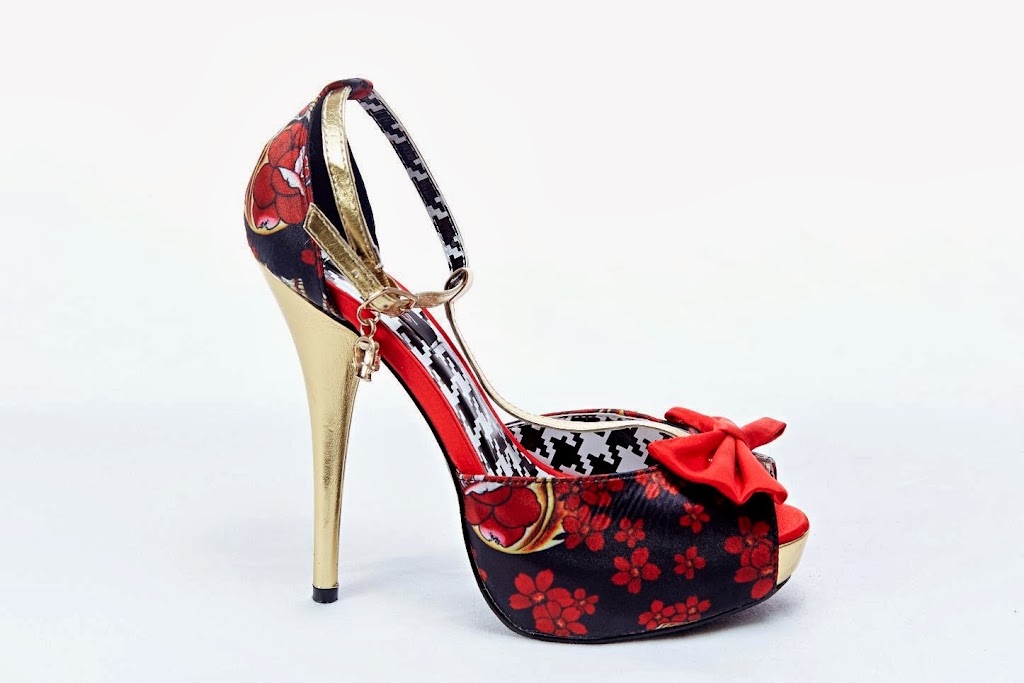
“Well, I think I tried all of them already… I want to be something new!” The screen thinks for a minute. “In this case, please feel free to choose any item from our catalogue”. I search the catalogue and find a slim black dress with vibrant blooms scattered across the bodice, and black velvet platform pumps with scarlet roses print, golden heels and golden buckles…. “This will work!” I smile and press “Submit Your Order” button at the bottom of the screen.

“You order has been submitted and will be shipped in 30 minutes. Thank you for using “My Caprice”.

In only half an hour after showering and breakfast the doorbell rings. I open the door and receive a paper bag with “My Caprice” logo. The bag has the dress and the shoes…

The next day I order a new dress and new shoes. Every day I order a new outfit that gets shipped to my house in a paper bag.

How much do you think this service costs? Where do I keep all the clothes and shoes I order? I don’t keep them anywhere and it costs me no more than a TV subscription. How is that possible?

Once I’ve used the clothes I take them to “My Caprice Clothing Return Drop Box” located at all major intersections of the city. “My Caprice” is one of the many clothing rental providers available in the market. Clothes collected at the drop boxes are shipped to a giant dry cleaning factory where several mega tons of used clothing is processed daily. Once cleaned the clothes become like brand new.
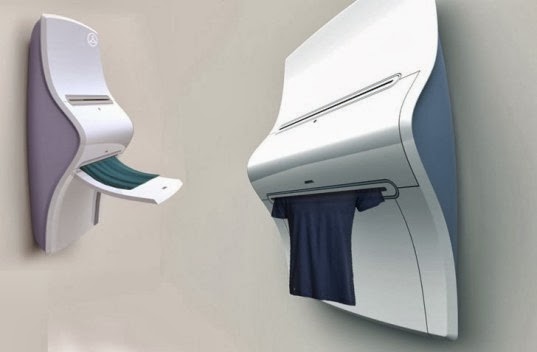
The cleaned clothing is sent to warehouses where it gets itemized and categorized. The warehouses are connected to the central database which is linked to the application running on the terminals installed in every home’s closet. The customers pay a yearly subscription for the service. There are different plans available depending on the clothes quality, designs and target market demographics.

The traditional “retail” shopping still exists. However, clothing rental services become more and more popular. How did this happen?

In a country where bad weather lasts three seasons out of four, and driving in traffic is a huge hassle , more and more people preferred online shopping to visiting a store. The biggest issue was lack of storage. People kept buying clothes and storing them in closets. With time, clothes weren’t fitting well anymore, or they were going out of fashion, or people simply became bored with them. Clothes were taking more and more space, producing dust and causing allergies.

Considering the fact that consumers use clothes for a short period of time, quickly replacing them with the new ones, manufacturers realized that quality is not of much importance to consumers. Eventually, the quality of clothing became so poor that after two washes most garments were discarded, causing significant harm to the environment.

This is when a group of scientists decided to popularize the concept of mass clothing rental. The idea mostly favoured by women thrived on the fact that every woman’s secret desire to wear a different outfit every single day of a year.

They capitalized on the fact that women don’t buy clothing for its own sake. They buy the looks created by the clothing. Companies like “My Caprice” were able to meet that demand.
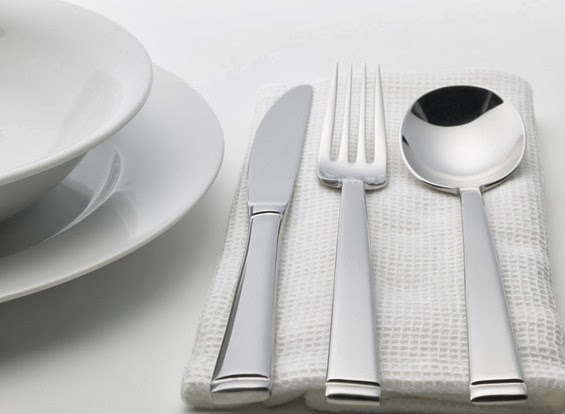
Any radical new idea will receive its share of criticism. Some people consider it inappropriate to wear used clothes due to religious, cultural and hygienic reasons. That is utterly strange as they share lots of other things with strangers every day. When they go to restaurants, they eat food from the plates that were previously used by others. When they stay in hotel rooms, they sleep on top of bed sheets that someone else had previously slept on. When they are admitted to hospitals, they wear robes that were worn by many others…

Eventually even the most raging opponents of this idea had to change their mind. Mainly, due to the environmental benefits of the new concept. Reusing items means less waste, less cleaning substances and less plastic ending up in landfills. The quality and durability of clothing also improved. They started using more natural, eco-friendly and recyclable materials, which helped improve people’s overall health and well-being…
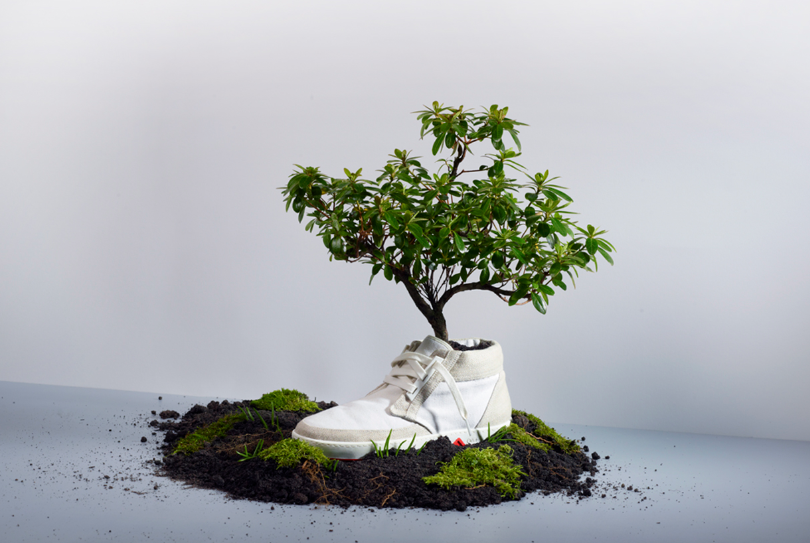
I kept contemplating about other long-term benefits of this idea, but suddenly I woke up from my dream. I opened my closet and saw how many clothes I had in there… For the last three years I have been obsessed with buying new clothes calling it my “retail therapy”. I had so much stuff that I didn’t know where anything was. I decided that it was time to get rid of some of my clothes instead of buying new ones. This is how “Shop My Closet” idea was born. Today, it’s a fast growing Facebook Group consisting of over 1000 members. I hope that with your help, we can spread the word, so that one day we could reach 10,000 members. People have to change their attitude towards the use of clothing. Consumerism is wrong. If we care about our planet, our environment we have to start living by the principle of the “Three R’s: Reduce, Reuse, and Recycle.

Read more about Sustainable Clothing and Clothing Swapping here https://en.wikipedia.org/wiki/Sustainable_clothing

https://www.facebook.com/groups/ShopMyClosetGTA/

The 21st Century Kids

Where is my eagle?

One day I was picking up my six year old son from school. As usual, he was sitting at the table with three other boys constructing something out of Lego. All of a sudden he gave me a very serious look and said, “I want an eagle.” “You mean an eagle toy?” “No, I want a live eagle!” For the next two weeks, each time I showed up in his classroom doorway, he was asking me the same question, “Where is my eagle? Did you get me the eagle?”

I tried to change the subject once. “Do you want to know about the Eaglet?” Eaglet is a Soviet Russian song from the 1930s dedicated to a heroic young soldier who was captured by the enemies and is about to be killed. “You mean those soldiers who we commemorate on the Remembrance Day when all people wear little red poppies?” He had no idea what I was talking about.

The generational gap 

That night I thought how different our children are compared to our grandparents and great grandparents who went through the horrors of war.

Two centuries. Two different generations.

Russian children born in the 20th century suffered many years of hunger, wars, and political oppression. Our kids have everything – tons of toys, electronics, ipads, iphones, Facebook… And still, our children keep asking for more. They make unreasonable – even  absurd demands. They throw tantrums and become hysterical if they don’t get what they want. They want to watch TV and play computer games endlessly. They leave a mess and don’t want to clean it up. They refuse to eat the food they are given. They are picky about everything – food, clothes, toys, friends …

Children born in the 21st century are protected from all possible hazards every step of their lives. Babies won’t know that they are wet because the diapers keep them dry all day long. Toddlers won’t hit themselves against the bed rails because it’s lined with the bumper. Kids will never swallow any wrong medication because all bottles have child-resistant caps.

George Carlin, the great American comedian, once said, “For one thing, there’s too much emphasis on safety; child-proof medicine bottles and fireproof pyjamas, child restraints in car seats, and HELMETS! Bicycle, skateboard, baseball helmets! Kids have to wear helmets now for everything…! Grown-ups have taken all the fun out of being a kid.”

Twenty five years ago, when I was in high school, we didn’t have iPads, iPods, Xboxes and hundreds of TV channels. We would finish our homework and go play outside. No one was watching us – it was considered safe. We read lots of books and wrote poems. The school policies were tough, the teachers strict and demanding. We learnt that in order to be successful you have to work hard and put in lot of effort.

Children and technology

Over the last 15 years, technology has changed our lifestyle and the environment in which our children are growing. We can’t live without our devices – we are texting, tweeting, posting, and instagramming every minute of every day. Kids become a part of this gigantic social web from the day they are born when the picture of a newborn appears on their parents’ Facebook timeline. For some kids this happens even earlier when their parents-to-be post ultrasound images.

Parents think that there is no harm in using a computer or watching TV while having a baby on their lap. They believe that if the baby is not staring directly into the screen then there is nothing wrong with it. Guess what – the researchers have found that even having TV in the background can be harmful for the developing brain because it can affect speech development.


Watching too much TV is not good for children of any age. It hinders their ability to think and learn because their brain becomes over- stimulated. Kids who watch too may cartoons are less creative and perform worse at school.

Are you wondering why children throw tantrums? One of the reasons could surely be sitting still in front of TV for too long, especially if they watch cartoons filled with violence and action. (And most cartoons are like that nowadays). Suddenly, they become hyperactive and even aggressive. Their unused energy needs to get out.


Punishment and reward 

So what are we supposed to do? Should we ban TV completely? And how do we keep them busy? Sports and board games are good ways to take kids away from TV. But more importantly, parents have to be role models: if daddy is on the computer all day and mom is on her phone, what habits will your child pick up?

Kids are much smarter than we think. This is why many child educators recommend teaching children good behaviour using the method of negative and positive consequences. A similar approach by the way is used by employers to increase employee performance.

Taking away toys = cutting down the salaries
Time off = letting go
New toy = salary raise

I was advised to make a sticker chart for my son. Every time he finishes his meal on time, cleans after himself or helps me around the house, I put a sticker on the board. After earning a certain number of stickers he gets a new toy. I noticed that when I warn him that I’ll remove some of the stickers if he doesn’t do what I say, he throws a tantrum.

Interestingly, unexpected rewards always work. One time, he decided to babysit his brother. He softly talked to the baby and the baby fell asleep while I was cooking in the kitchen. Well, obviously he earned a sticker. He was so proud. And of course he wanted to do this again.

Little adults and big kids 

Speaking of role modelling, children often act like grown-ups while adults behave like kids. I went to Walmart to buy a hair band. I couldn’t choose which one I needed and took two. Meanwhile, my son got himself three electric toothbrushes: A Transformer one, a Batman one and another one with something else on it. “Why would you need three toothbrushes?” I asked. “And why do you need two hair bands?” I didn’t know what to say, but I put one band back on the shelf.

Why do preschoolers need so many Lego games (or Barbie dolls)? And why does mom need so many pairs of shoes?

Another interesting observation: 4-6 year old boys are obsessed with superheroes, Power Rangers, ninja turtles, and Transformers. Marvel and DC Comics have built an entire industry based on their popular characters – from stickers to underwear. Kids will wear only those clothes that have the images of their favorite characters. Why? And why are ladies of all ages and backgrounds are obsessed with Coach and Michael Corse purses? These are typical examples of how the principle of social proof works. It was described by Professor Robert Cialdini as one of the most powerful weapons of influence. If a lot of other people are doing something, we assume that it’s a good thing to do.

****************

Kids like to brag. When they get a new toy (boots, mittens, or a pencil case) they have to show it to classmates just to be in the center of attention. What about adults? How often do we hear “Did you see my new car?”, “I’ve taken this with my new Nikon 700”, “Do you know how much we spent on this bathroom?”, or “Here’s me drinking Banana Mama on the beach in Punta Cana…”?

Facebook and other social media have thrived on people’s need to be liked and admired. Whenever someone responds to our comment, or “likes” our photo, it nurtures our ego and makes us feel special. In fact, social web is a much more addictive toy than Lego, Barbie or any other child’s toy. But if parents can tell children to stop playing and start learning, who’s going to convince adults to stop wasting time on Facebook and start doing more valuable things in their lives?