A Blog About Life, Work, Relationships, and World

Japan in July: Hot. Lost. Amazed. And Completely in Love. Part 1

My Invisible AI Tour Guide

My boys had been begging to go to Japan for two years. As a mom, I had always been mildly terrified of the 13-hour flight and the massive time difference. It turns out, those were the least of my worries. The flight honestly didn’t feel much different from flying to Europe—provided you have a good neck pillow and spend the time sleeping or binge-watching movies. Surprisingly, thanks to a little melatonin magic, I barely felt the jet lag and switched to the new time zone pretty quickly.

The real adventure began when we landed.

This was the first trip I planned almost entirely using AI. Honestly, it felt like Gemini Pro was a personal guide traveling in my pocket. I used it for everything, from “Where should we eat right now?” to “Are we on the right train?” and “What does this beautiful origami at the temple mean?”

I planned almost our entire itinerary with it, and it was incredibly helpful. It recommended the major attractions, told me how far in advance to book tickets, and helped structure our visits to Lake Kawaguchiko to see Mt. Fuji, Shibuya Sky, TeamLab Planets, Tokyo Skytree, and our incredible side trip to Shibu Onsen in Nagano.

Shibu Onsen: Hot Springs and Sasha’s Brilliant Idea

My older son, Sasha—who probably knew more about Japan before this trip than the rest of us combined—suggested we stay at a traditional ryokan (Japanese inn) with hot springs in the mountains. That is how we ended up booking a two-night stay at the 70-year-old Suminoyu Ryokan in the scenic Yamanouchi village. It ended up being the absolute highlight of our trip.

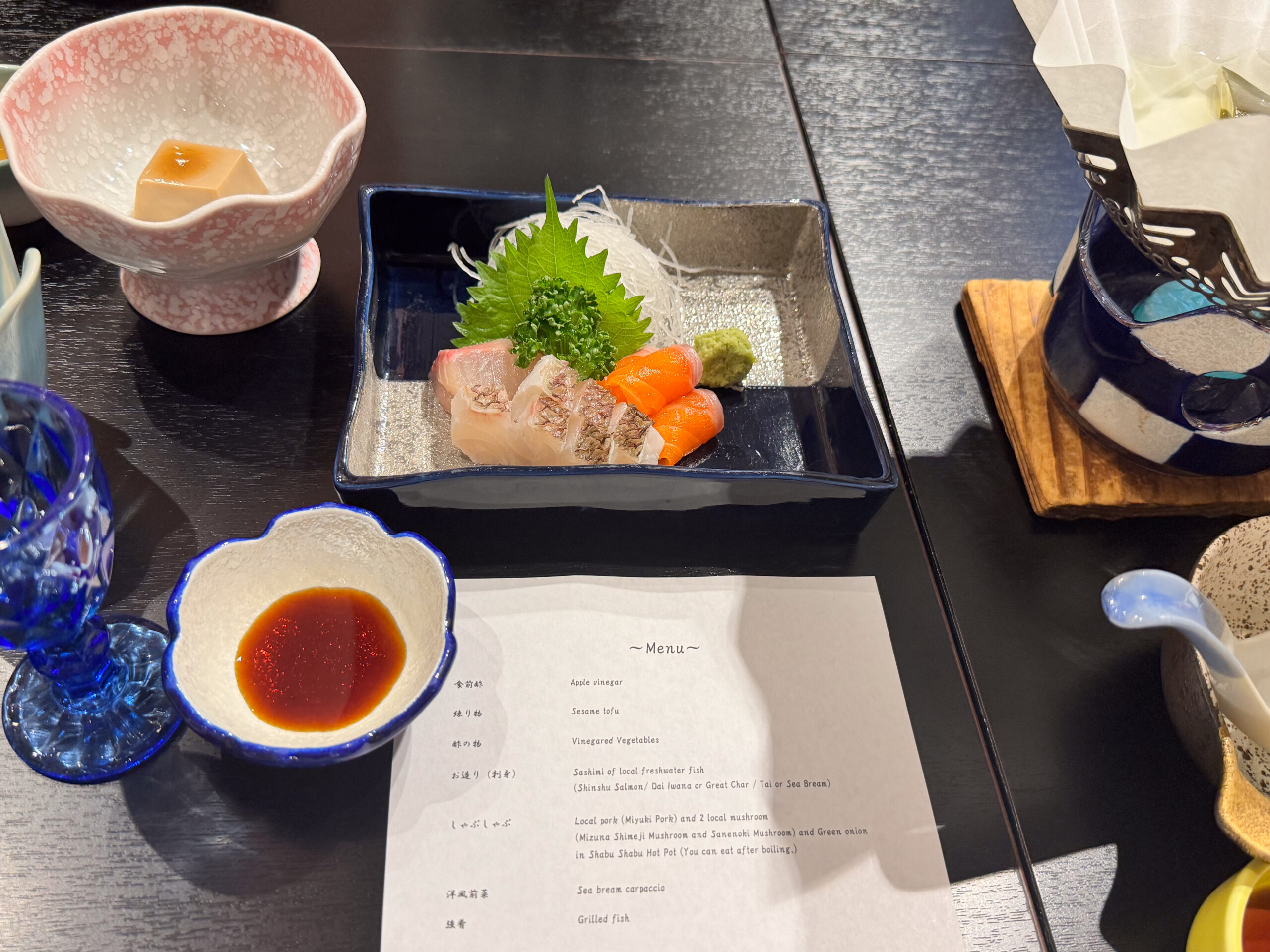
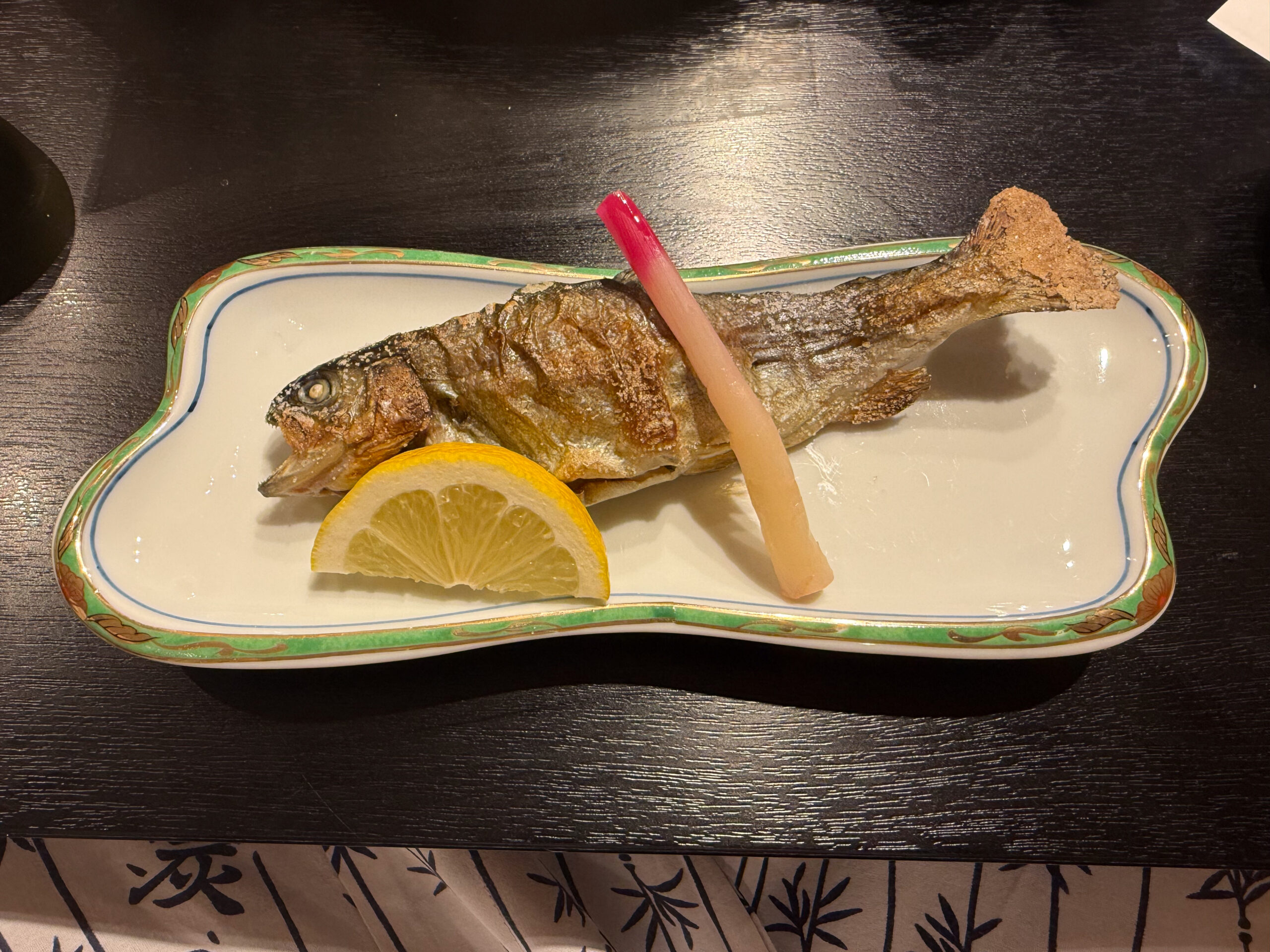
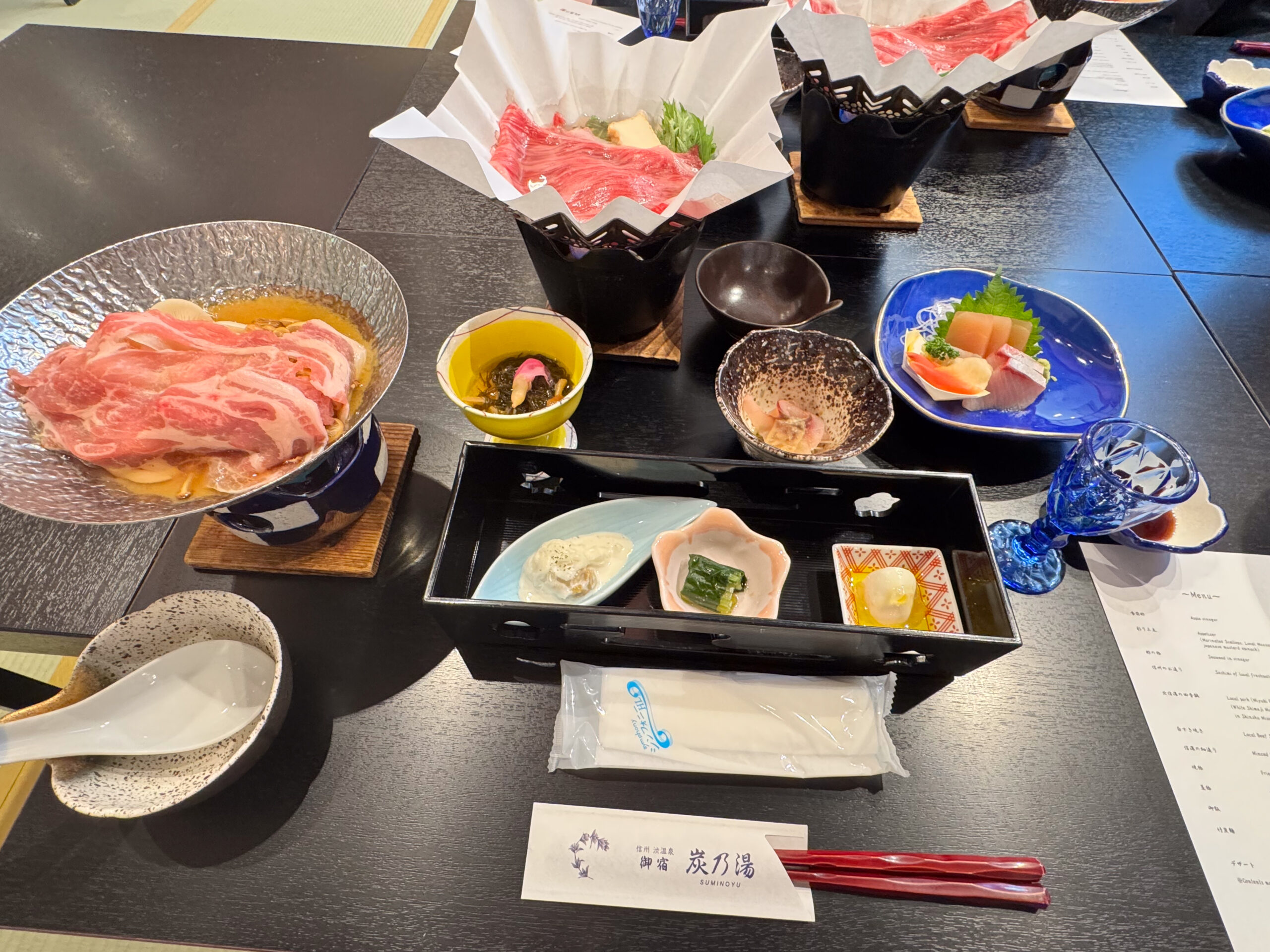
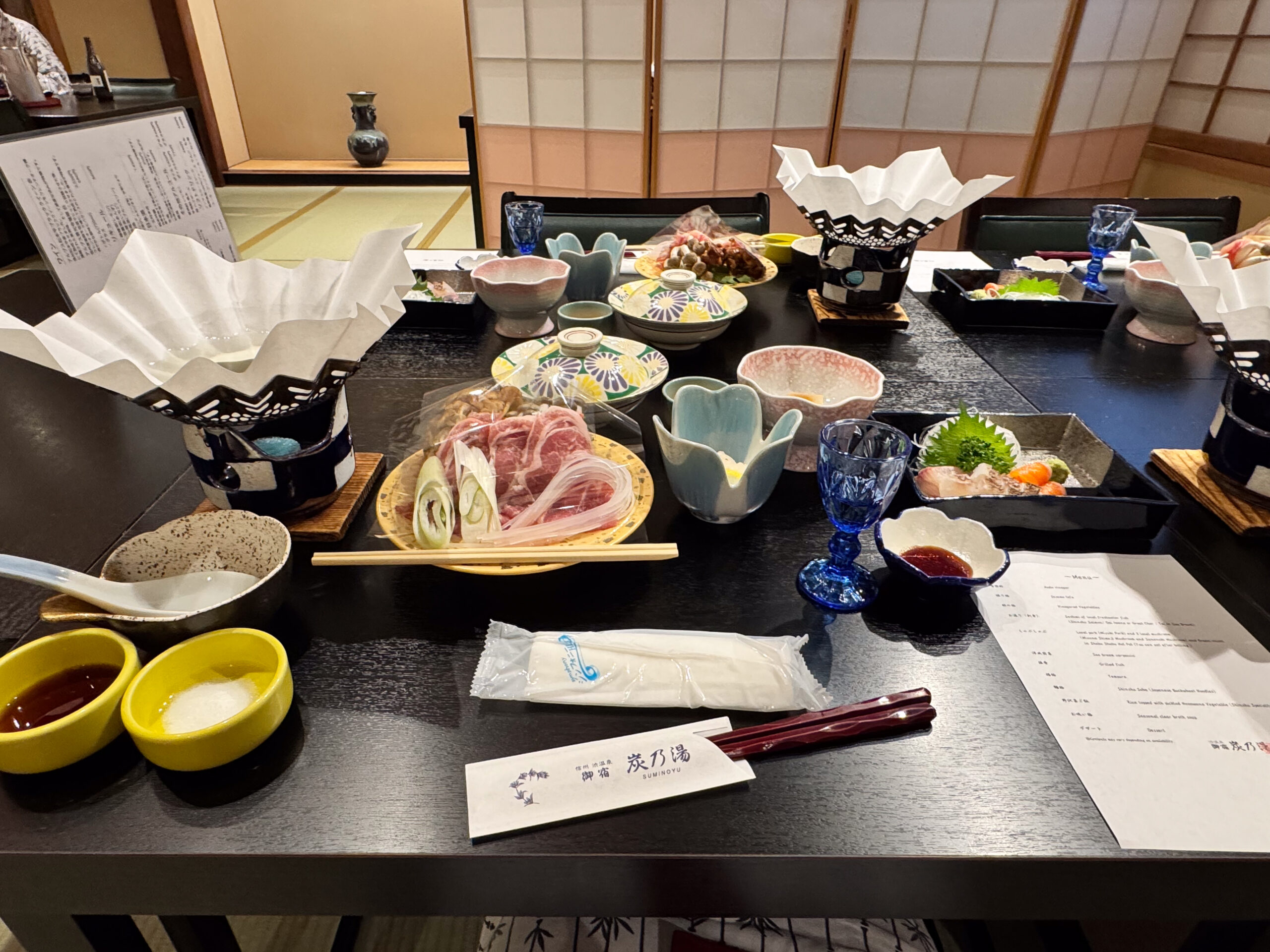
Our stay included breakfast and a spectacular multi-course kaiseki dinner. We’re talking about 12 exquisitely presented small dishes: sashimi made from incredibly fresh local fish like Shinshu salmon, mountain char, and sea bream, alongside tofu, noodles, and miso soup. The best part was the meat, mushrooms, and vegetables cooked right on our table in a shabu-shabu hot pot.
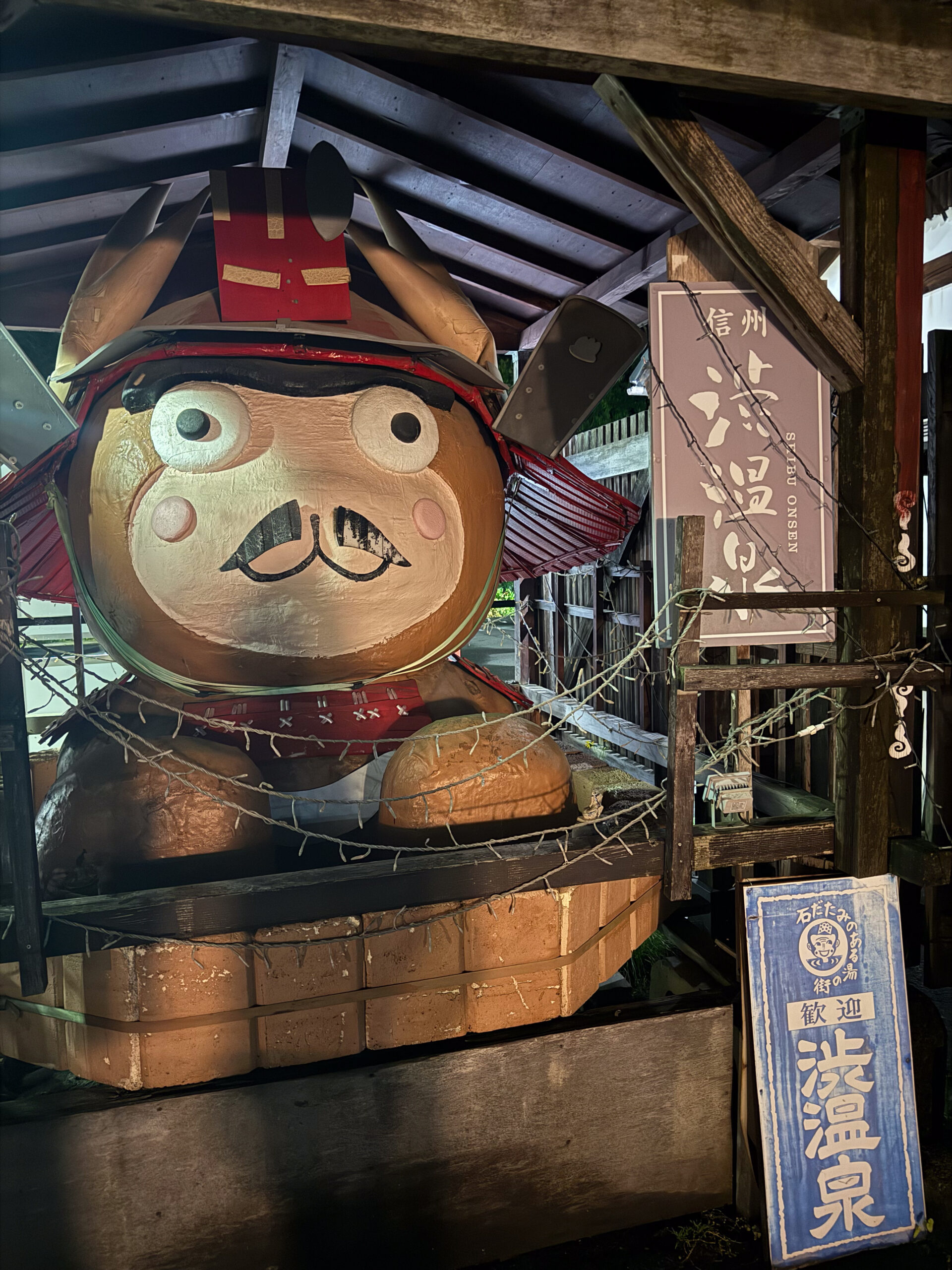
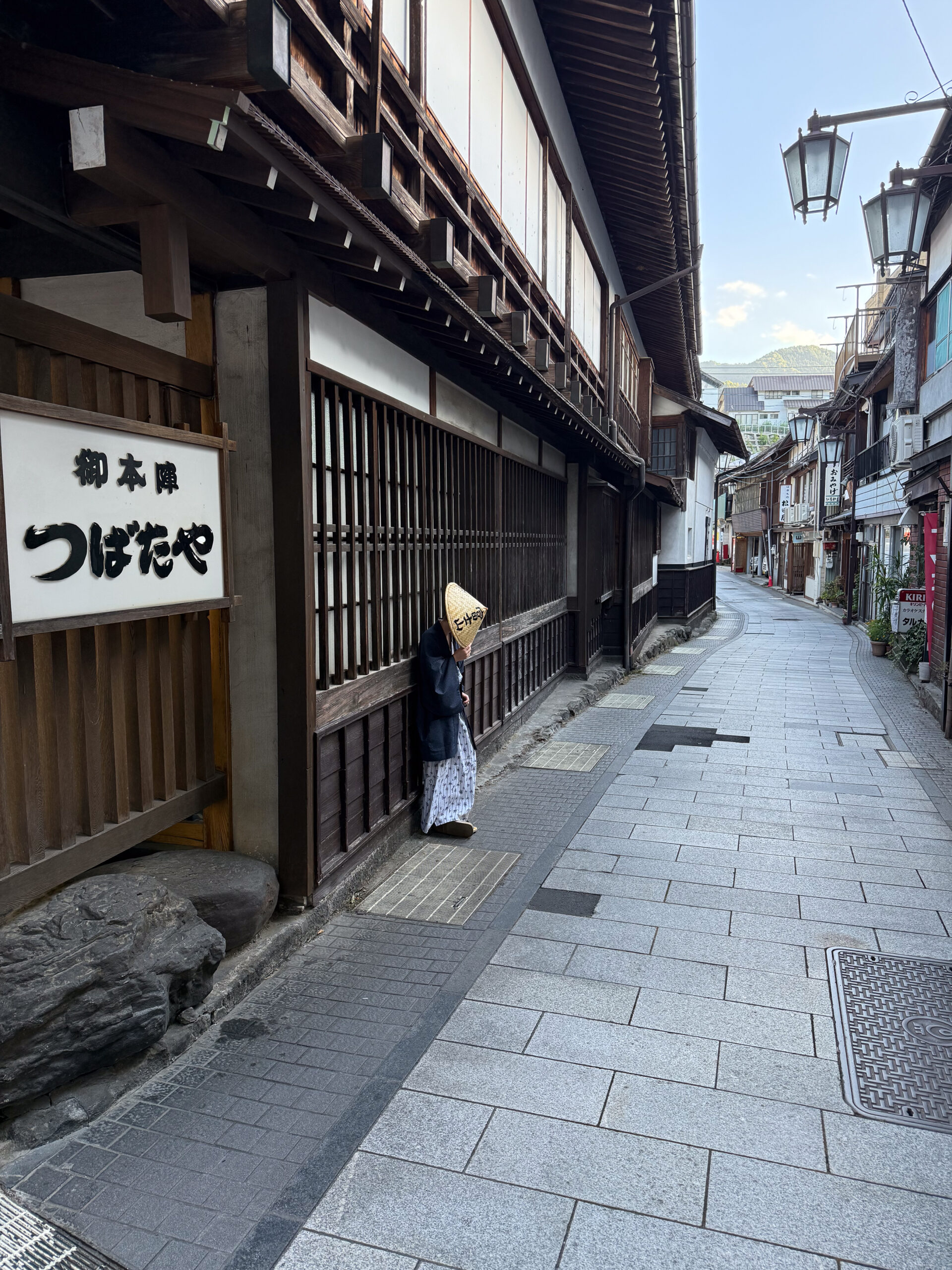
The village itself is famous for its complex of nine public hot spring baths (soto-yu) spread along the cobblestone streets. Our incredibly welcoming hostess handed us an old-fashioned key attached to a huge wooden plate that opened all nine baths. She explained that visitors usually buy a special towel for 500 yen and collect a stamp at each bath as a souvenir. We visited all nine to look, but skipped bathing in them since they were quite small, crowded, and lacked showers.

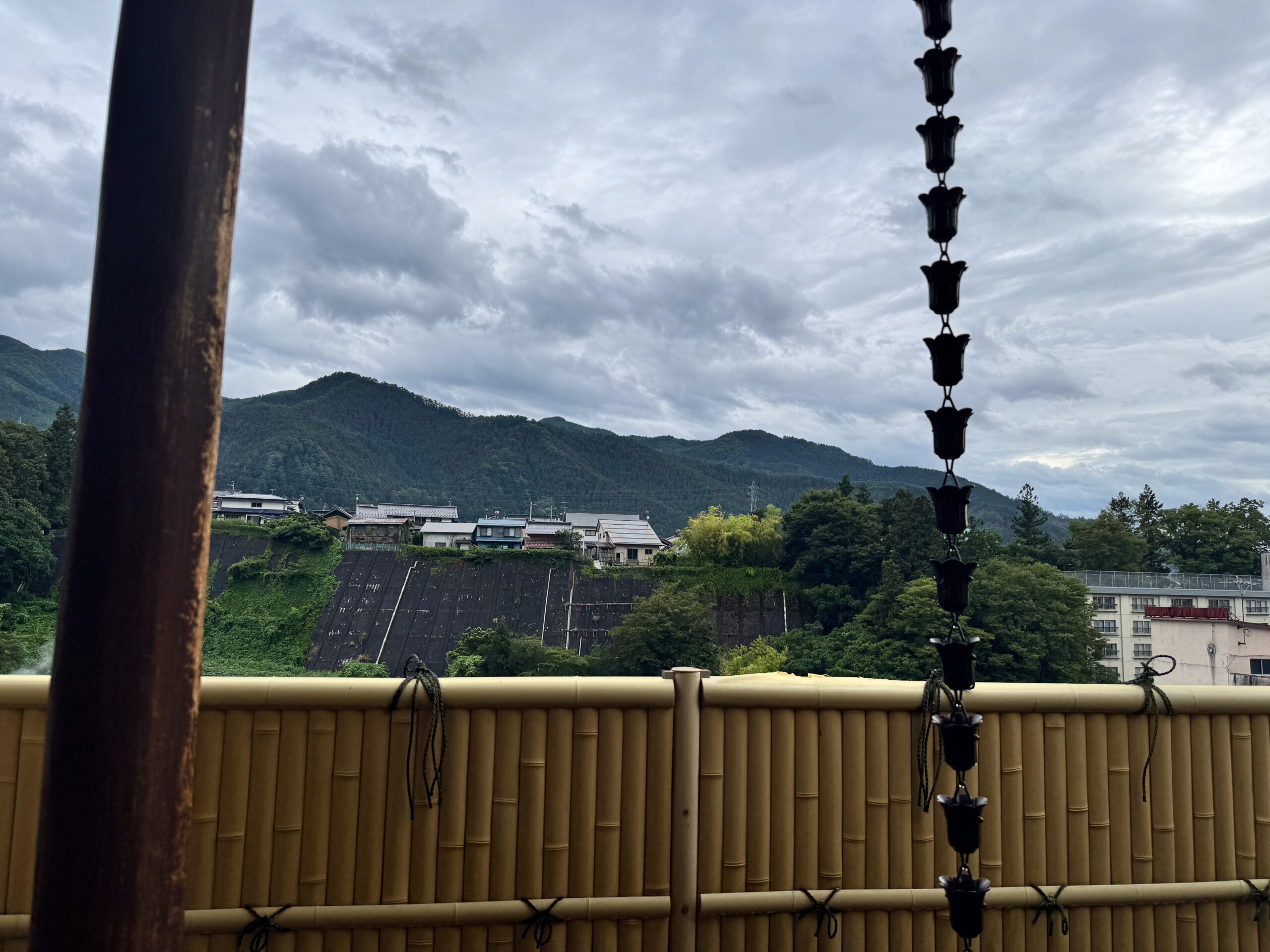
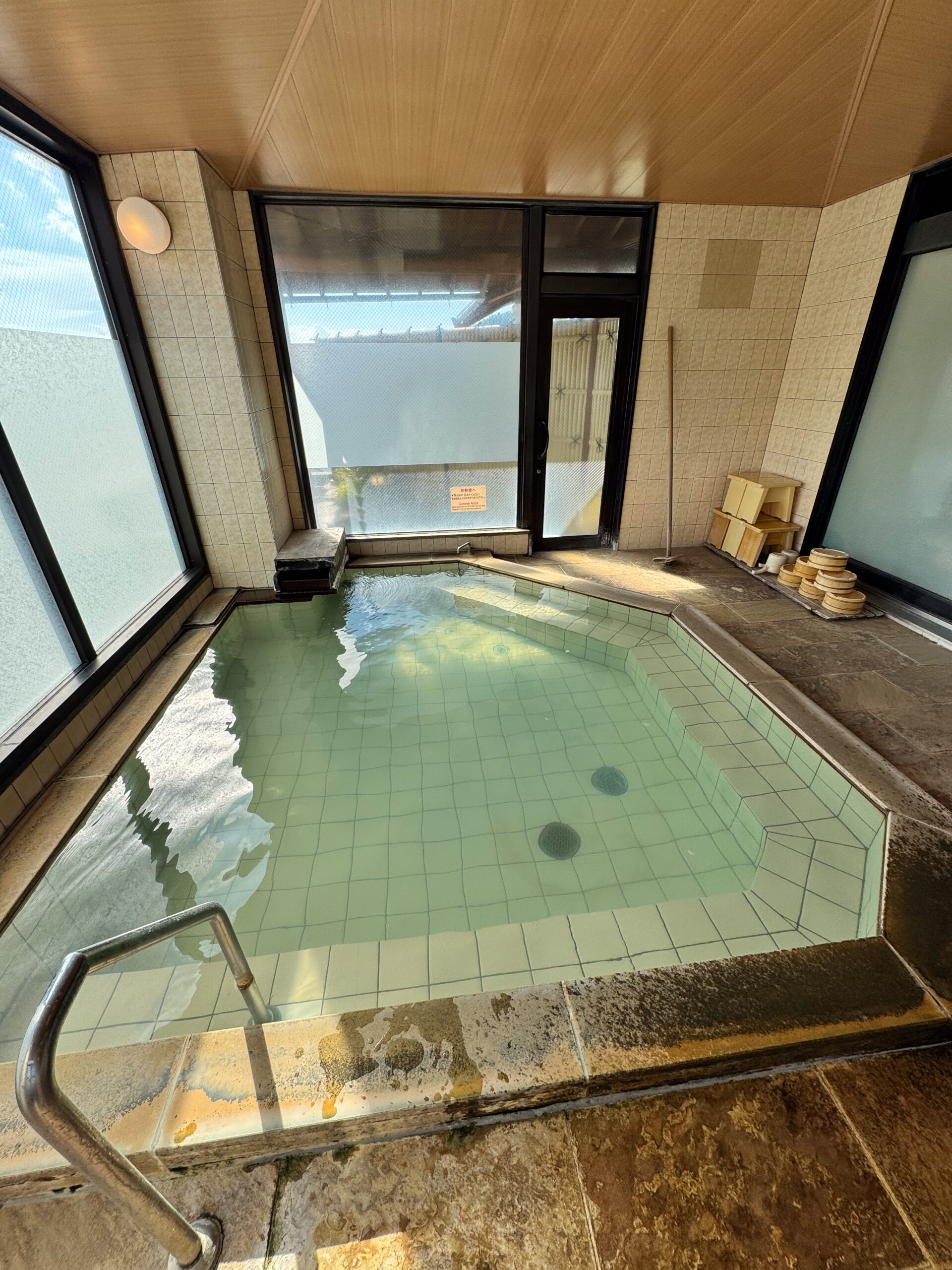
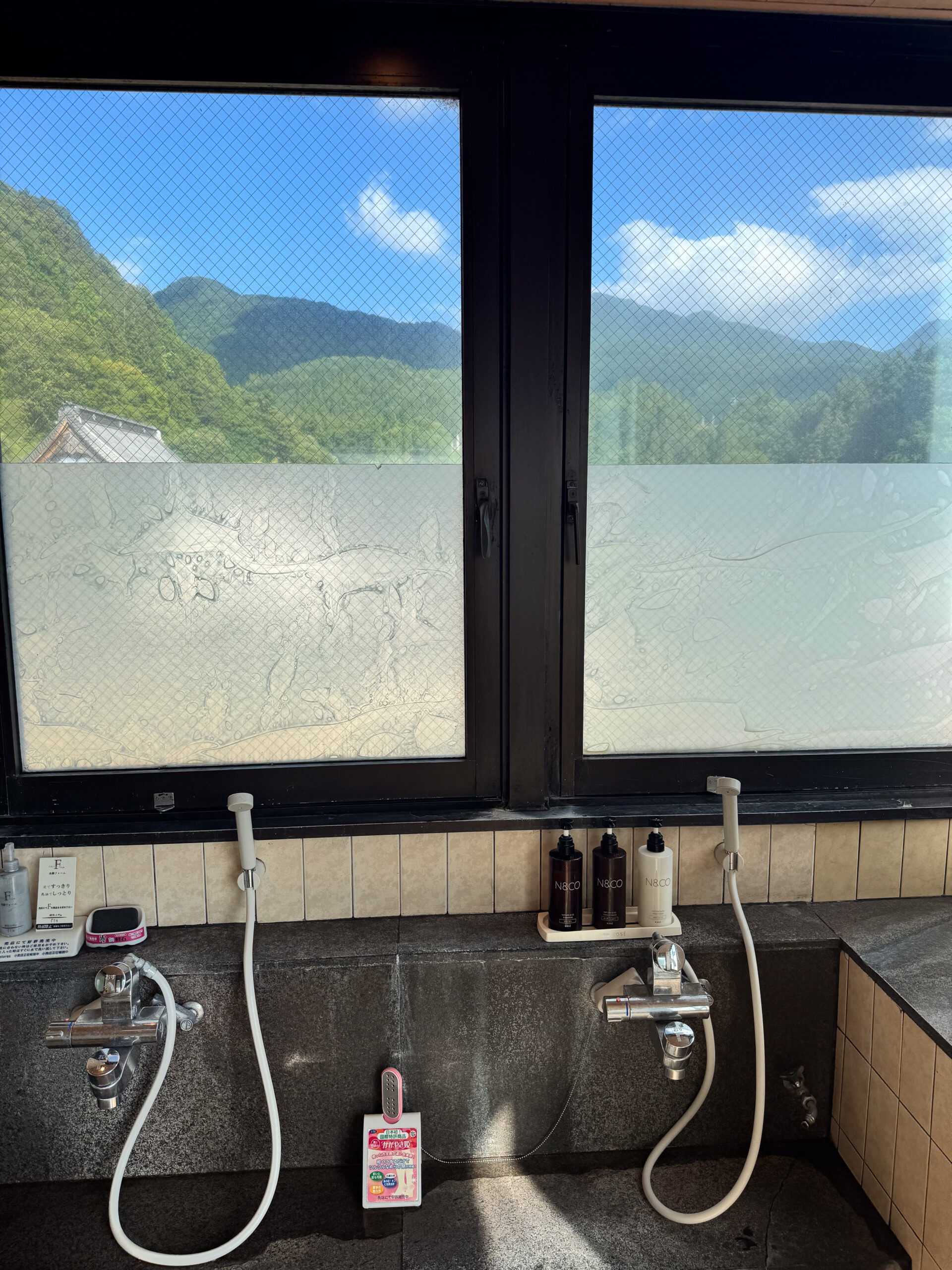
Instead, we took full advantage of our hotel’s amazing onsen. They had an indoor bath, which was very hot, and a much more comfortable outdoor bath with breathtaking views of the village spread across the mountain hills.
Speaking of onsens, there was one mystery I didn’t fully solve until two weeks after we came home: the purpose of the tiny towel we were given at the hotel. At first, I thought it was a washcloth. Then I saw Japanese women balancing theirs on their heads in the onsen, so I assumed that was its purpose. Apparently, I was still missing something.

Two weeks later, Hugh Jackman finally enlightened me with this hilarious explanation. He figured the tiny towel was meant to cover your private parts — only to discover that it was ridiculously too small for the job. 😂 Interestingly, I never saw a single Japanese woman even attempt that. The towel went on the head; modesty apparently took care of itself.
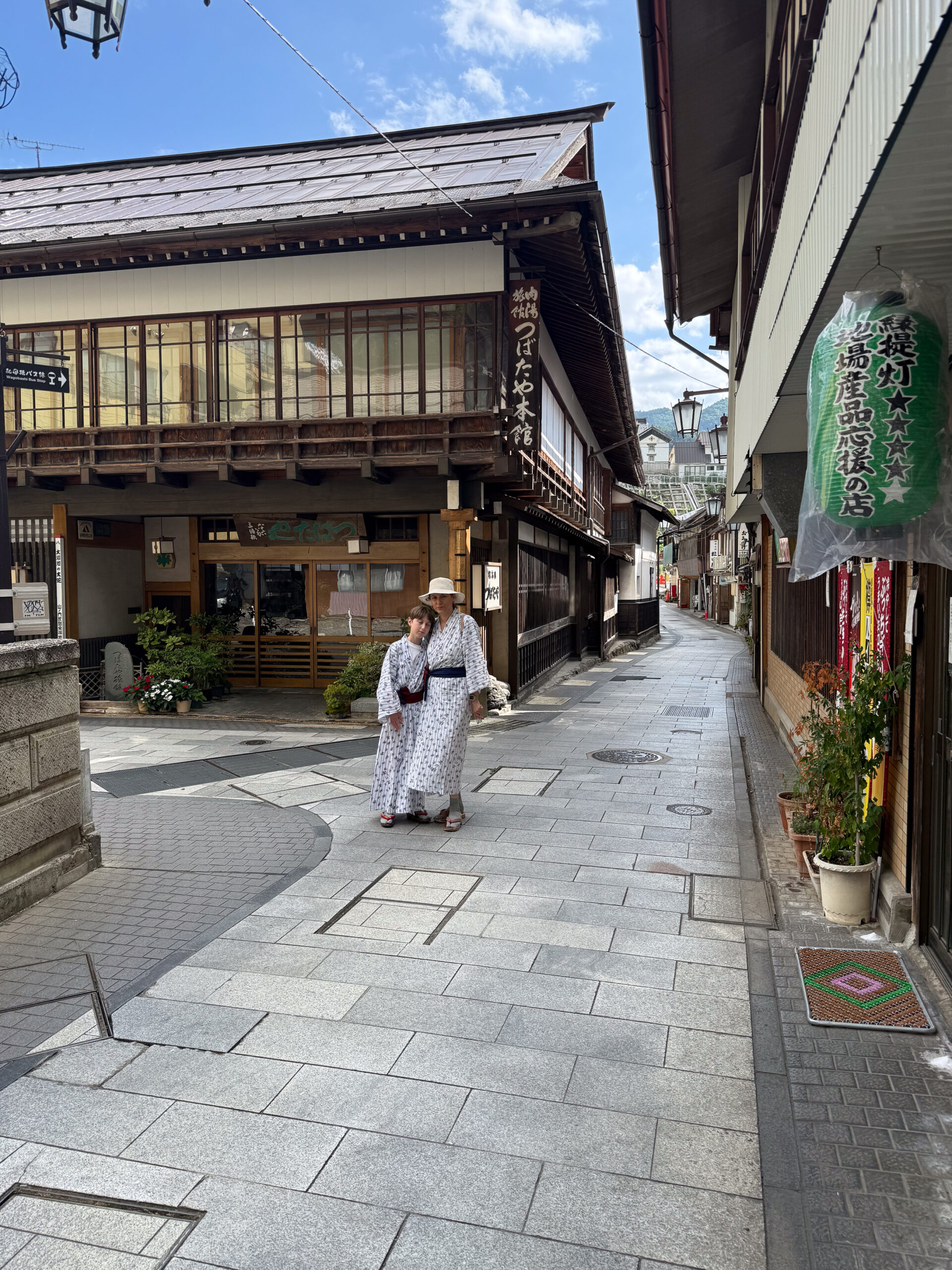
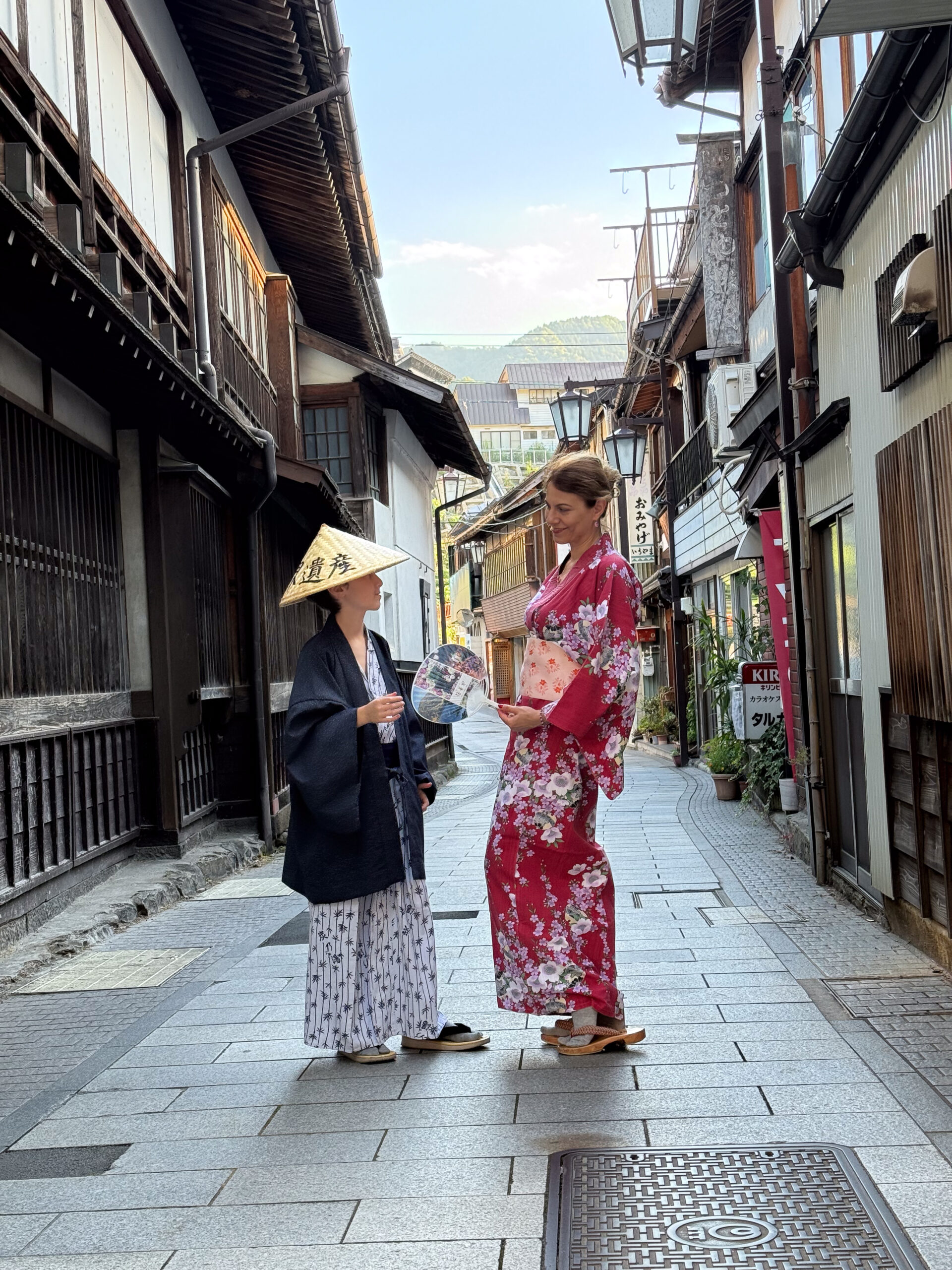
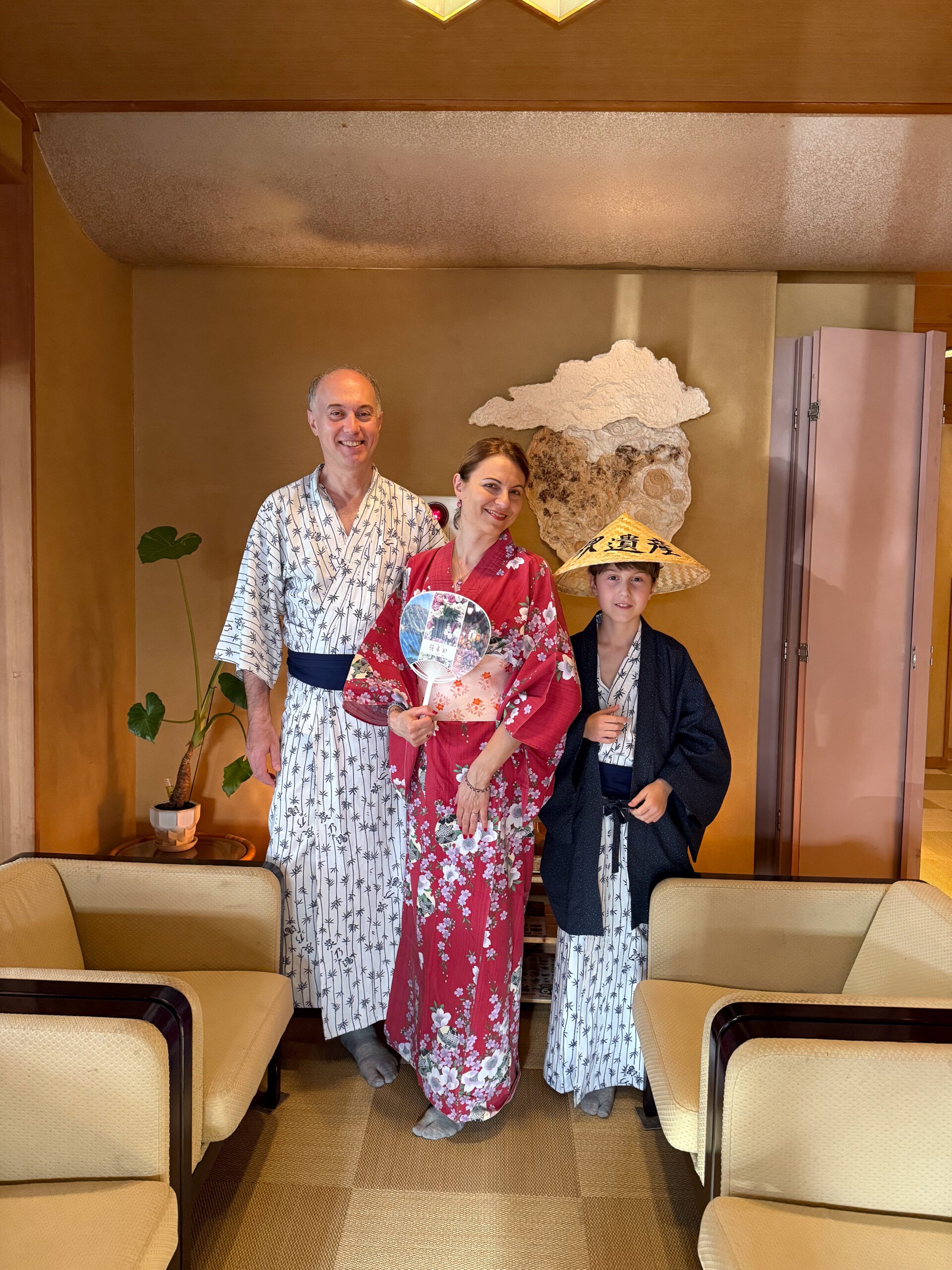
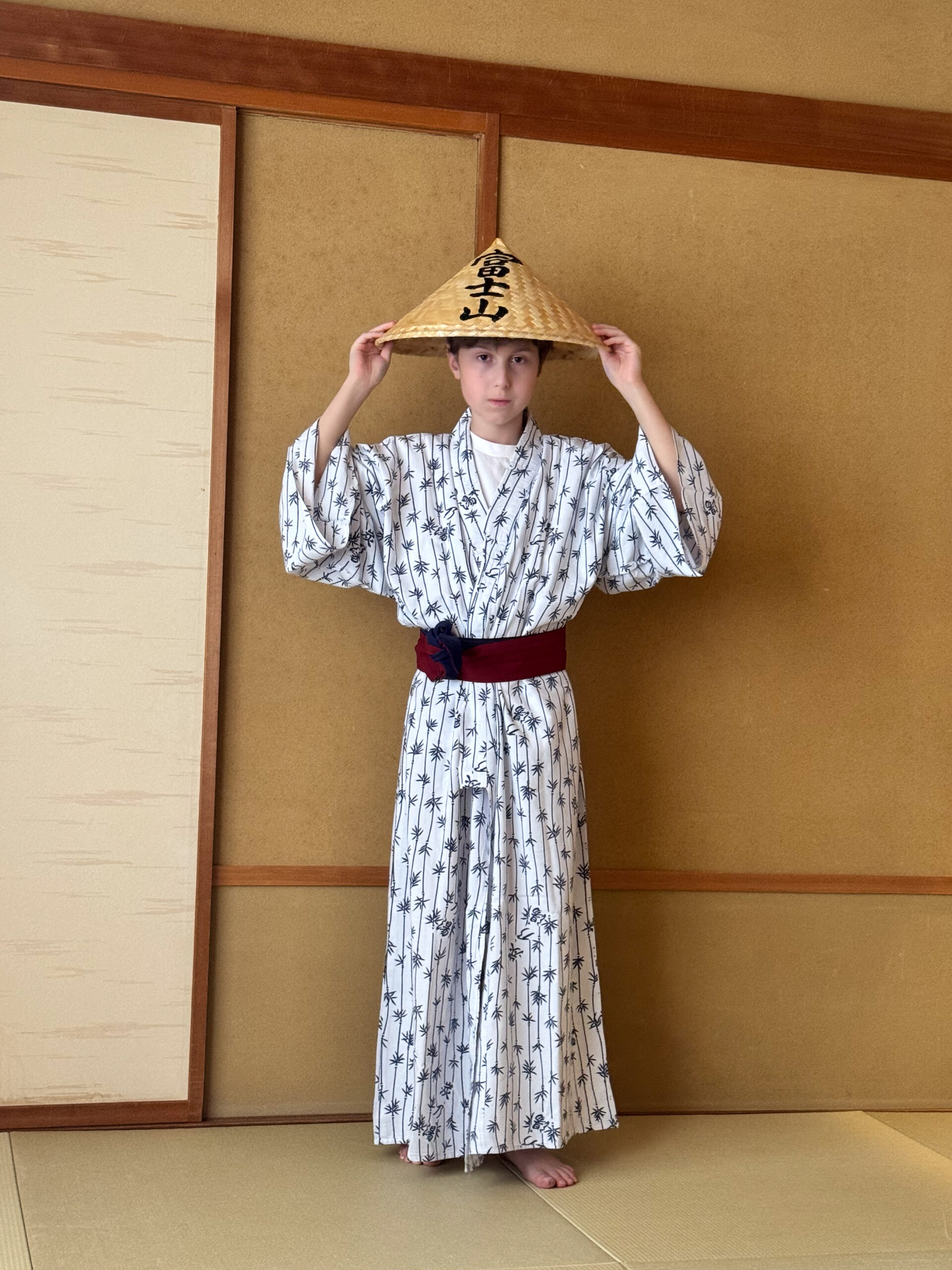
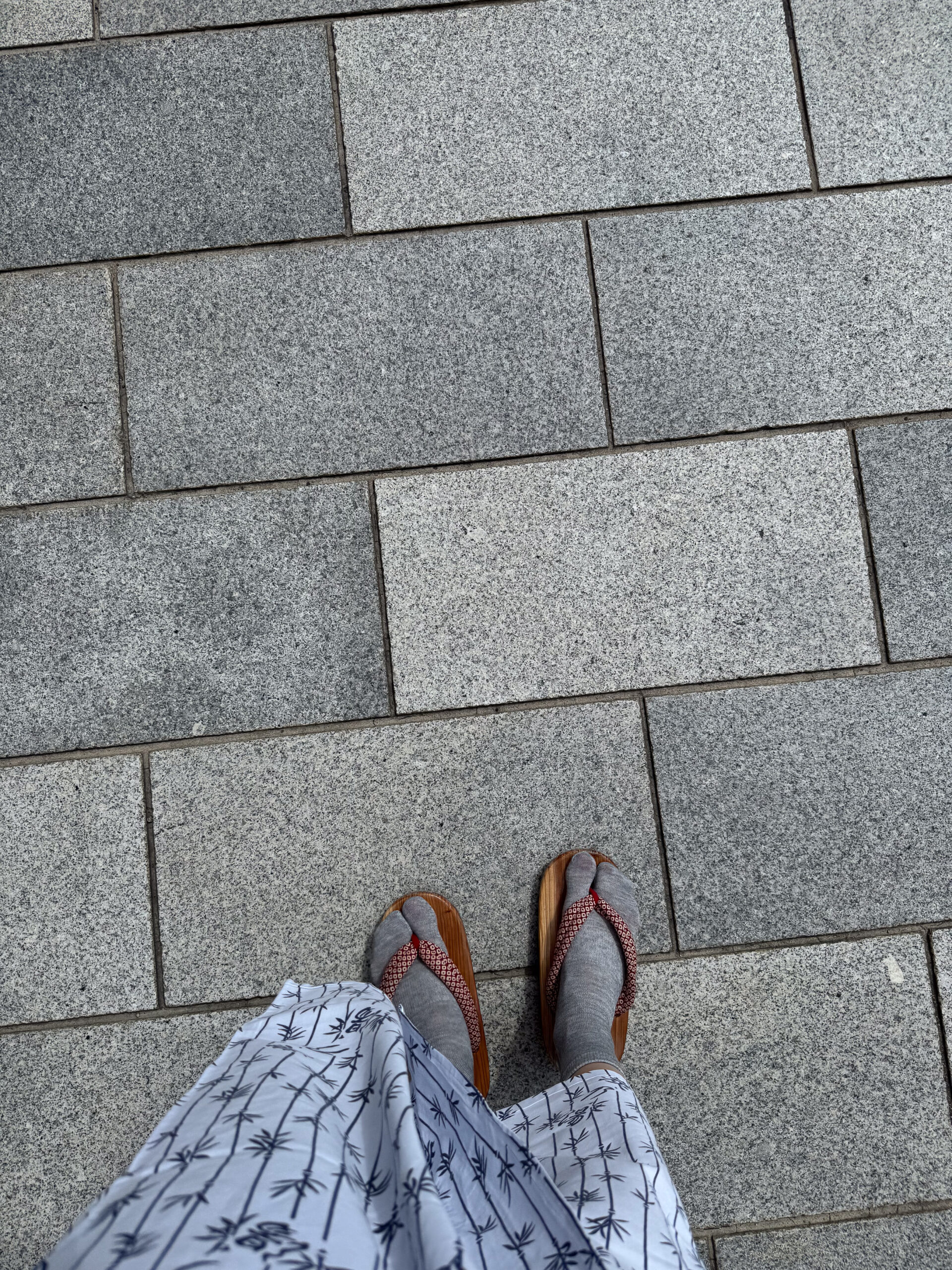
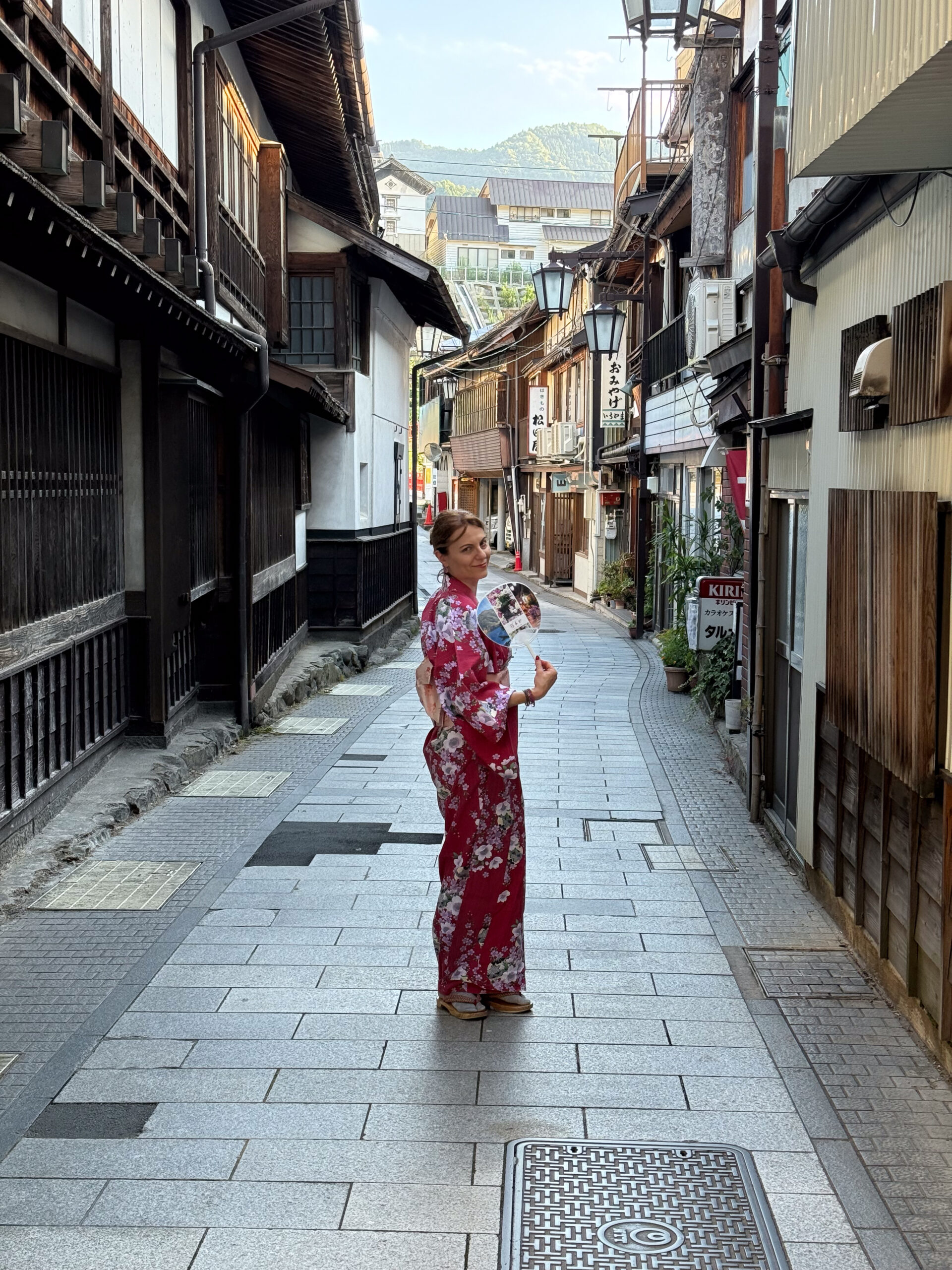
In ryokans, outdoor shoes are strictly forbidden. Inside, we walked around in special tabi socks, which have a separated big toe so you can easily slip on traditional wooden geta sandals. We clacked around in these geta along the village’s cobblestone streets. In addition, we were all given yukatas (light cotton kimonos) and short haori jackets for the evening. I even rented a brightly colored yukata for a fun family photo shoot!

Through the Rain to the Mountain Spirits: Macaques, Temples, and Paper Prayers


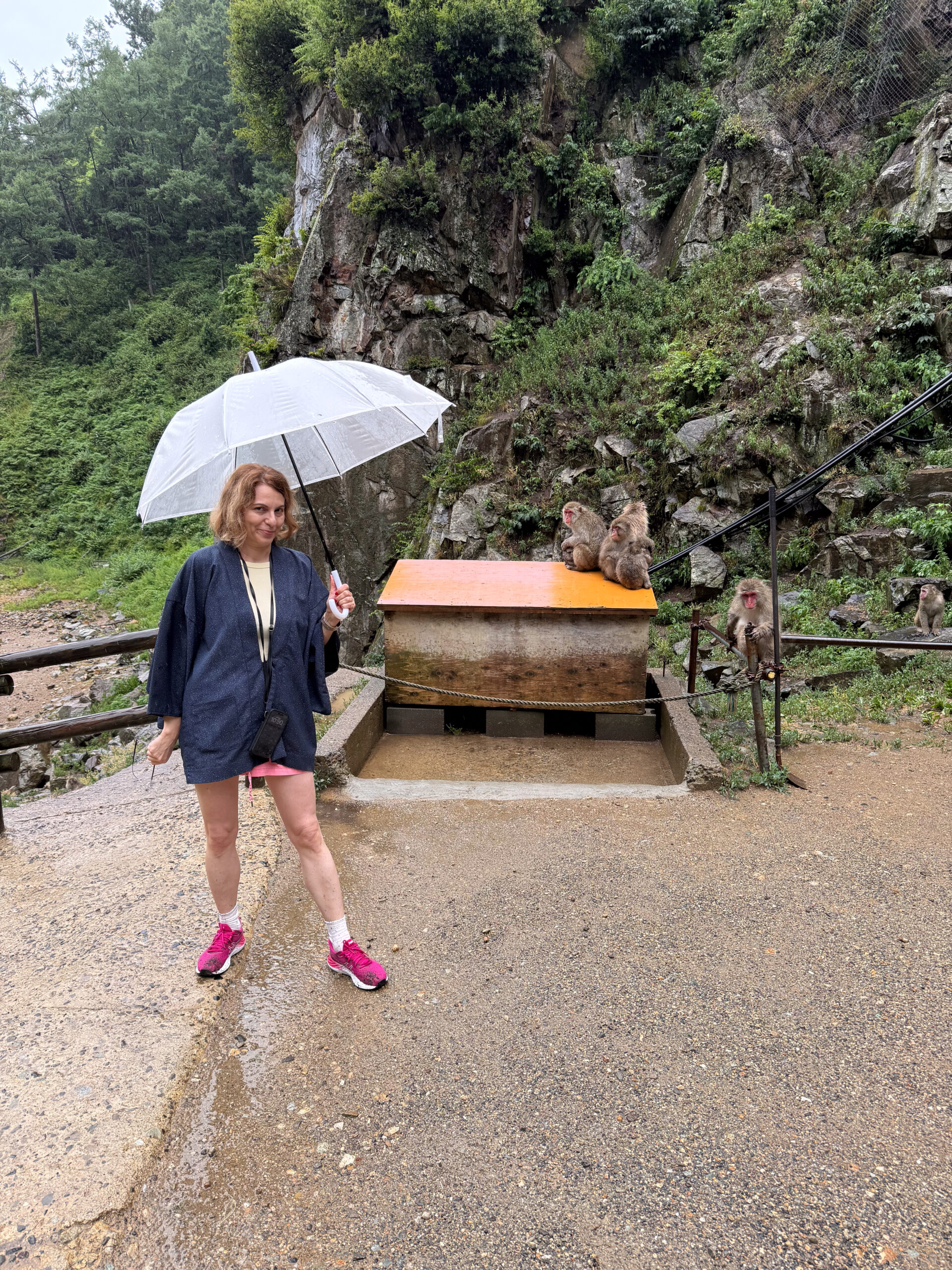
The next day, we were scheduled to go to the Jigokudani Snow Monkey Park. It started raining heavily that day, and at first, we wanted to cancel the whole thing. But, armed with umbrellas from the hotel, we decided to risk it anyway—and it was totally worth it, even though our shoes turned into clumps of mud by the end.

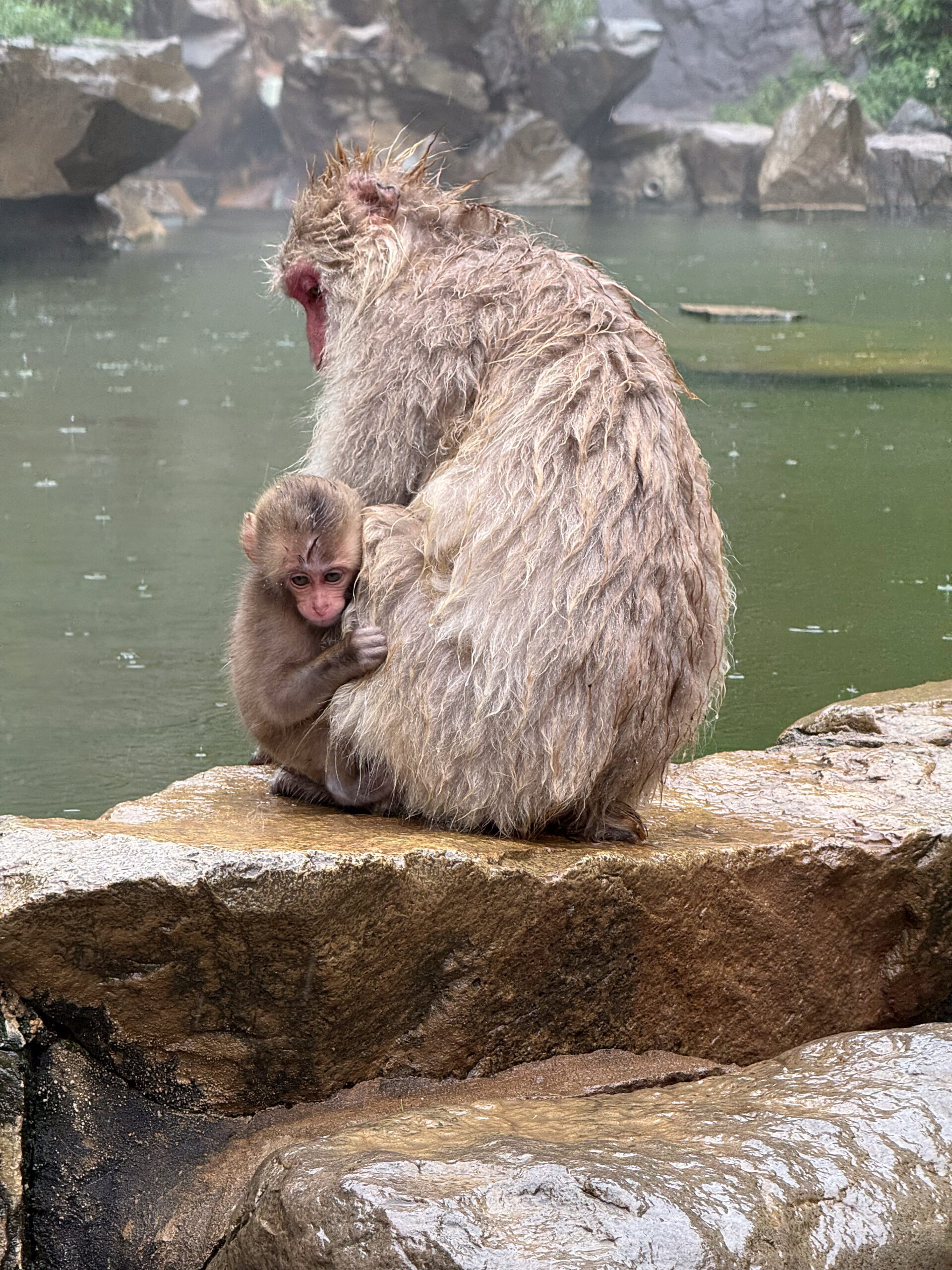
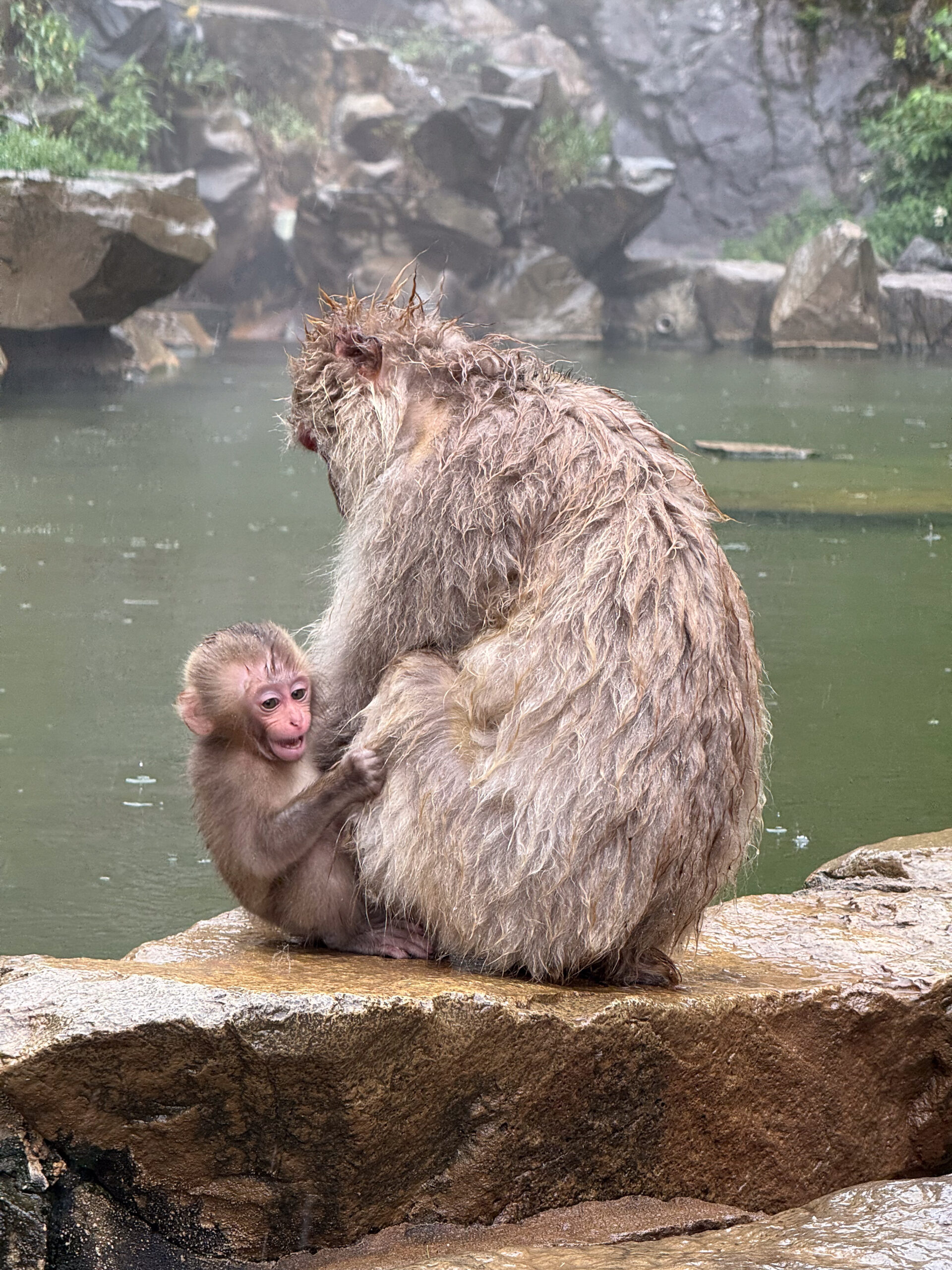
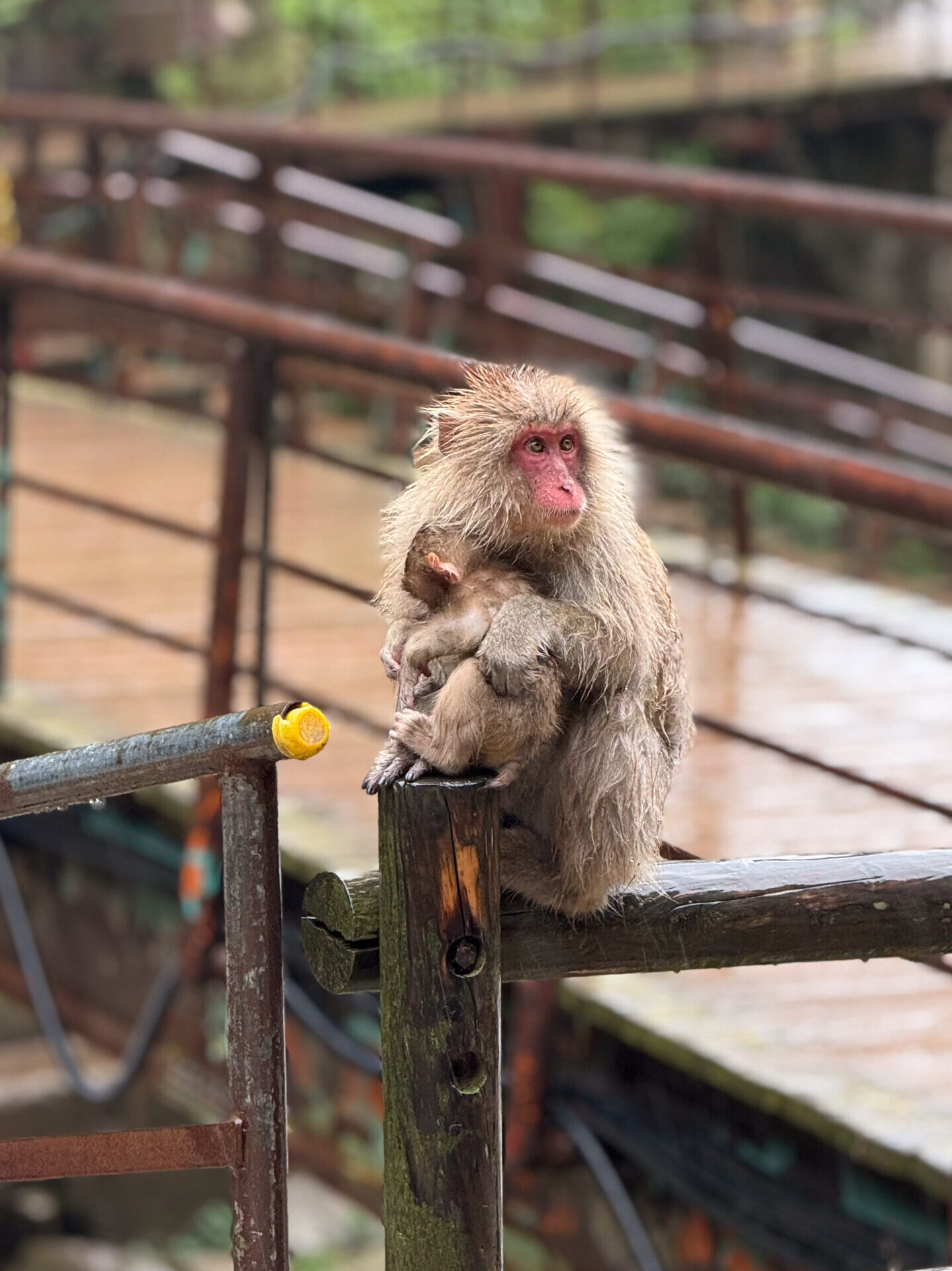
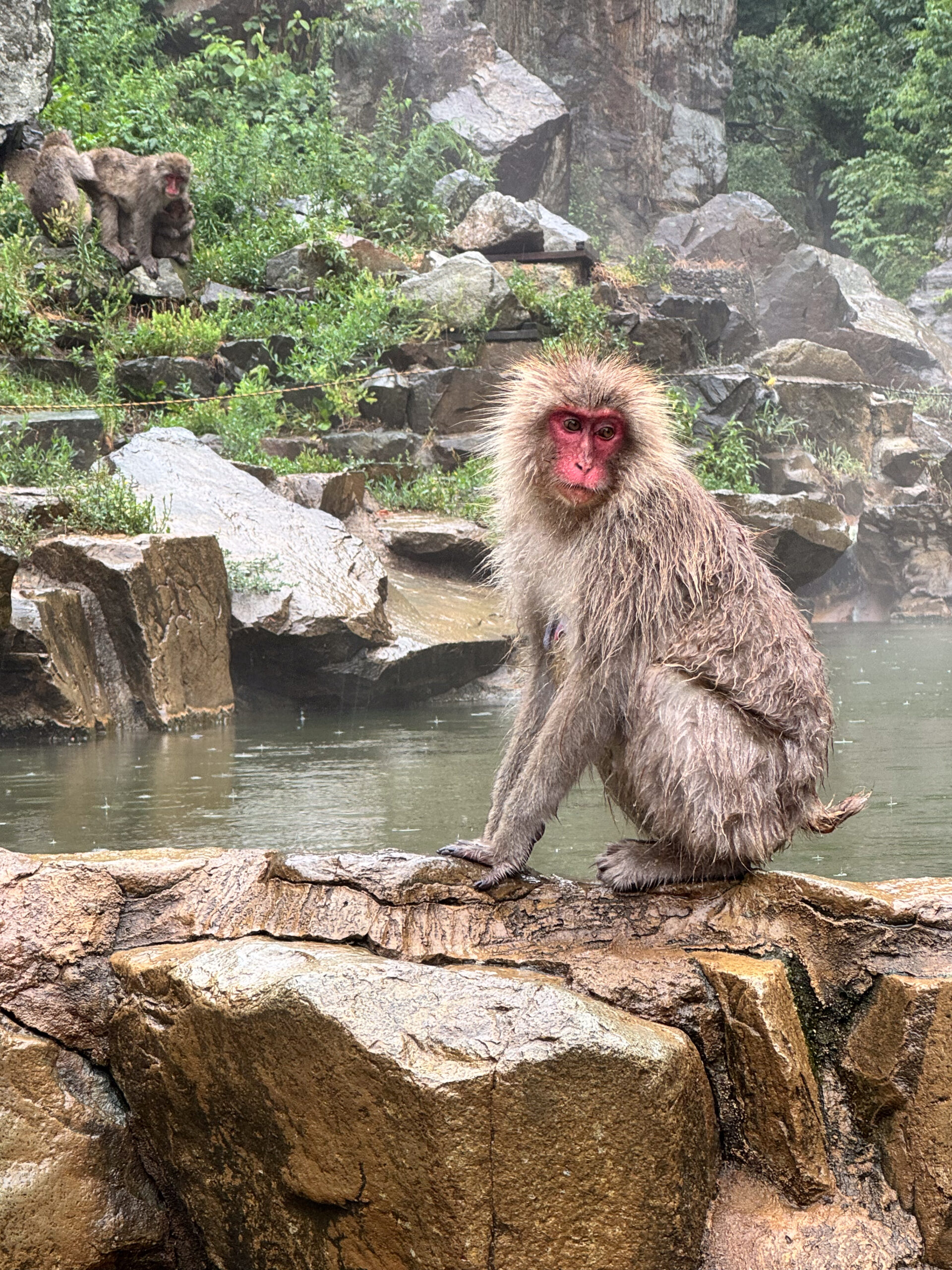
The macaques and their babies posed for us so picturesquely. By the way, a long time ago, they learned to warm up in the hot springs during the winter, and later a separate bath was built just for them in the park. They are capable of traveling long distances, but thanks to the food and the hot springs, they choose to stay in the park. Some macaques do manage to wander off from the park, though.
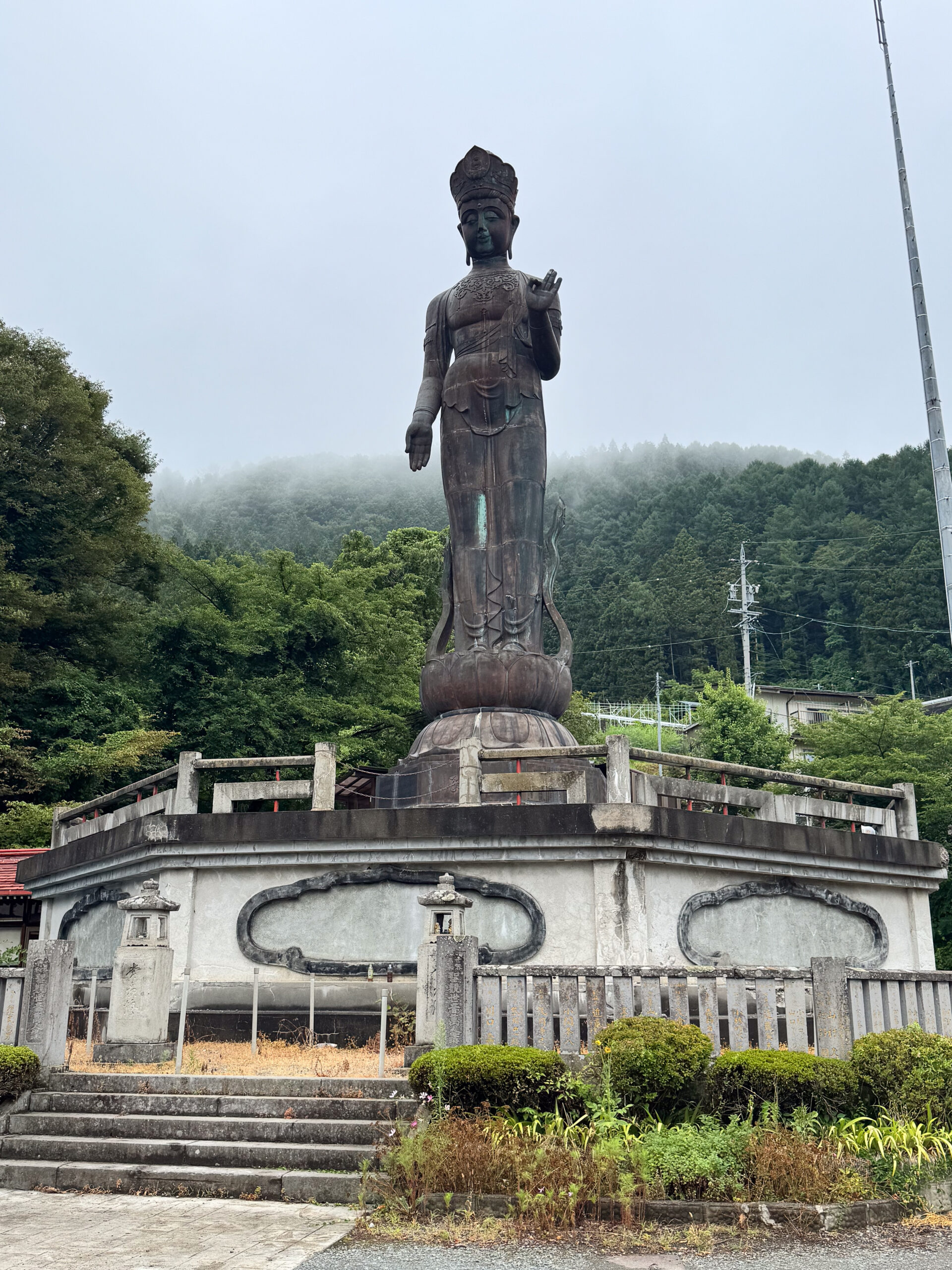
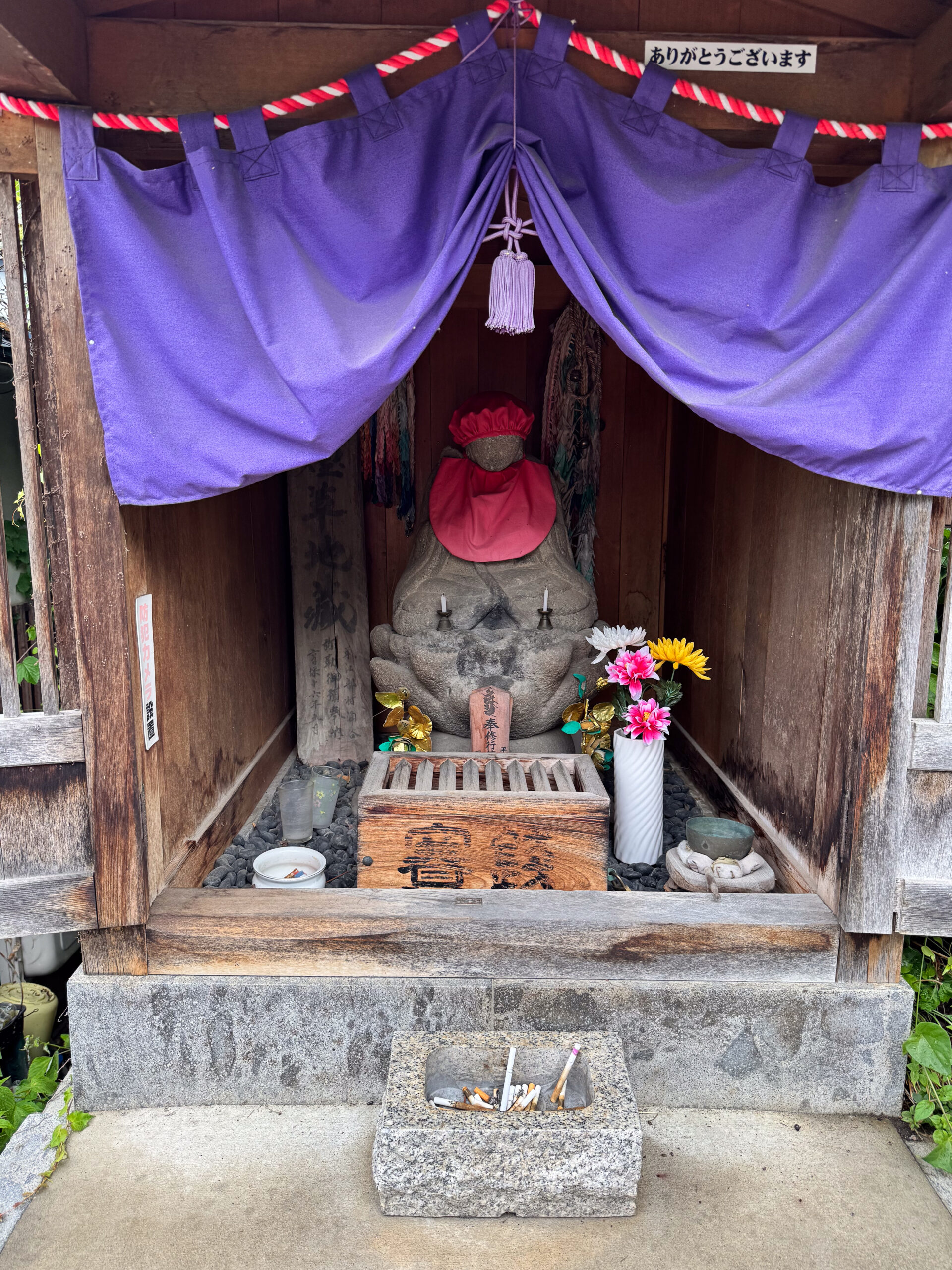
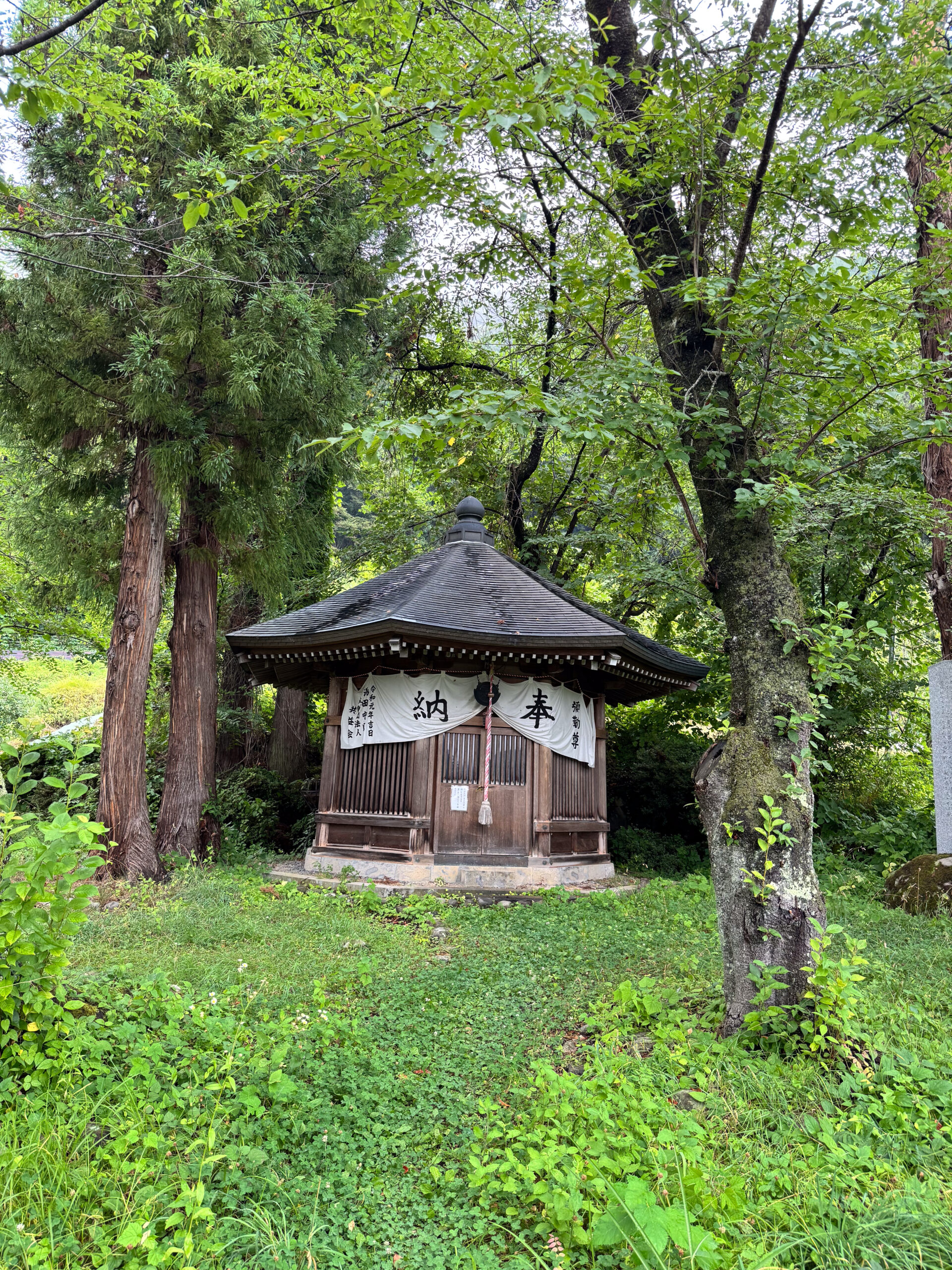
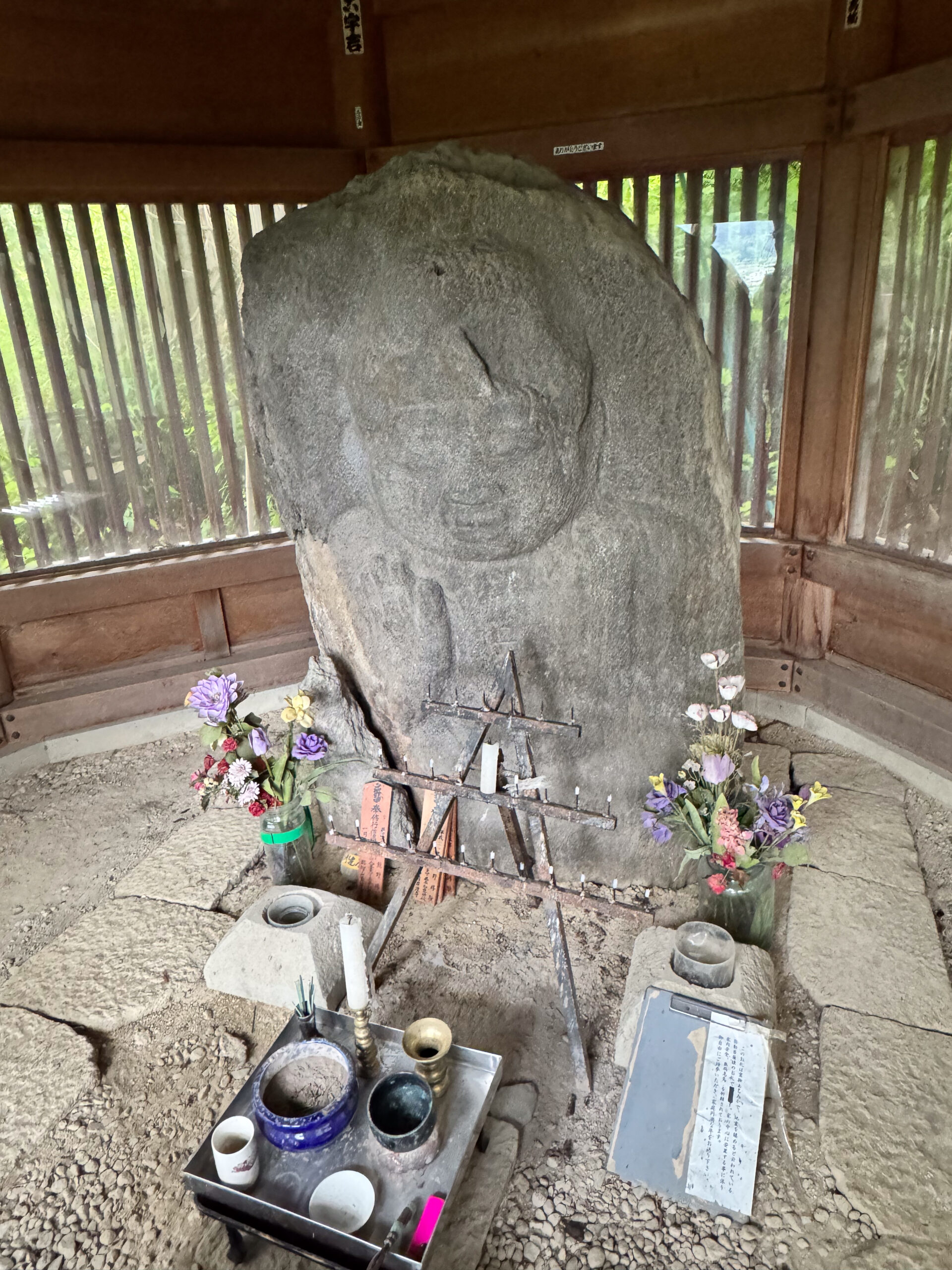
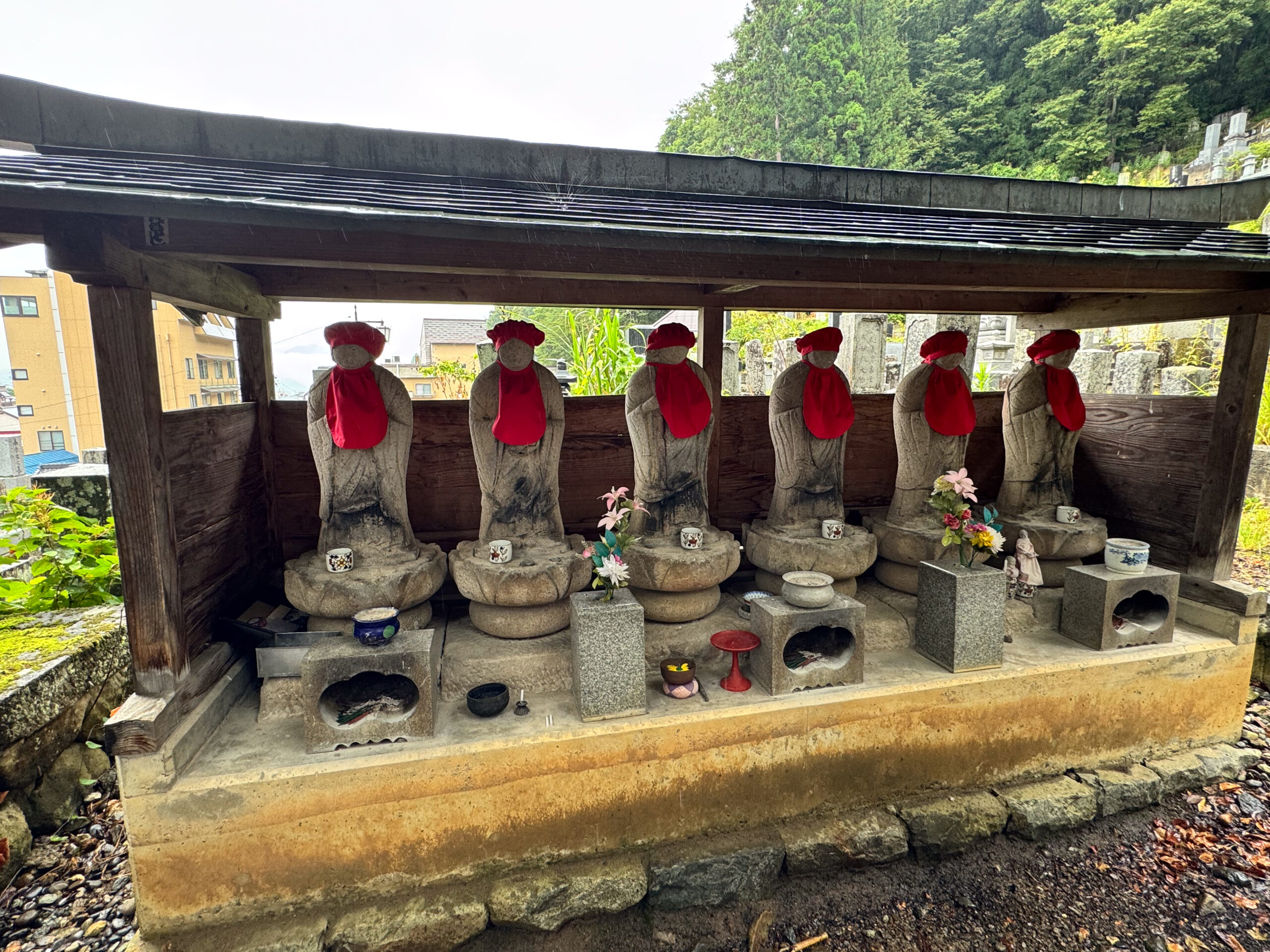
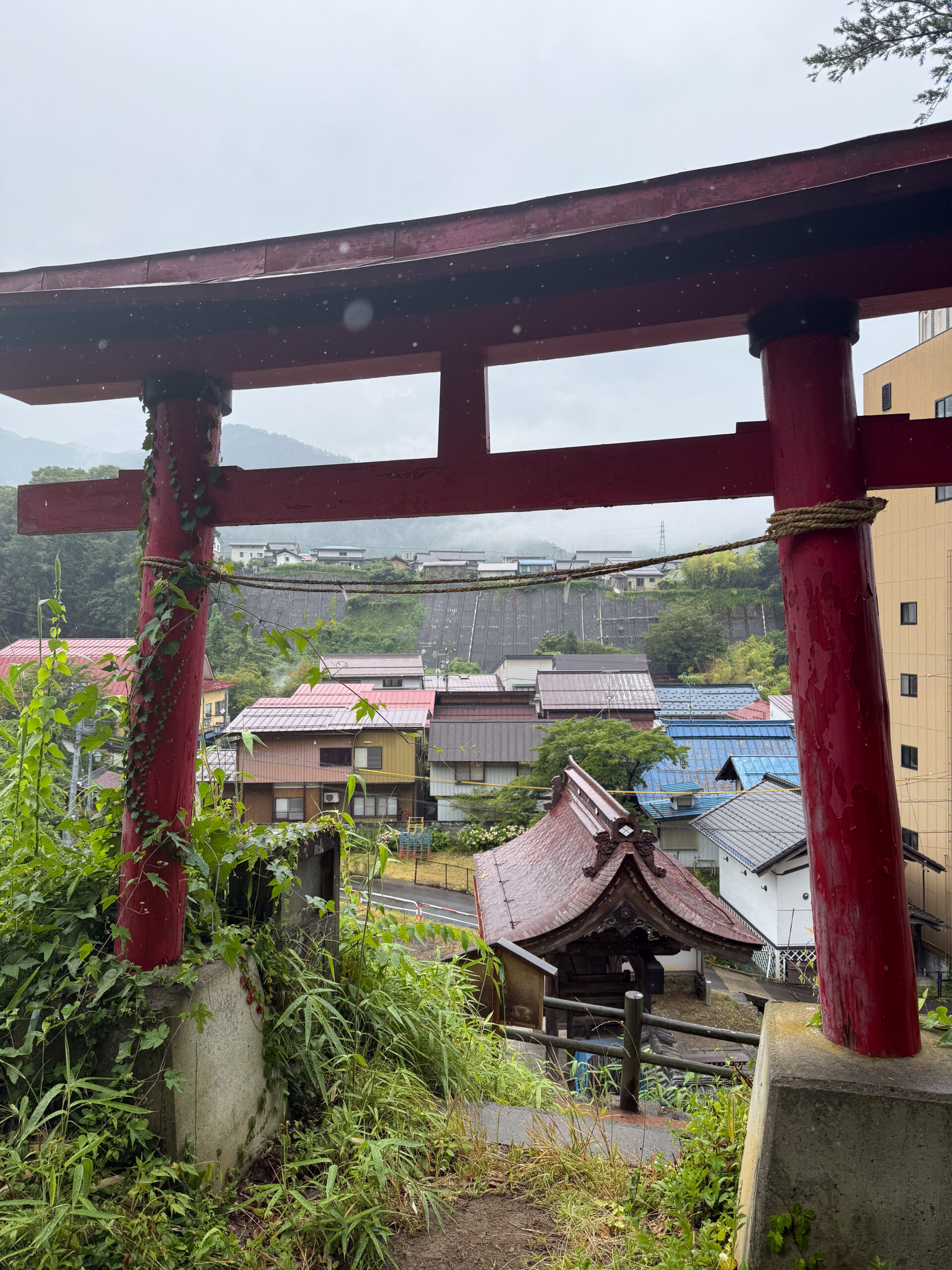
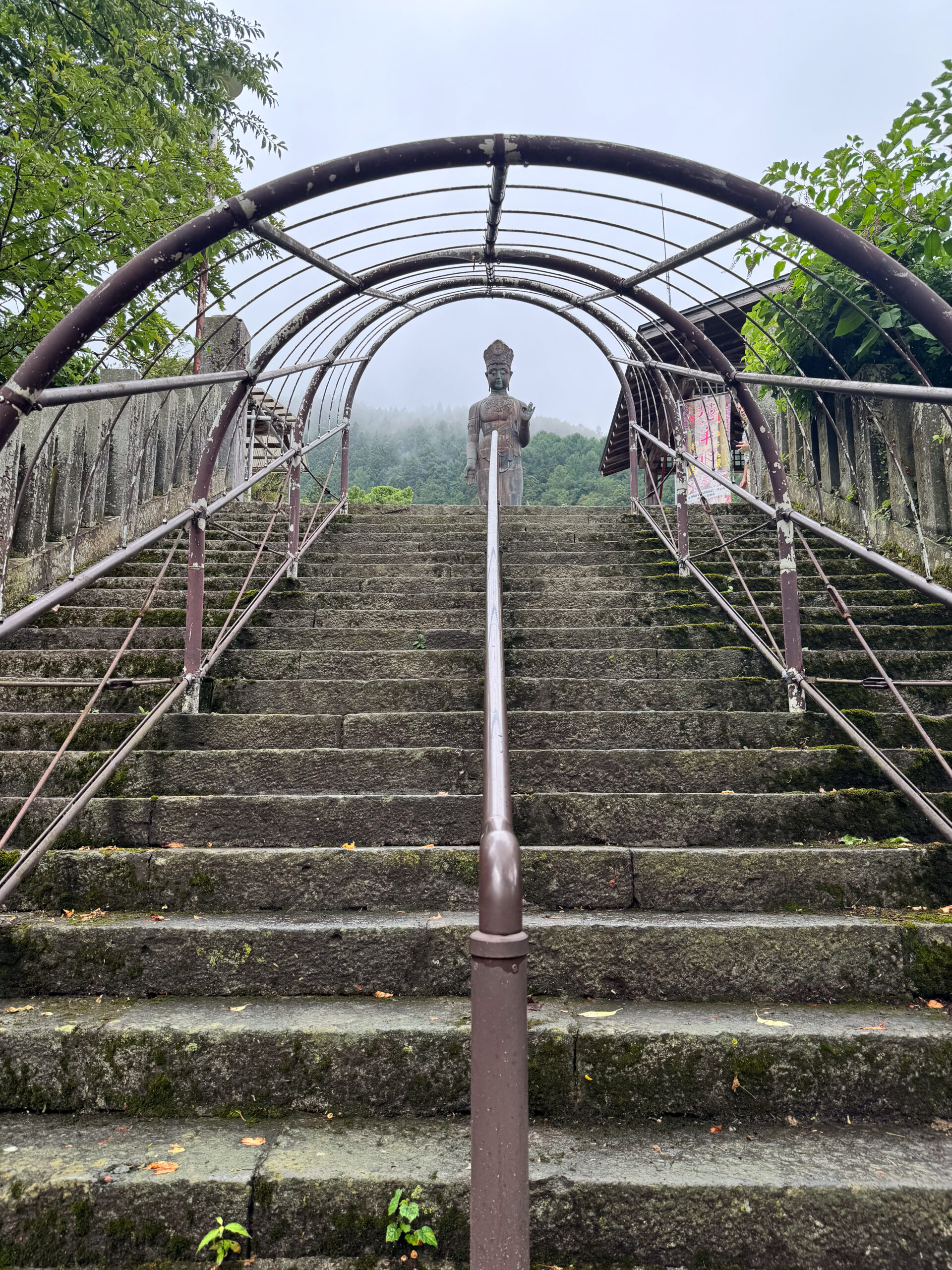
We walked to the opposite end of the village and found a massive 25-meter statue of the Buddhist Goddess of Mercy, Kannon, which was erected in the 60s as an appeal for world peace (partly following the tragic events in Hiroshima and Nagasaki at the end of WWII). Actually, there are quite a few even larger statues of this goddess in Japan (the biggest one, standing at 100 meters, is in the city of Sendai). Not far from Kannon, inside a small Shinto shrine, sat a very ancient stone statue of the Buddha of the Future. A lock was installed on the outside of the shrine—specifically to keep the monkeys from breaking in! Just a couple of minutes’ walk down the slope is Tabako Jizo, a small stone statue of the patron deity of travelers and the suffering. This altar was created for pilgrims who came to heal at the hot springs but couldn’t overcome their tobacco addiction. To this day, smokers from all over Japan come here to leave their last pack of cigarettes for the deity and ask for the strength to quit, or they light and leave a cigarette at its base as a “treat” in exchange for lung protection and longevity.
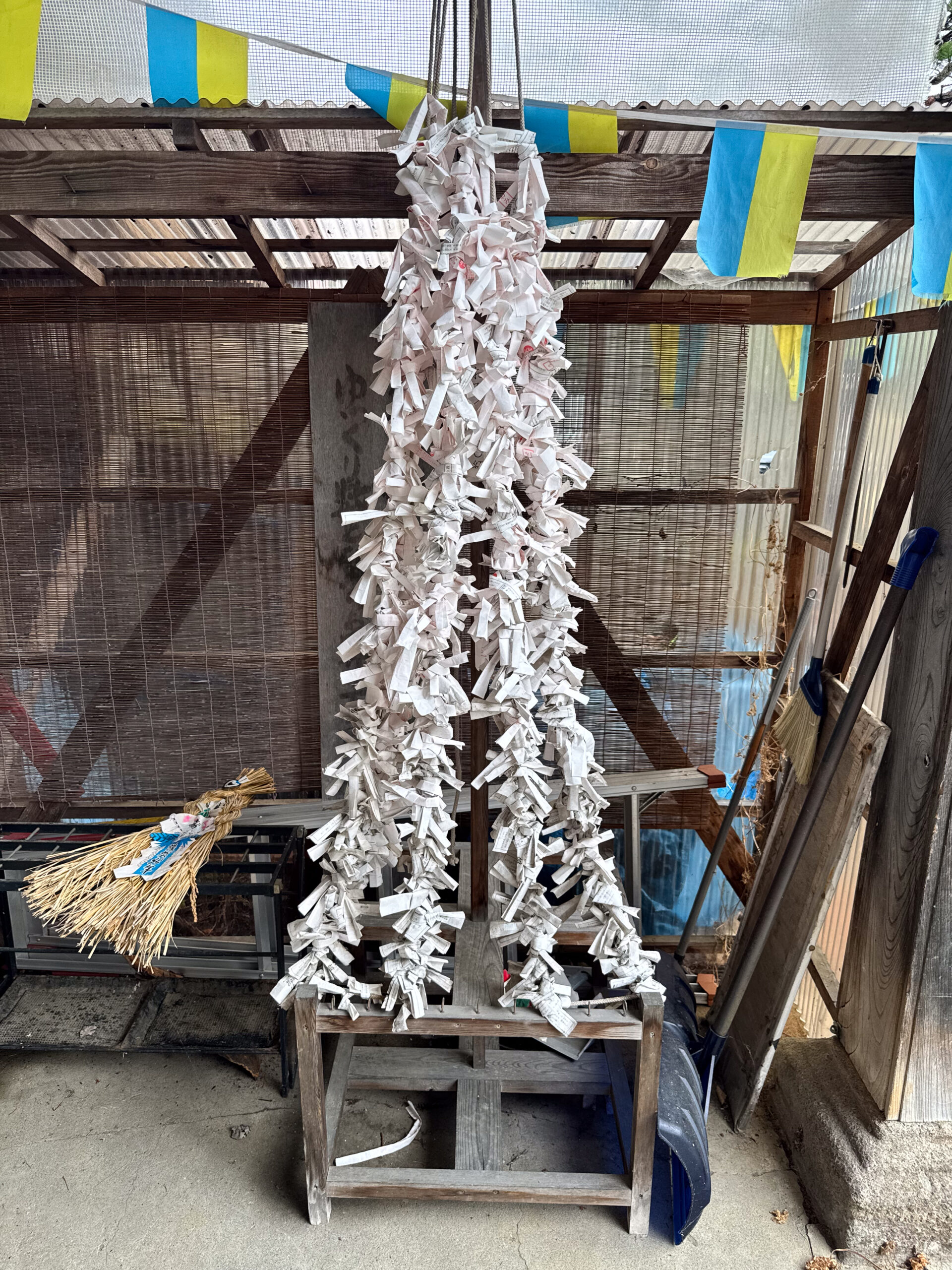
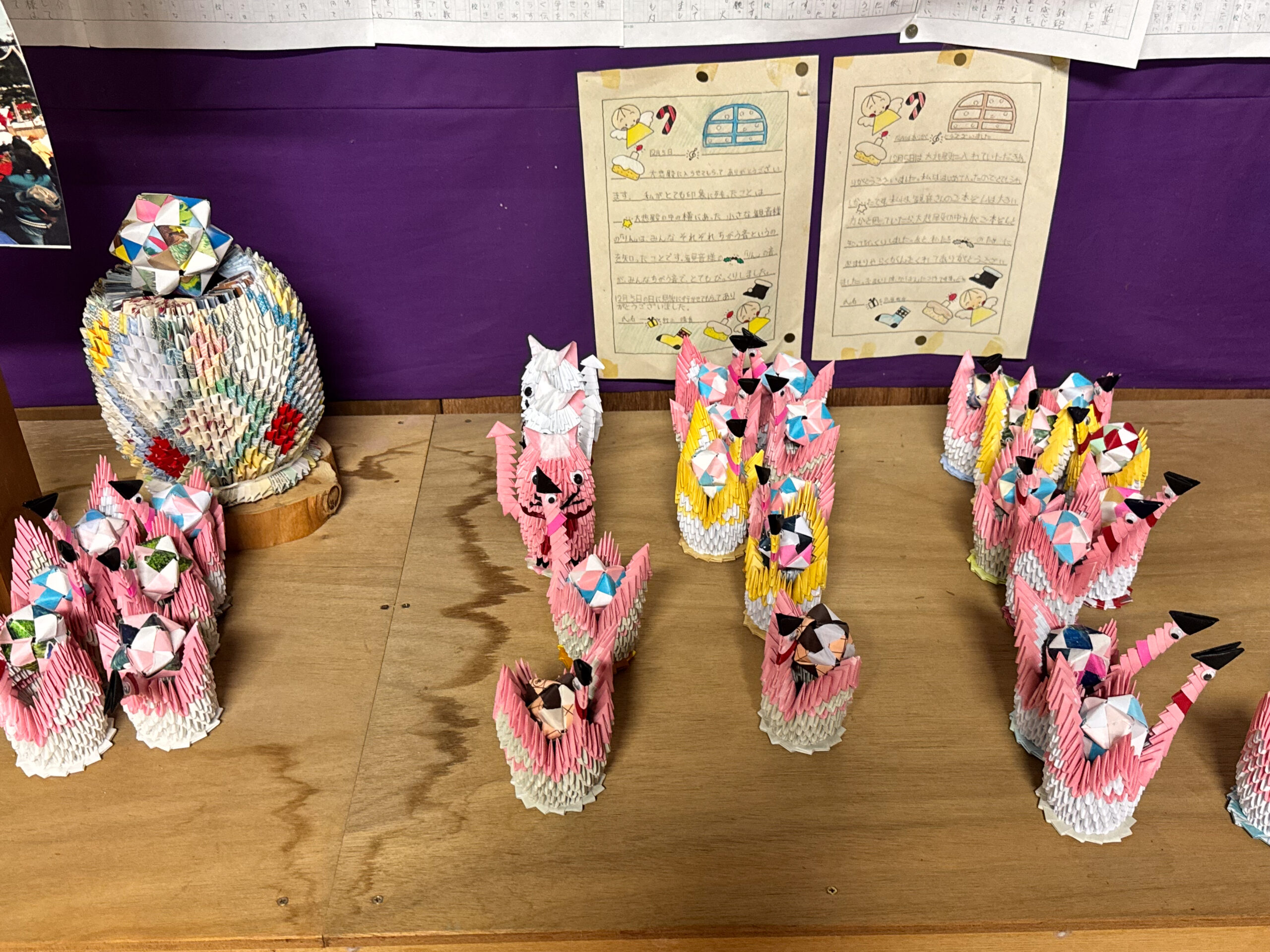
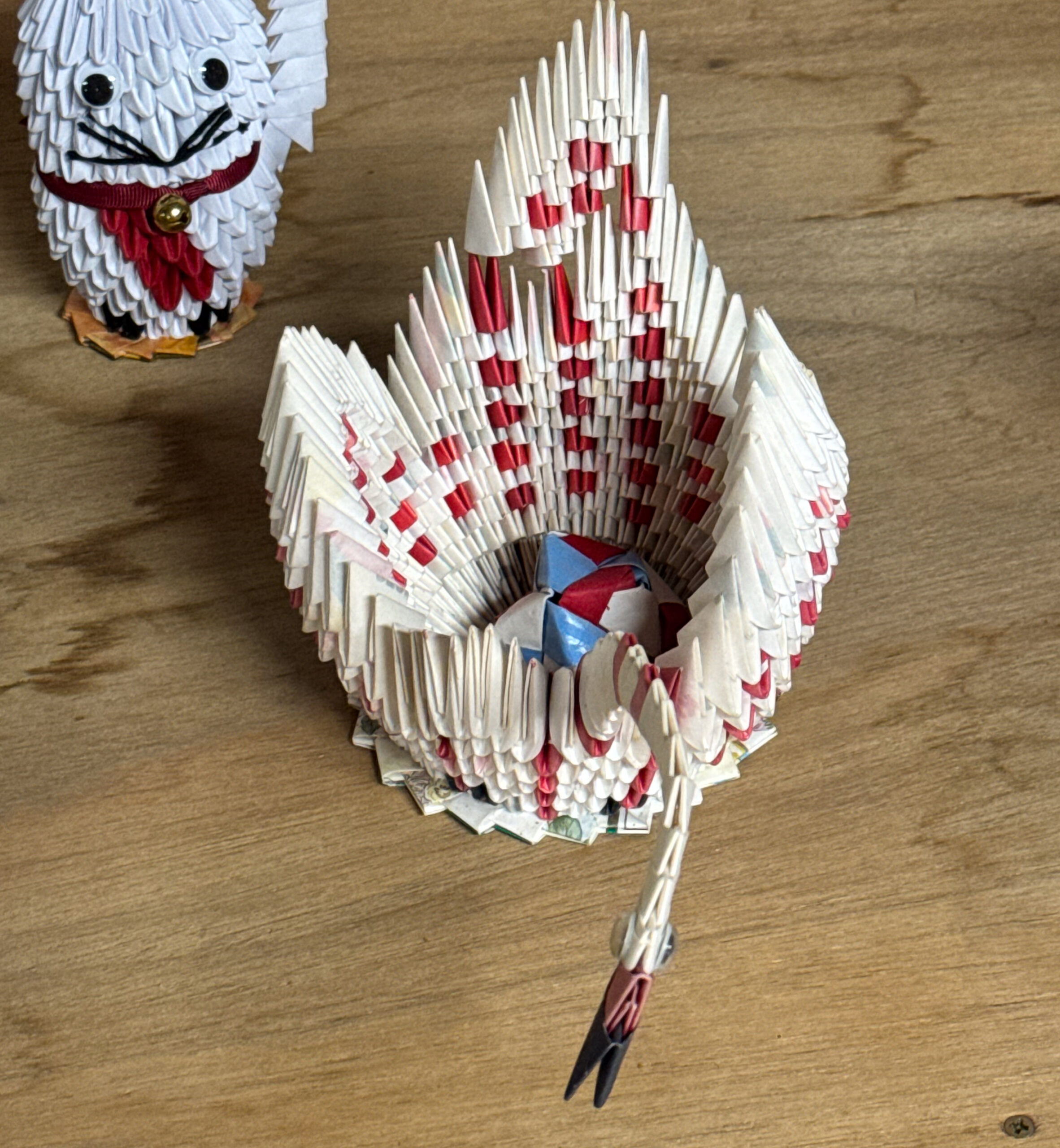
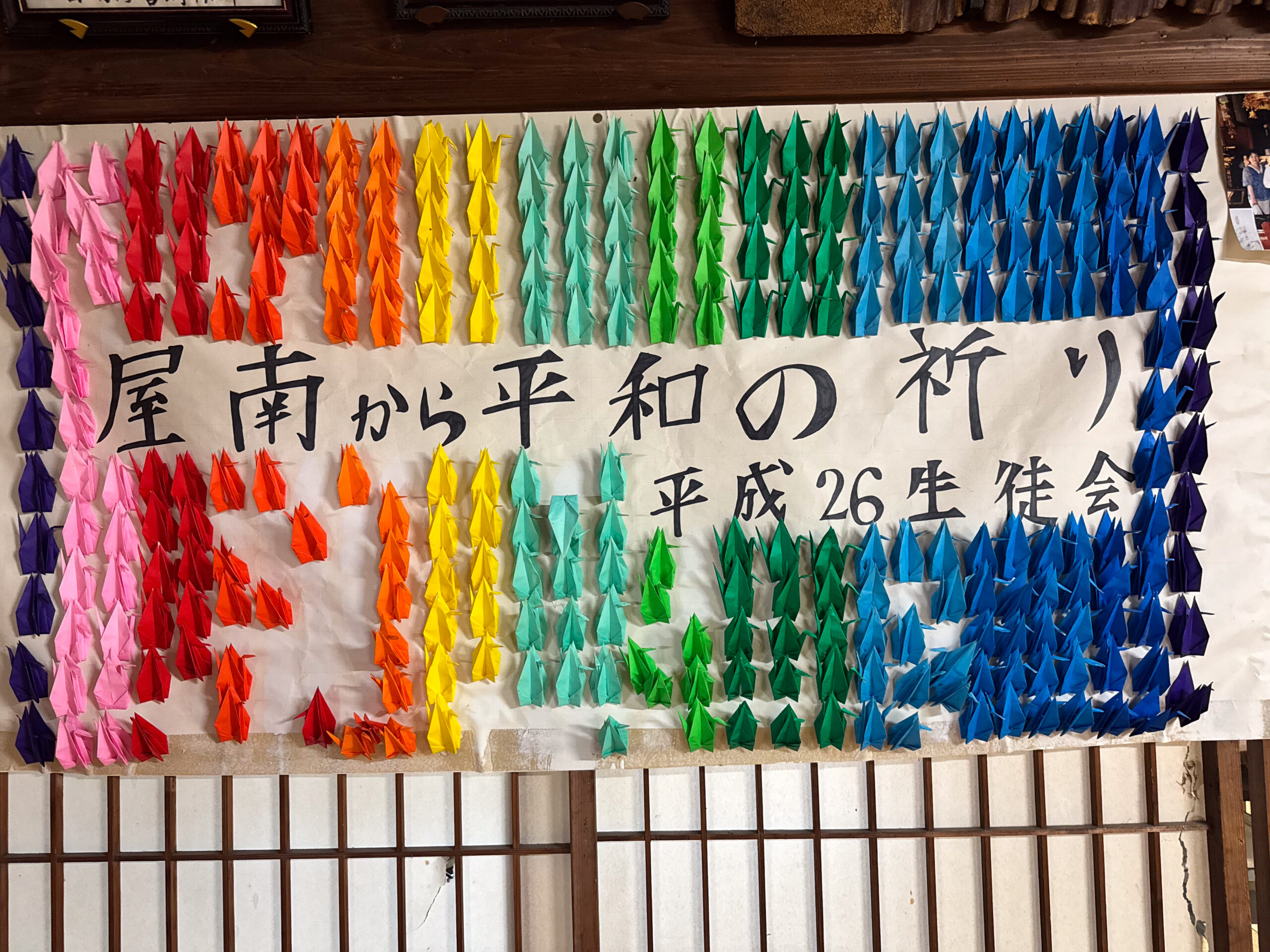
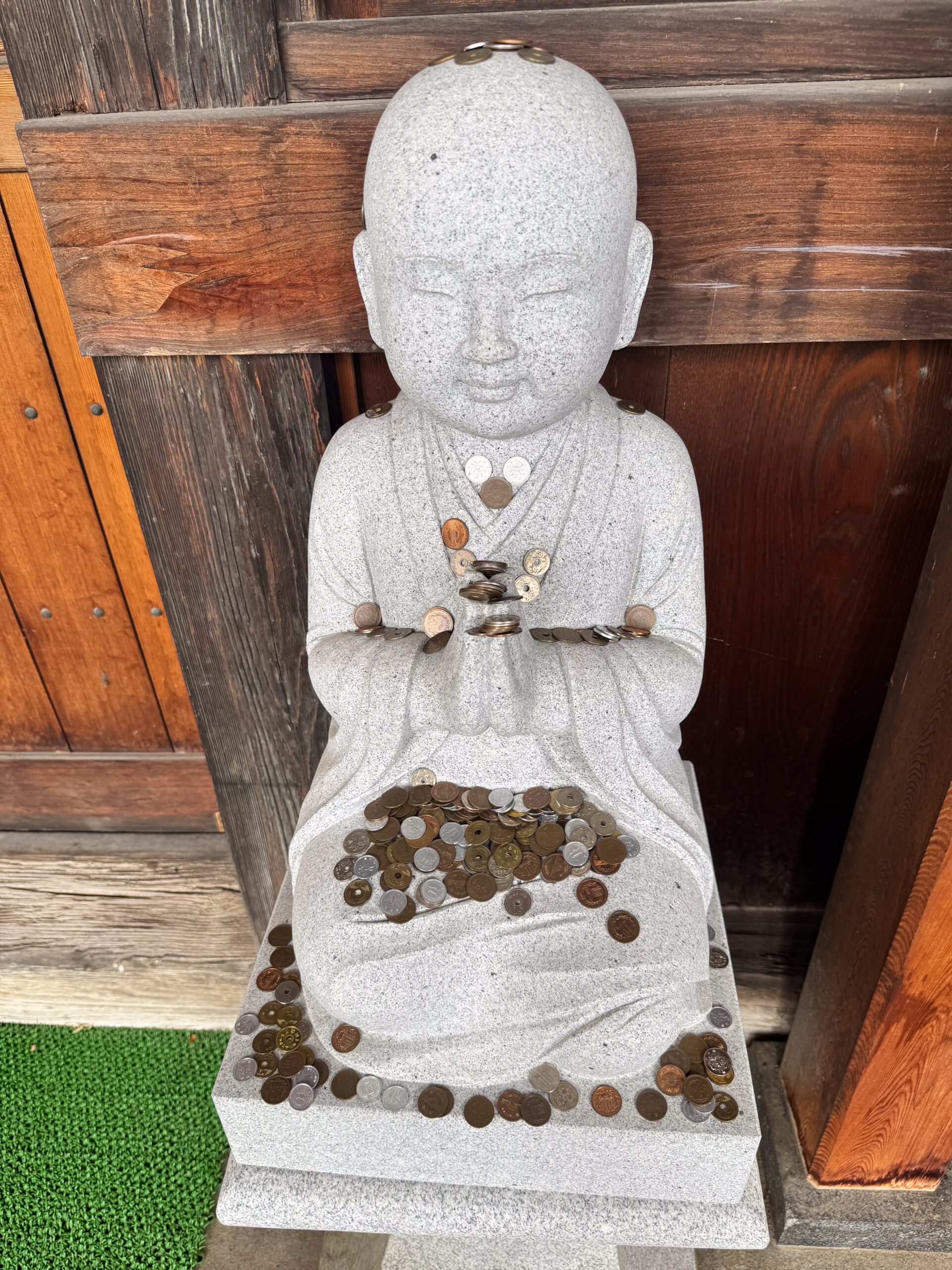
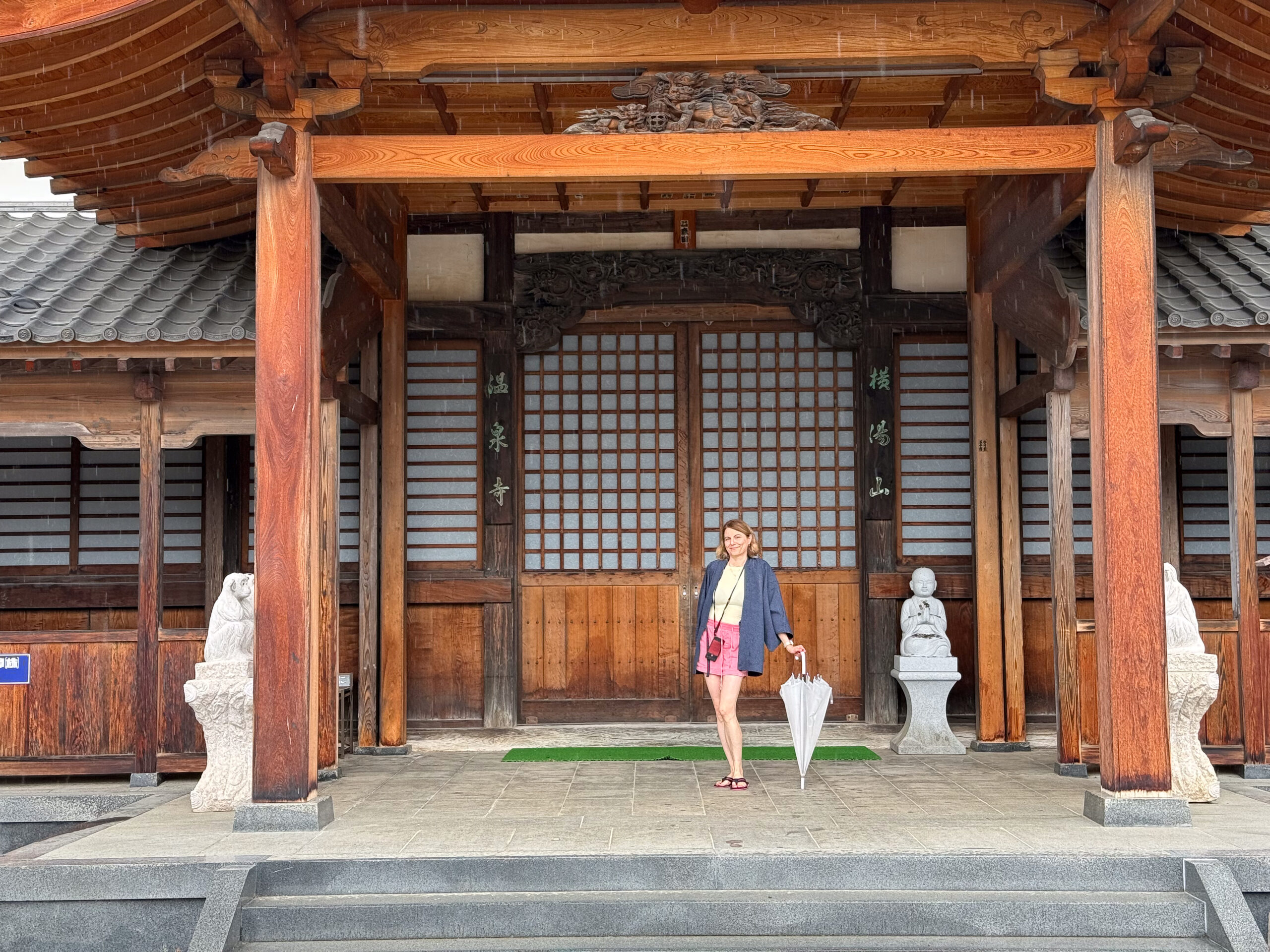
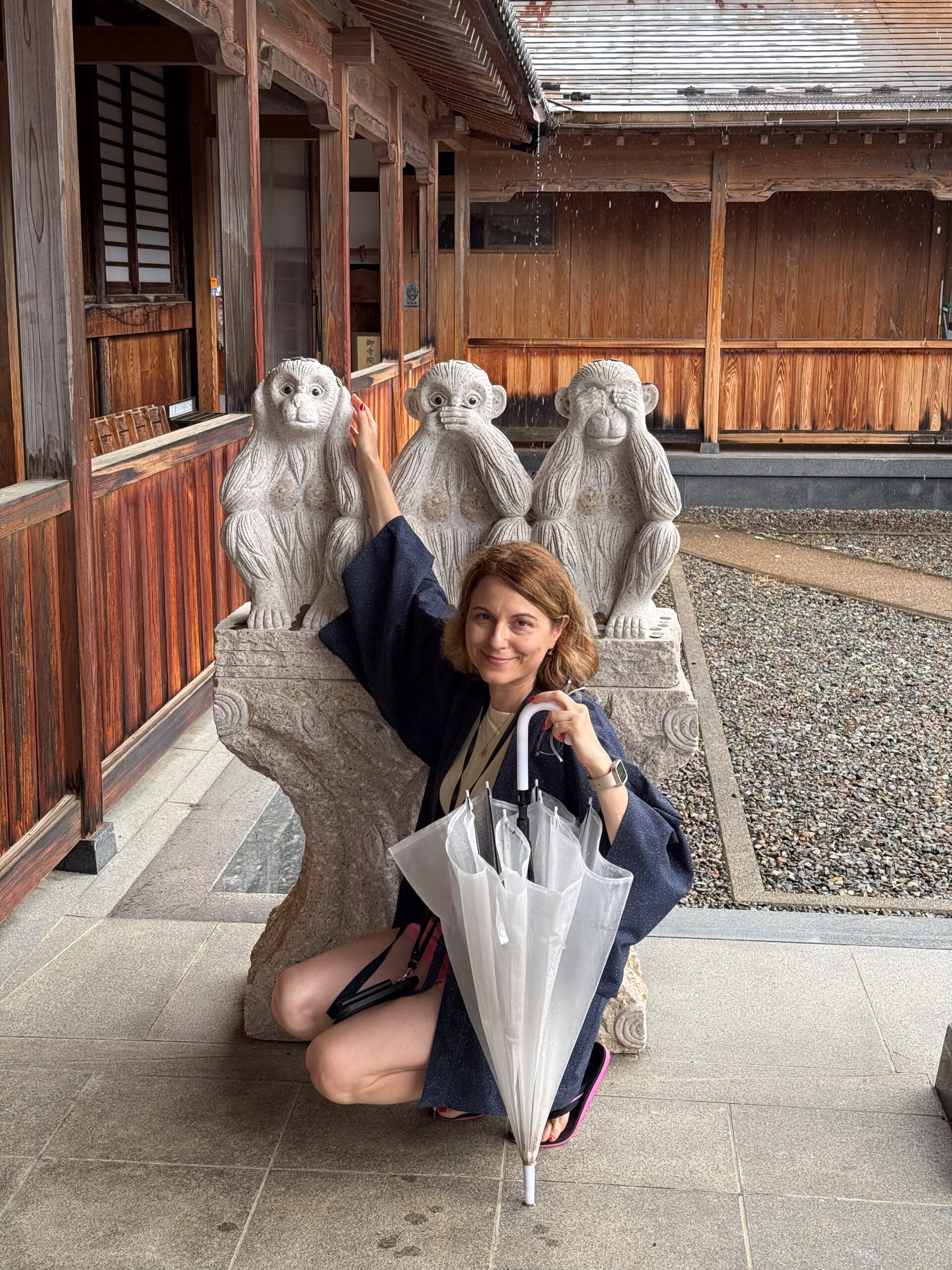
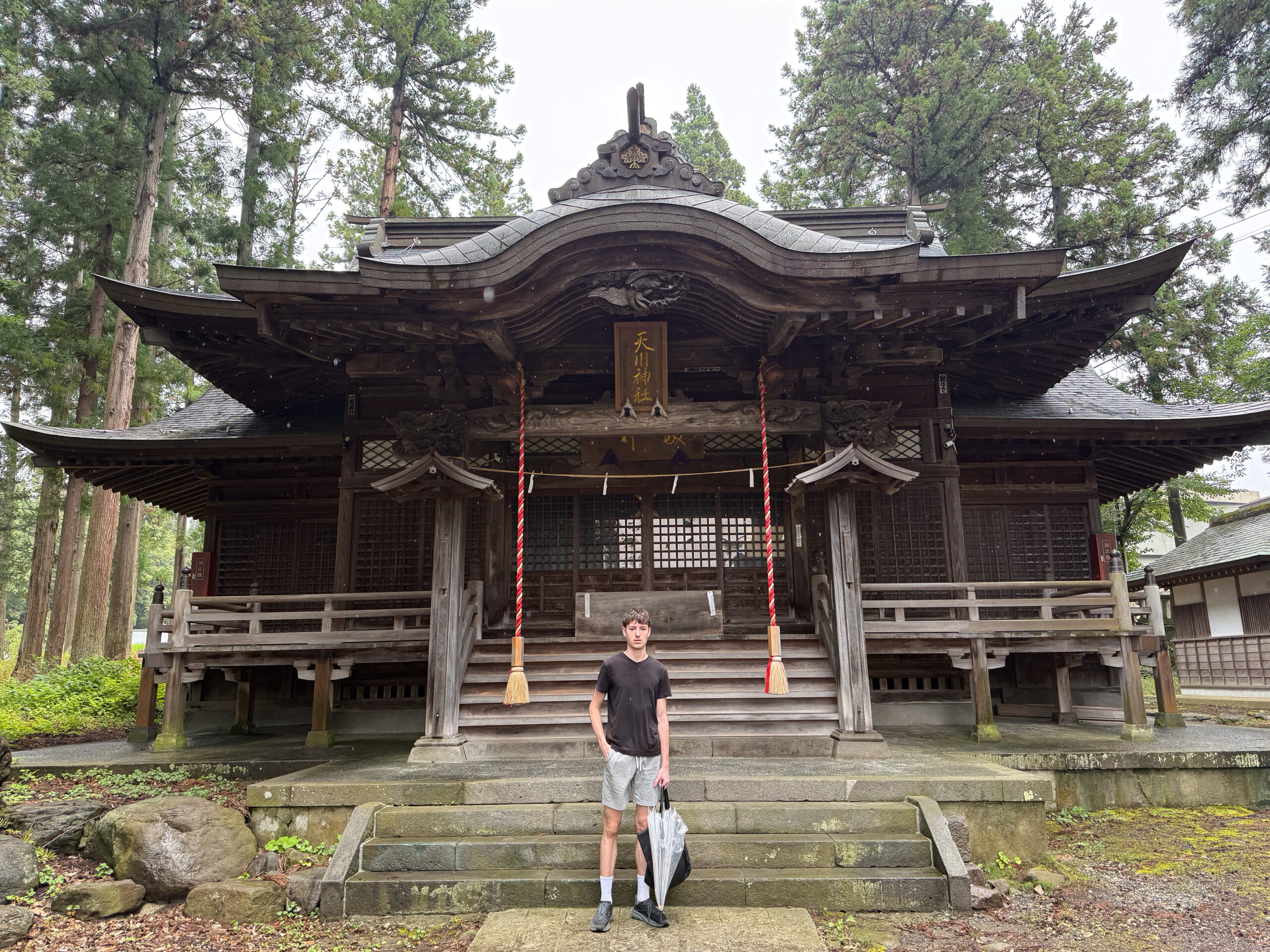
In Japan, Shintoism and Buddhism have existed for centuries not as competing religions, but as a single syncretic system called Shinbutsu-shugo, where ancient Japanese deities (kami) were considered local earthly incarnations of Buddhas. This deep religious synthesis still defines the everyday lives of Japanese people, who traditionally celebrate births and weddings with Shinto rituals, while funerals and memorial services are held in Buddhist temples. Despite an official state decree to separate the religions in 1868, their architecture and rituals remain inextricably intertwined: on the grounds of a single complex, you will almost always find both Shinto torii gates and Buddhist pagodas, and the Japanese themselves often pray at both Shinto shrines and Buddhist temples without making strict distinctions between them. Inside the Buddhist temple, we saw beautiful origami and paper fortunes called omikuji. Few people know that the art of paper folding actually originated as a temple ritual: the figures were initially created by monks to decorate altars and make offerings to the gods. Today in Japanese temples, you can often find garlands of a thousand brightly colored paper cranes (senbazuru), which Japanese people painstakingly fold and bring here as a sincere prayer for the recovery of a loved one or the fulfillment of a cherished wish. The legend of the thousand cranes is connected to Sadako Sasaki, a little girl who was two years old when she survived the atomic bombing in Hiroshima and later developed leukemia. While in the hospital, she remembered an old Japanese belief: the gods will grant a wish to anyone who folds a thousand paper cranes (senbazuru). Dreaming of recovery, Sadako diligently made the birds out of any paper scraps she could find, but she only managed to finish 644 before her death in 1955. Her friends folded the remaining cranes, and ever since, these origami figures have become Japan’s main symbol of hope, healing, and prayers for world peace. Right next to the origami, we also saw traditional omikuji scrolls; if you draw bad luck, you carefully tie the paper to a tree branch or a special stand to leave the misfortune behind under the protection of higher powers. Pilgrims also frequently leave coins on religious statues as offerings (osaisen) for granted wishes or safe travels, trying to carefully balance them on the head or shoulders of the statue: according to belief, if the coin stays put and doesn’t fall, the requested wish will definitely come true. In stark contrast to the cozy temples in the valleys, the Shinto shrines in this village were hidden at the very tops of the hills, so you always had to climb steep, moss-covered stone stairs, braving a tough ascent just to meet the mountain spirits.