The Tokyo Oven and the Great Subway Quest
When we arrived back in Tokyo, the city was its own kind of hot pot. It was already over 33°C (91°F), and on the worst days it hit 36°C, with suffocating humidity that made it feel closer to 40°C. We felt like we were literally boiling in our own sweat. We bought personal electric fans, constantly chugged ion drinks, and ate special salt tablets provided by our hotel just to replace what we were sweating out.
But the real stress wasn’t the heat. It was the Tokyo transit system.
If you don’t speak Japanese, the Tokyo subway is a high-stakes escape room. Imagine a gigantic anthill with millions of ants moving in every possible direction through thousands of holes. That is Tokyo. Coming from the Toronto subway, which has just a few simple lines, my mind was blown. Tokyo has 13 underground subway lines, plus a huge network of surface rail lines operated by different companies, all intersecting at massive hubs.
Even a simple transfer can involve so many exits, levels, and corridors that you end up completely lost. Almost two weeks into our trip, we were still getting confused. We navigated using Google Maps and Apple Maps, and eventually I discovered a lifesaver: Google Maps can track your progress while you’re traveling, showing the station you’re approaching, entrance and exit numbers, and departure times. Sadly, I figured out how useful this was a little late.
In the beginning, I was in charge of navigation. After a few “strategic errors”—like taking us three stops in the wrong direction—I happily surrendered navigation duties to Mikhail and Sasha. It became a lot more relaxing once I just blindly followed them!
Transit Card Chaos and High-Tech Toilets
Japan is a beautiful paradox: it is simultaneously living in the year 3000 and the year 1990.
Our hotel was near Ueno, right by the smaller Okachimachi station. Despite doing my research on Suica and Pasmo transit cards, our first day in the subway was a disaster. Mikhail and I easily added digital transit cards to our phones, but we couldn’t get them to work for the kids. We had to withdraw cash and buy physical cards instead.
Eventually, we managed to transfer one physical card to a digital Pasmo on my phone, while I moved my own card to my Apple Watch. So I was tapping myself in with my watch and my son in with my phone! My other son finally got a card on his phone, but Apple Pay wouldn’t work for him, so we still had to top it up with cash at the machines.
Between the cards, getting lost, and running onto the wrong trains, we had a lot of adventures. More than once, we got trapped by the turnstiles because something had gone wrong with our tap. The station attendants had to perform some kind of digital magic on our phones to release us and hand us paper tickets instead.
And when we traveled to Yudanaka to reach our hot spring village, our high-tech transit cards suddenly became much less useful. Parts of the journey required paper tickets, and the Shinkansen added another layer of confusion: we were given two tickets each and had to understand when to insert one and when to insert both. If we hadn’t stopped to ask several locals for help, we absolutely could have missed our train. I quickly learned my golden rule of Japanese transit: arrive early, especially when you have to exchange QR codes for physical tickets at a special machine!
But then, you walk into the bathroom.
The toilets in Japan are an absolute marvel. Back home, we spent a fortune to install a bidet toilet, but in Japan heated washlet-style toilets seem to be everywhere—from tiny cafes and train stations to traditional ryokans. Heated seats, washing functions, multiple flush options: after fighting with paper train tickets, sitting down on one feels like suddenly being transported back into the future.
The Swimsuit Quest and Japanese Modesty
Before heading to our next destination, Kamakura, I had a mission: I needed a swimsuit. I had packed light and completely forgot mine, assuming I could just buy one in Tokyo. I was very, very wrong.
We were staying near Ueno and Okachimachi, right next to a massive, bustling street market where you can buy literally anything—from fresh peaches to sneakers. But a normal swimsuit? Impossible. We spent two hours wandering. I asked Gemini, I asked Google Maps. We found a few sports stores selling professional swimming gear, but no beachwear anywhere. Plus, Japanese sizing runs incredibly small, and I needed a 2XL just to get it on my body.
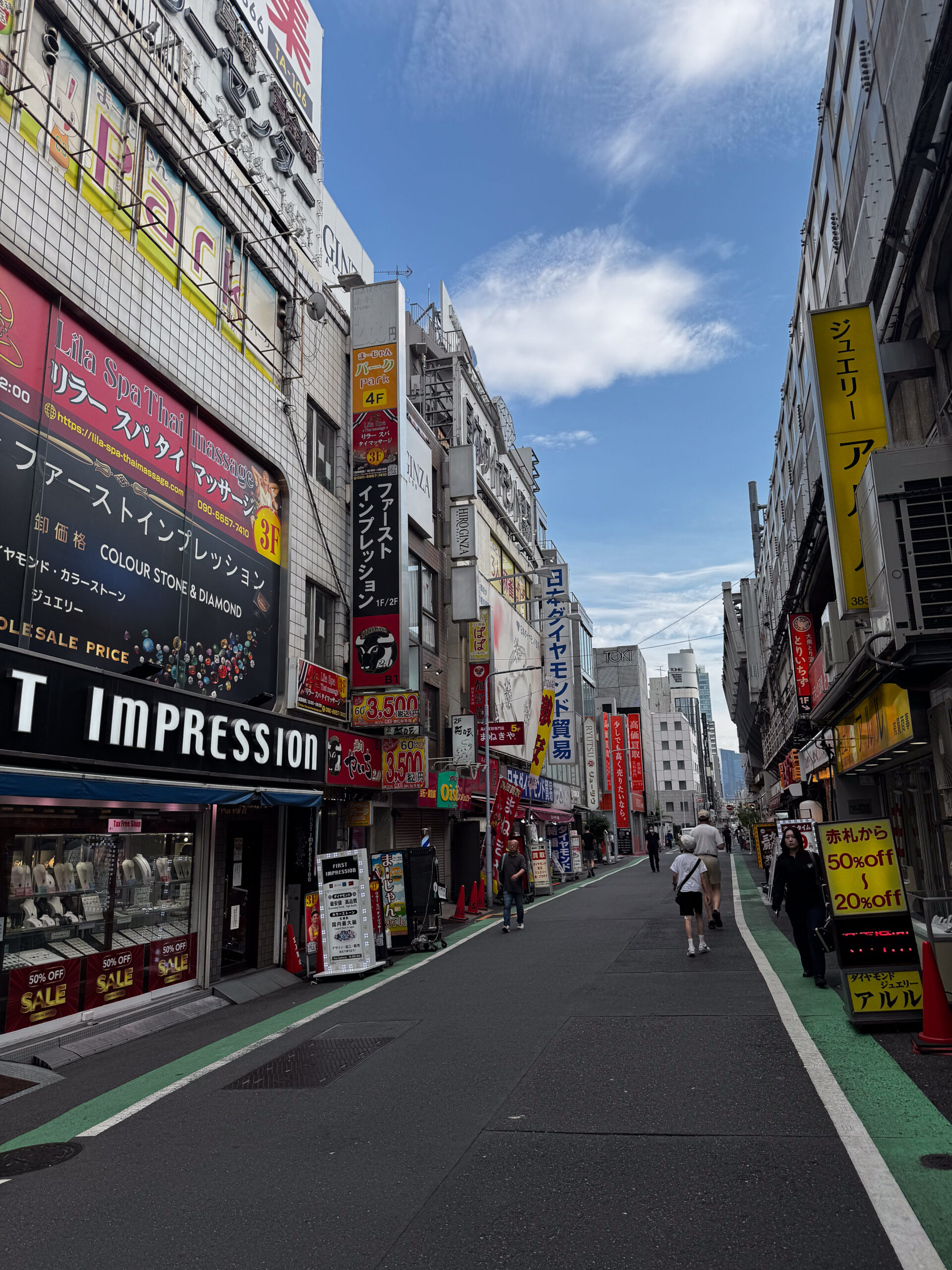
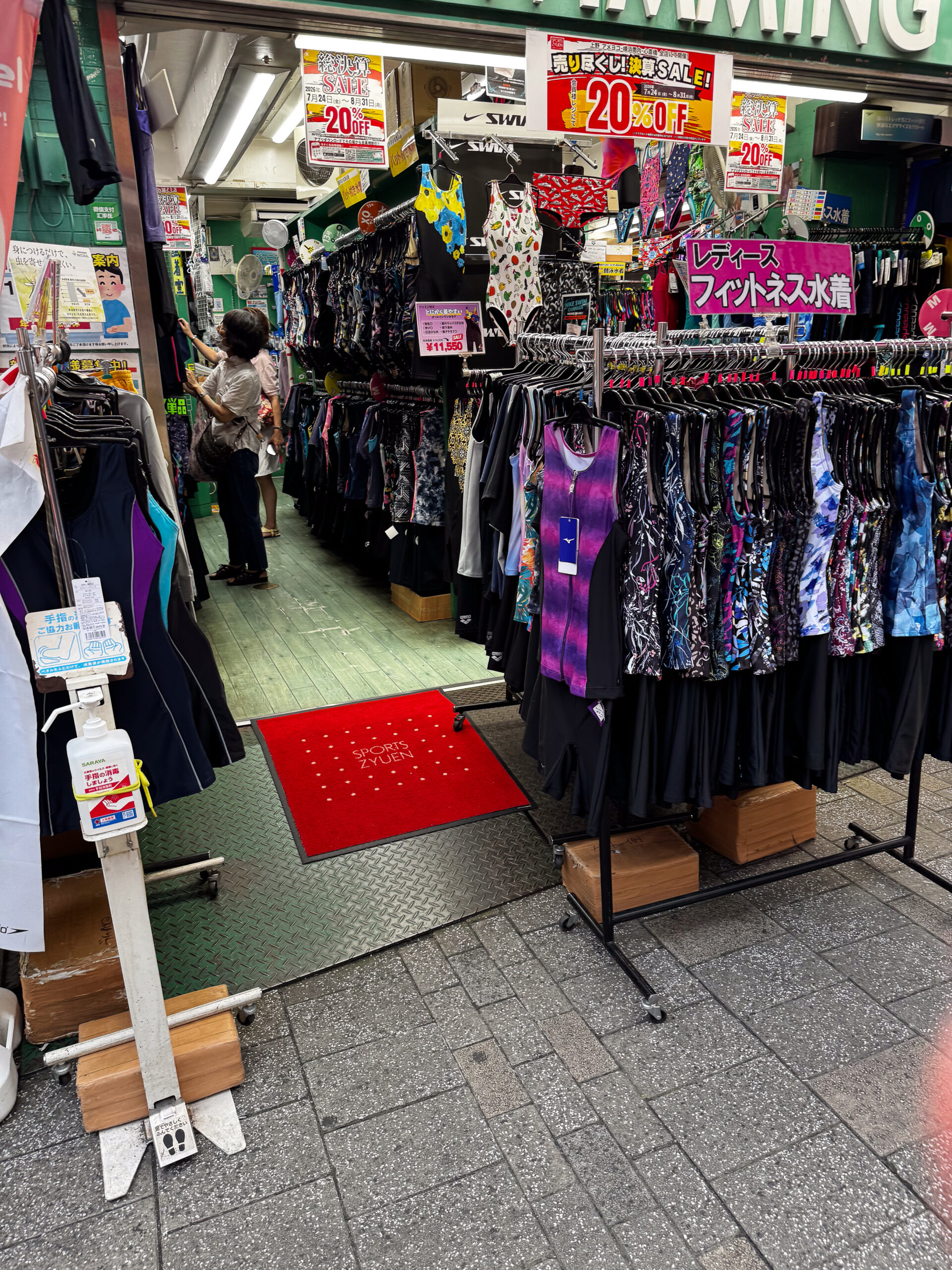
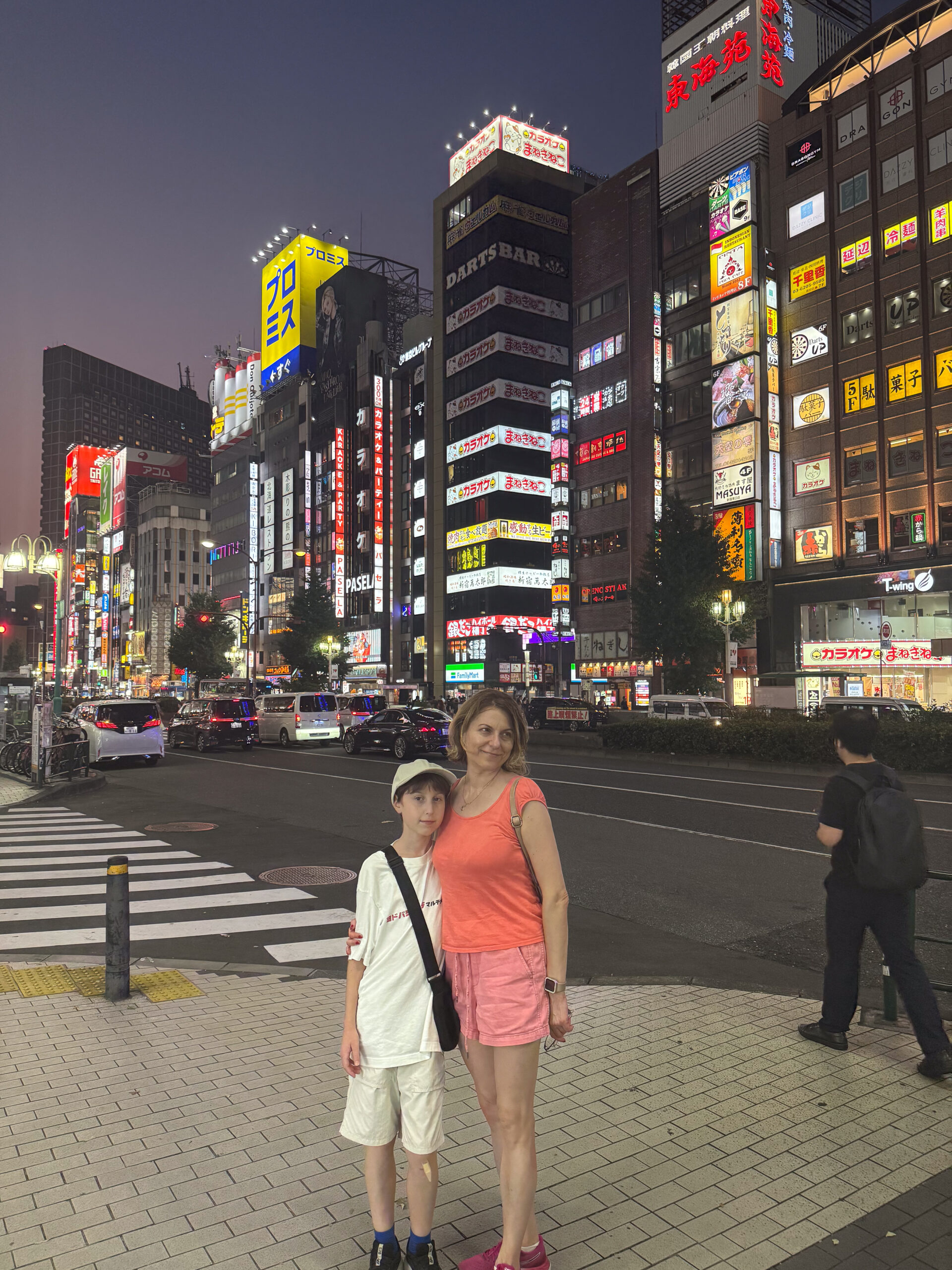
We tried Uniqlo and GU, but no luck. Finally, we asked a saleswoman in a tiny shop selling men’s trunks. She pointed us down an alleyway to a multi-story sports shop. There, on the very top floor, I finally found a one-piece swimsuit in a 2XL for a reasonable 6,600 yen.
I later tried to figure out why a regular Western-style swimsuit had been so difficult to find. One explanation was the much stronger emphasis on sun protection in Japan. We certainly noticed umbrellas, covered arms, and layers everywhere despite the heat, and many women’s swim outfits offered far more coverage than what I’m used to seeing in Canada. Whatever the reason, I learned not to assume that something as basic as a swimsuit will be easy to buy just because you’re in one of the biggest cities in the world.
Fashion Contrasts: From Conservative Commuters to Anime Maids
That preference for coverage was also noticeable in everyday fashion. A lot of the adult clothing we saw was quite conservative. When you look in some stores, it feels like every outfit is designed for meeting the Queen or working in a bank.
While shopping at a GU near a robot exhibition, I bought a slightly sheer camisole. I wanted to put it on immediately to survive the heat. The cashier looked at me with pure terror in her eyes, silently pleading with me not to wear what she apparently considered an undergarment outside. I didn’t care—I was thrilled to have something cool to wear! The locals might prefer layering up to avoid the sun, but I will gladly take the Japanese anti-dehydration drinks and wear my sheer camisole.
However, there is a wild flip side to this conservative fashion. In places like Shibuya, teenage street fashion is incredibly cool and vibrant. And then there are the “Maids.”
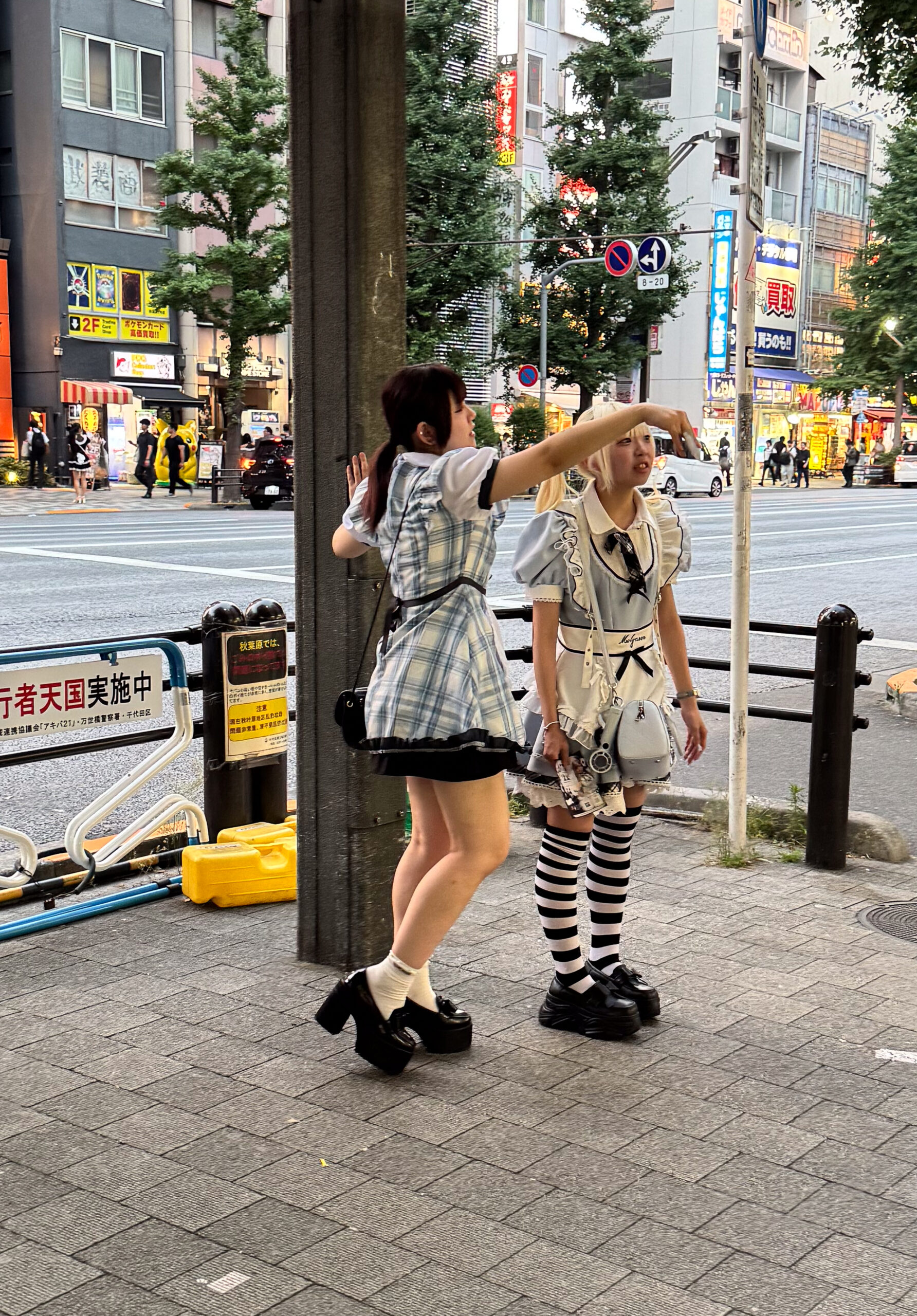
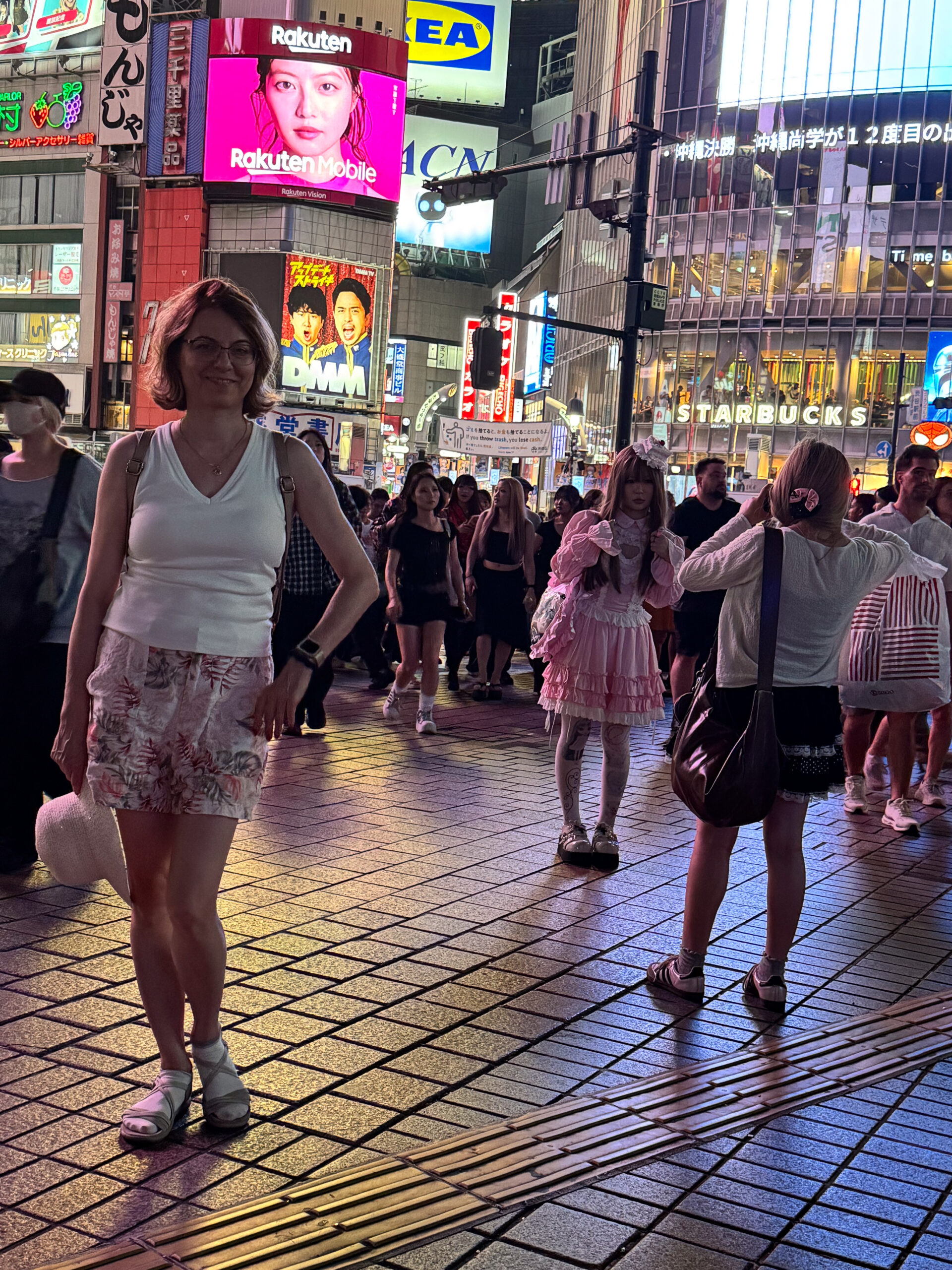
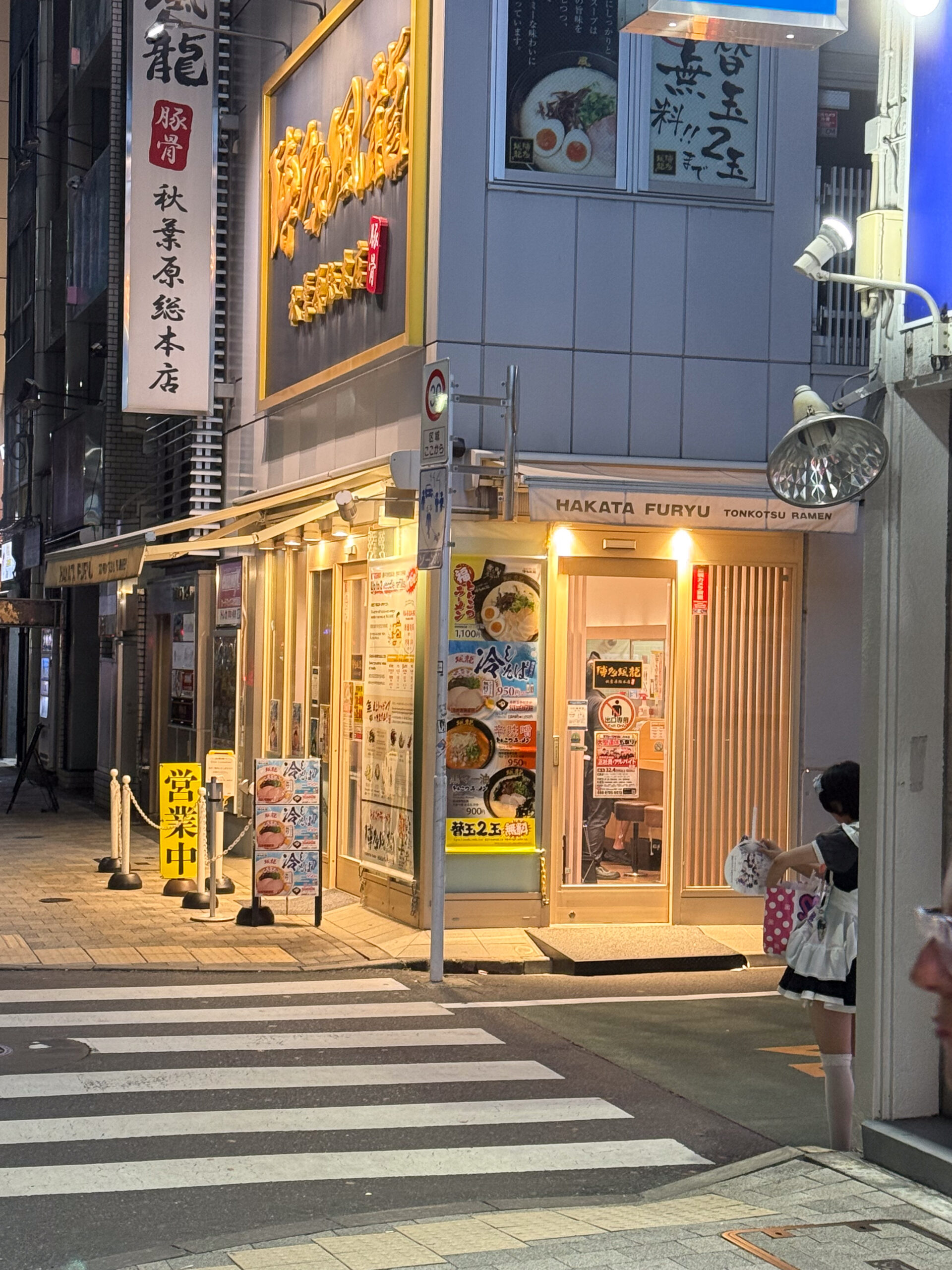
Near Akihabara, we saw girls dressed perfectly as anime maids standing on the sidewalks and inviting customers into Maid Cafes hidden on upper floors. Inside, they dance, sing, and perform “magic spells” over your food. My boys absolutely refused to go into one, but it was fascinating to see them dotting the streets!
Shopping Quirks: Face Bags and Magic Bins
Shopping in Japan comes with its own unique set of rules and mind-blowing tech.
If you want to use a fitting room, you may be asked to take your shoes off. In nicer stores, attendants can also hand you a breathable gauze cover to place over your face before trying on tops so your makeup doesn’t stain the clothes. Definitely a first for me.
But the most futuristic part of shopping is the checkout at places like Uniqlo and GU. There are no barcodes to scan one by one. You simply drop your entire basket of clothes into a large bin at the self-checkout, and the RFID tags are read almost instantly. Your whole purchase appears on the screen in a split second. It feels like magic.