Daily archives: August 20, 2026

3 posts

Japan in July: Hot. Lost. Amazed. And Completely in Love. Part 4

2026-08-01_21-05-09_IMG_5795

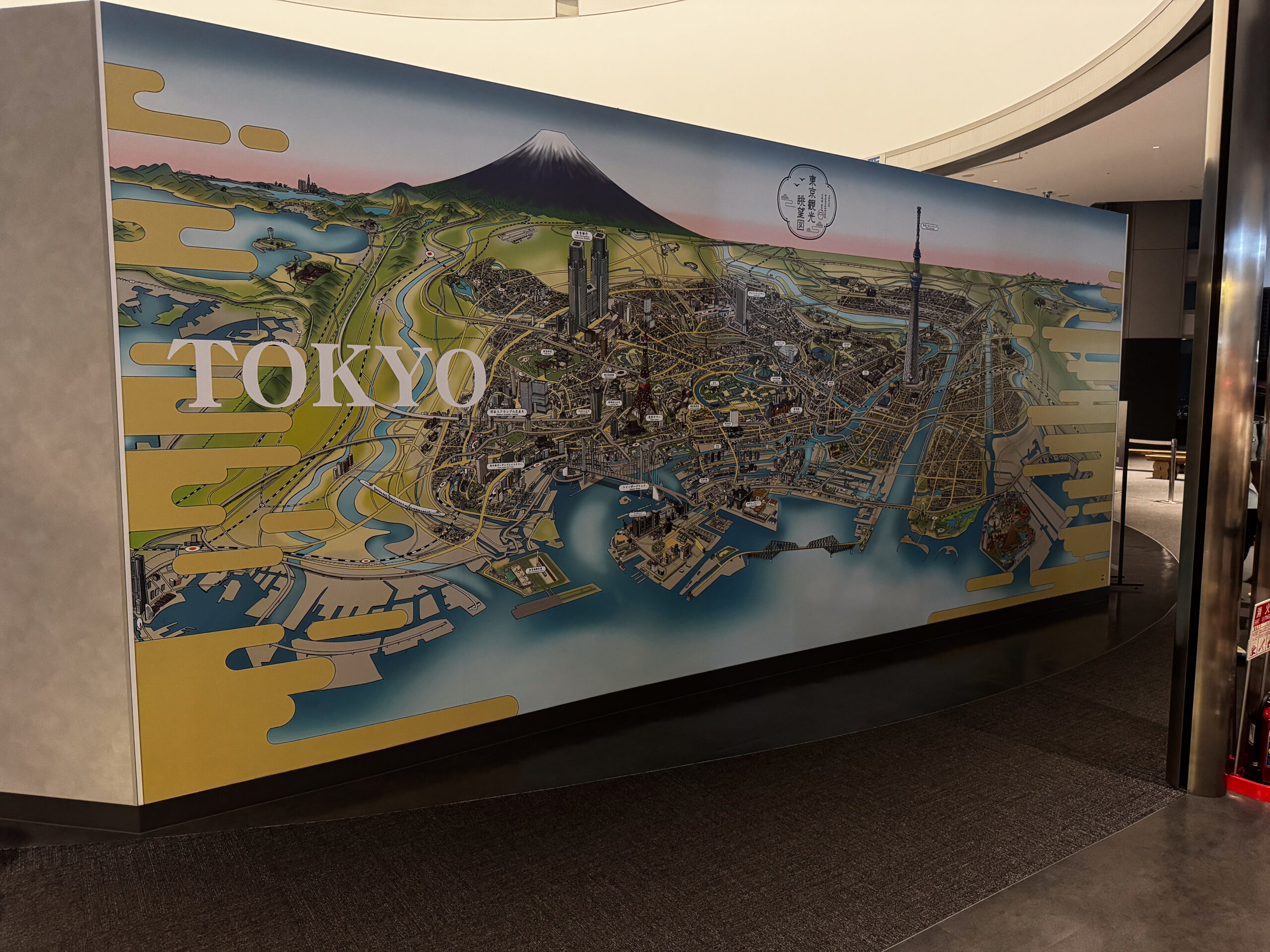
When Tokyo Got Too Hot: Getting Creative Indoors

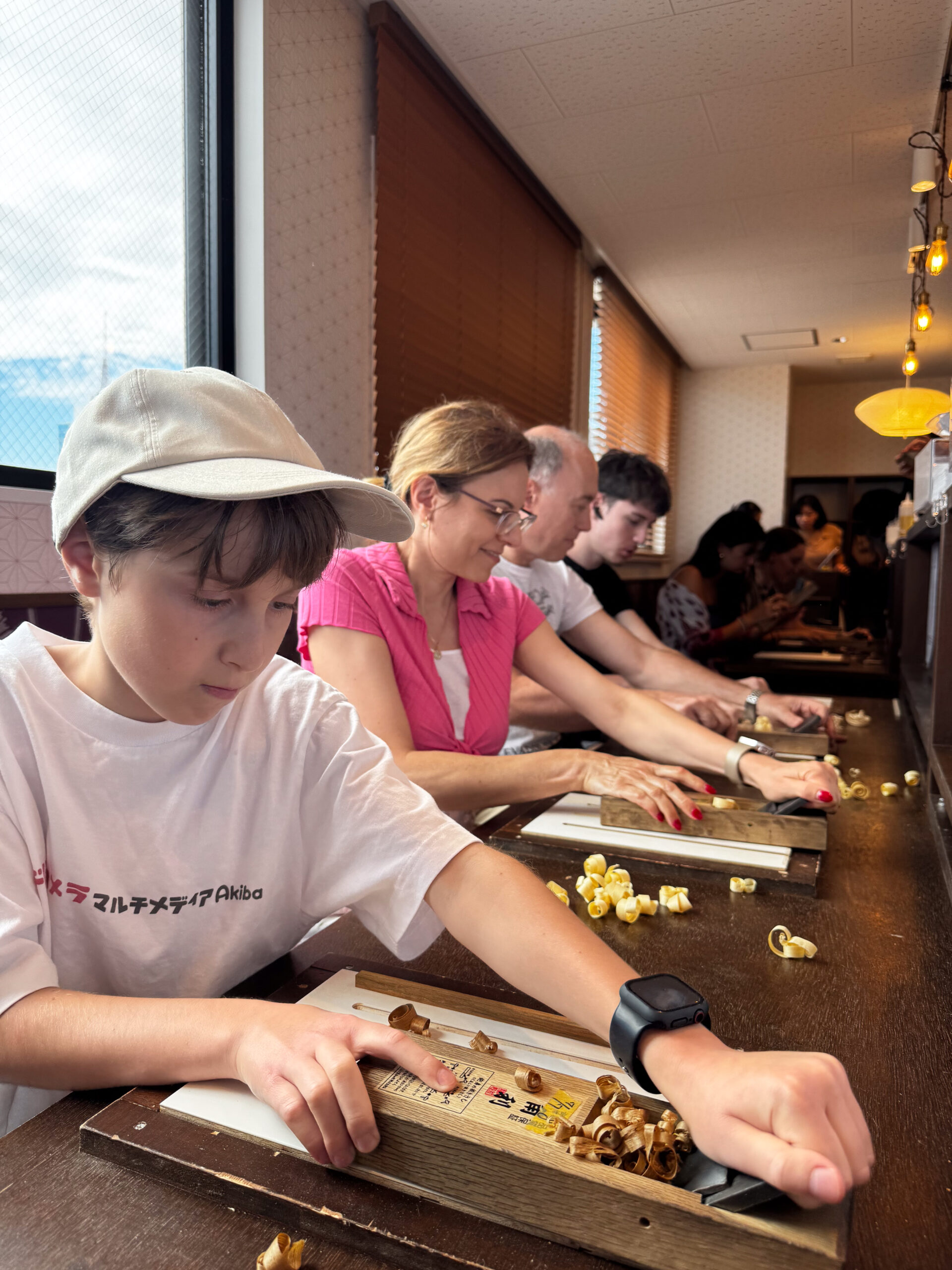
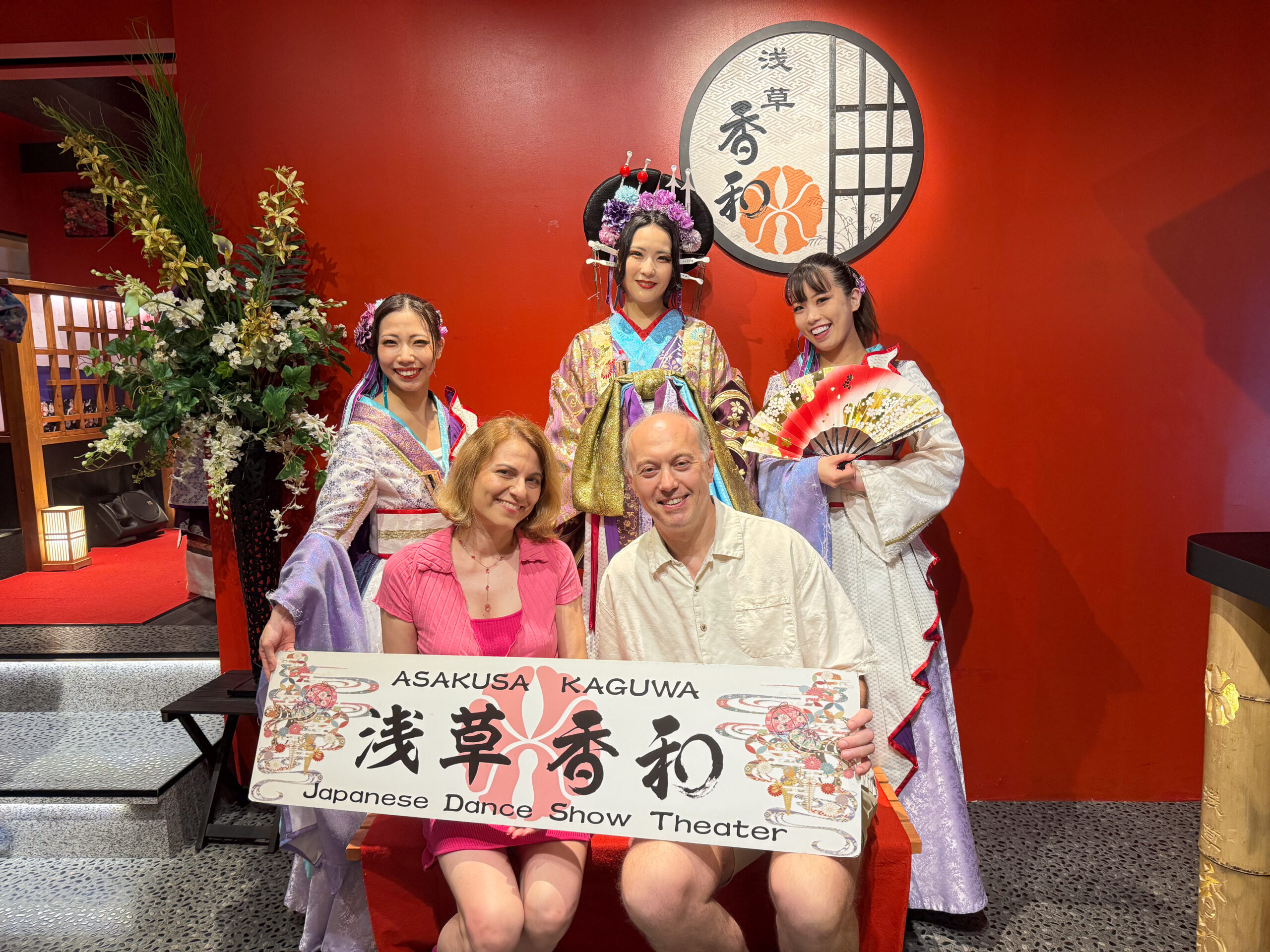
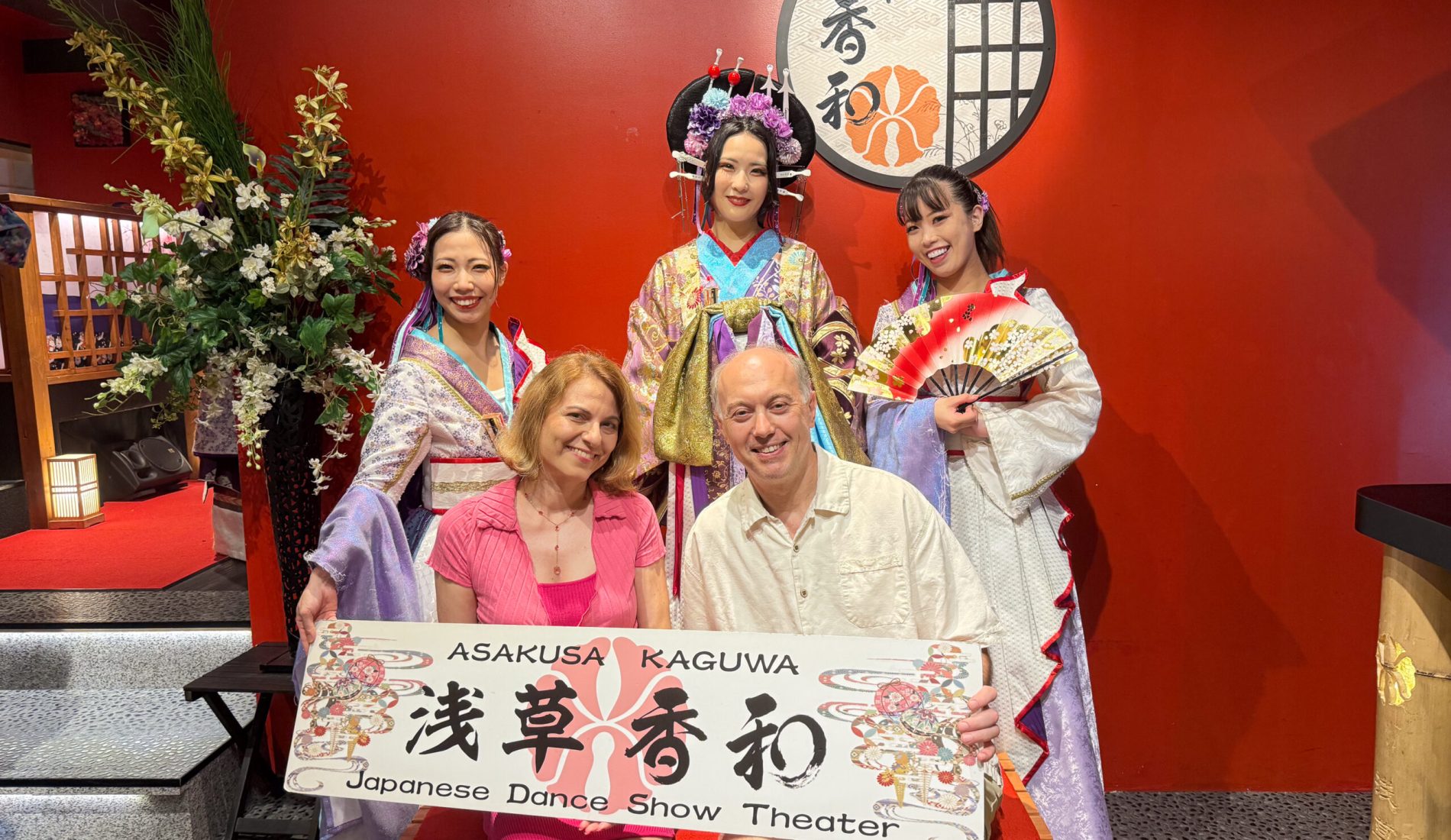
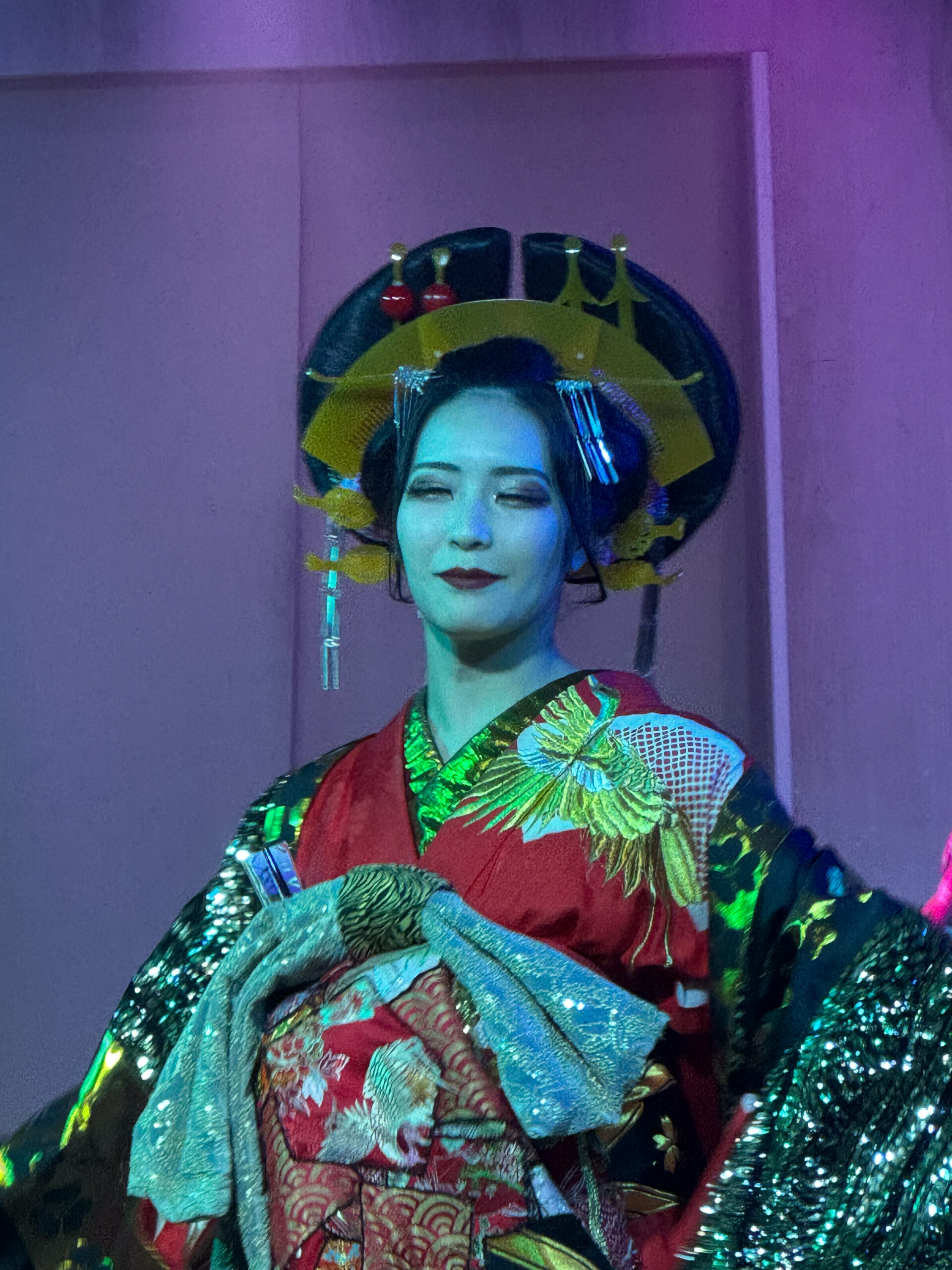
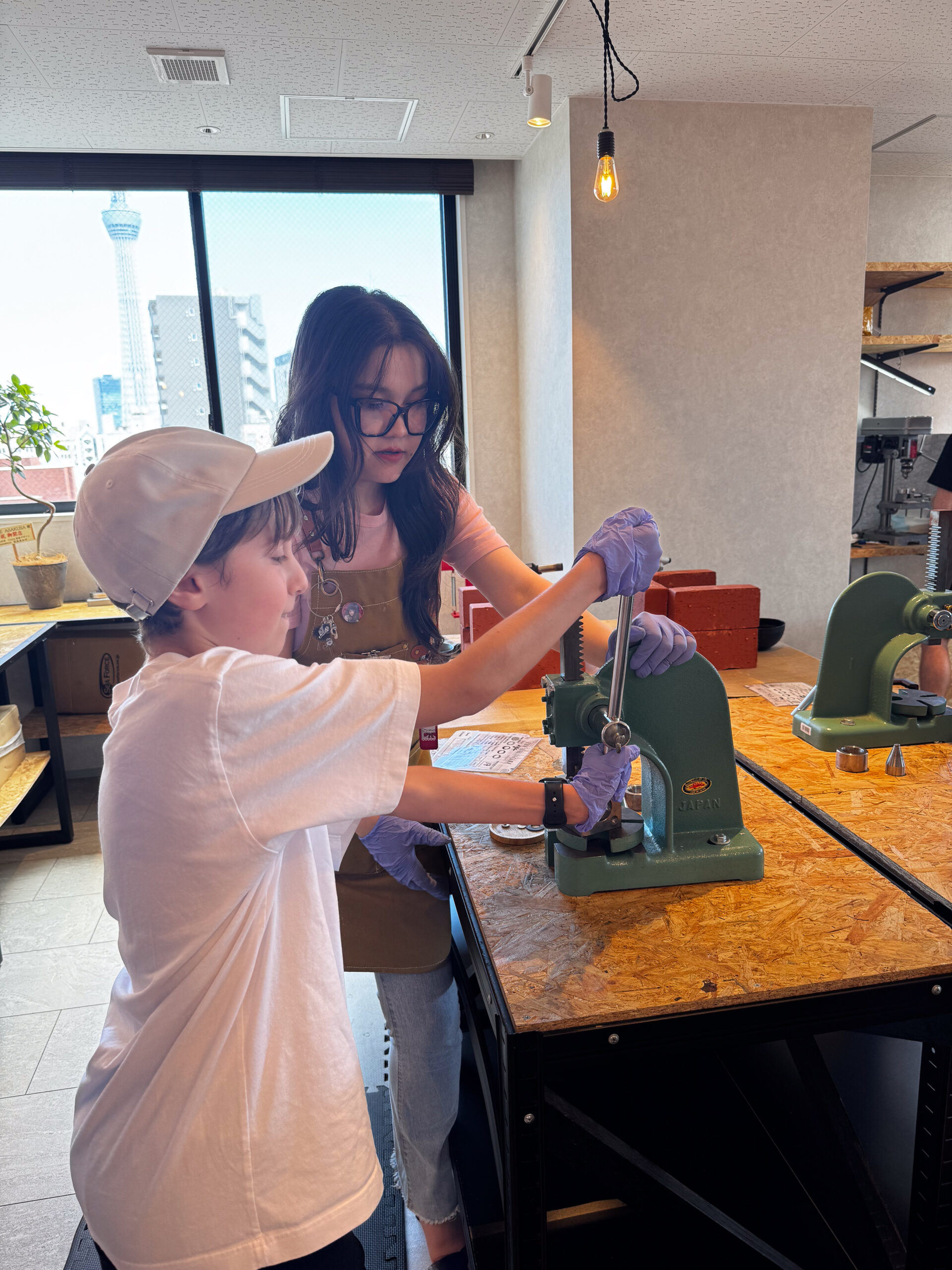
By our last few days in Tokyo, we had learned an important survival strategy: when it’s 36°C outside, find something to do indoors! I booked several activities through GetYourGuide, and because I kept using the same app, I even picked up some discounts along the way. We made rings out of Japanese coins in Asakusa and carved our own wooden chopsticks using a traditional hand plane—two of my favorite souvenirs because we actually made them ourselves. We had also booked a traditional geisha tea ceremony, but it was cancelled because of the extreme heat. Instead, we ended up at a cabaret theater in Asakusa—and honestly, it was such a fun alternative. Male and female performers in spectacular costumes told a dramatic historical story involving samurai and a young woman being sold into a brothel, with incredibly expressive acting, dance, and music. Before the show, the performers came to our table to introduce themselves and give us their cards, and afterward we even got to take photos with them. Sometimes Plan B in Japan turned out to be just as memorable as Plan A.
Anime Everywhere: Skytree, Solamachi, and Our Shibuya PARCO Quest

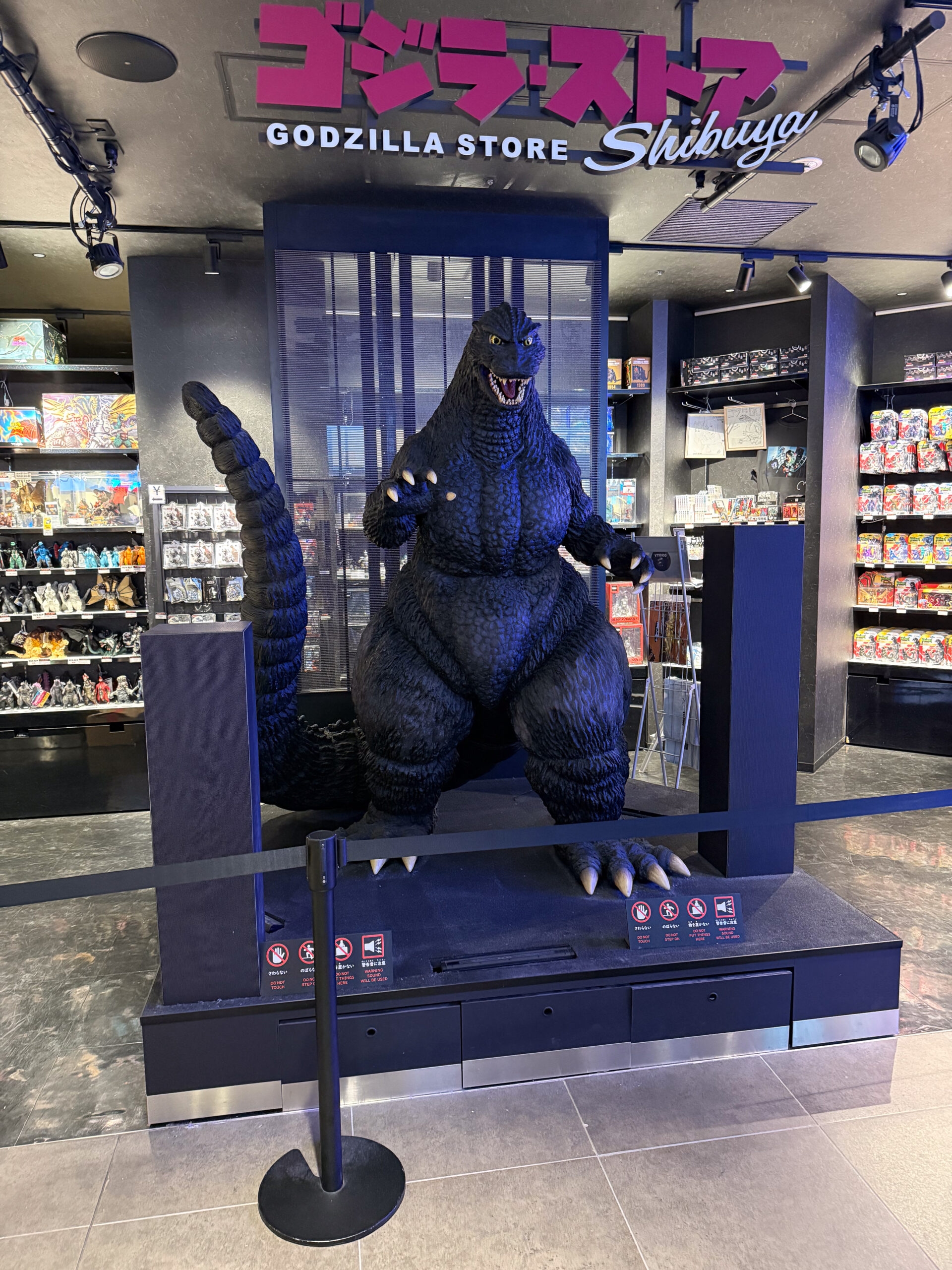
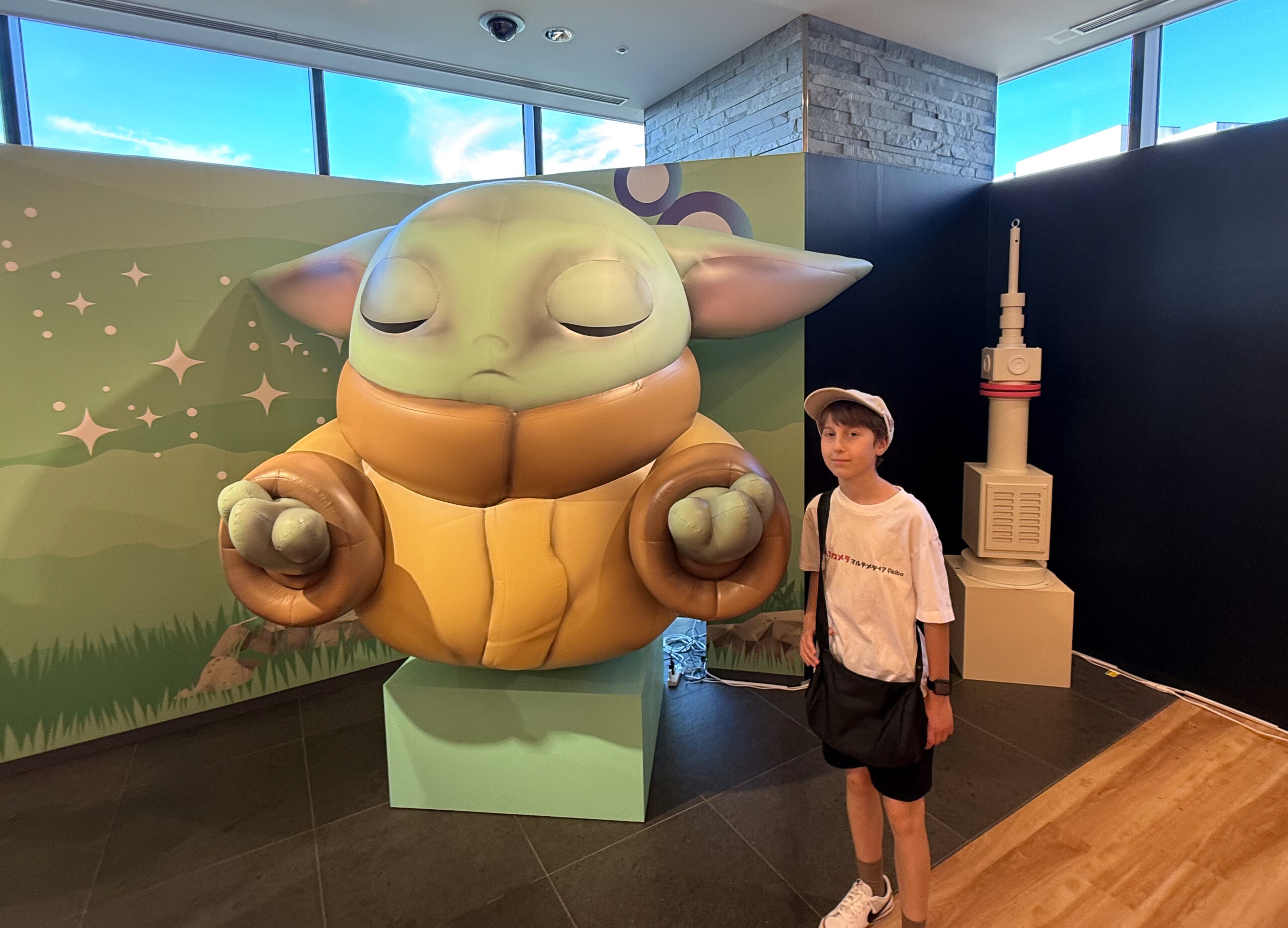
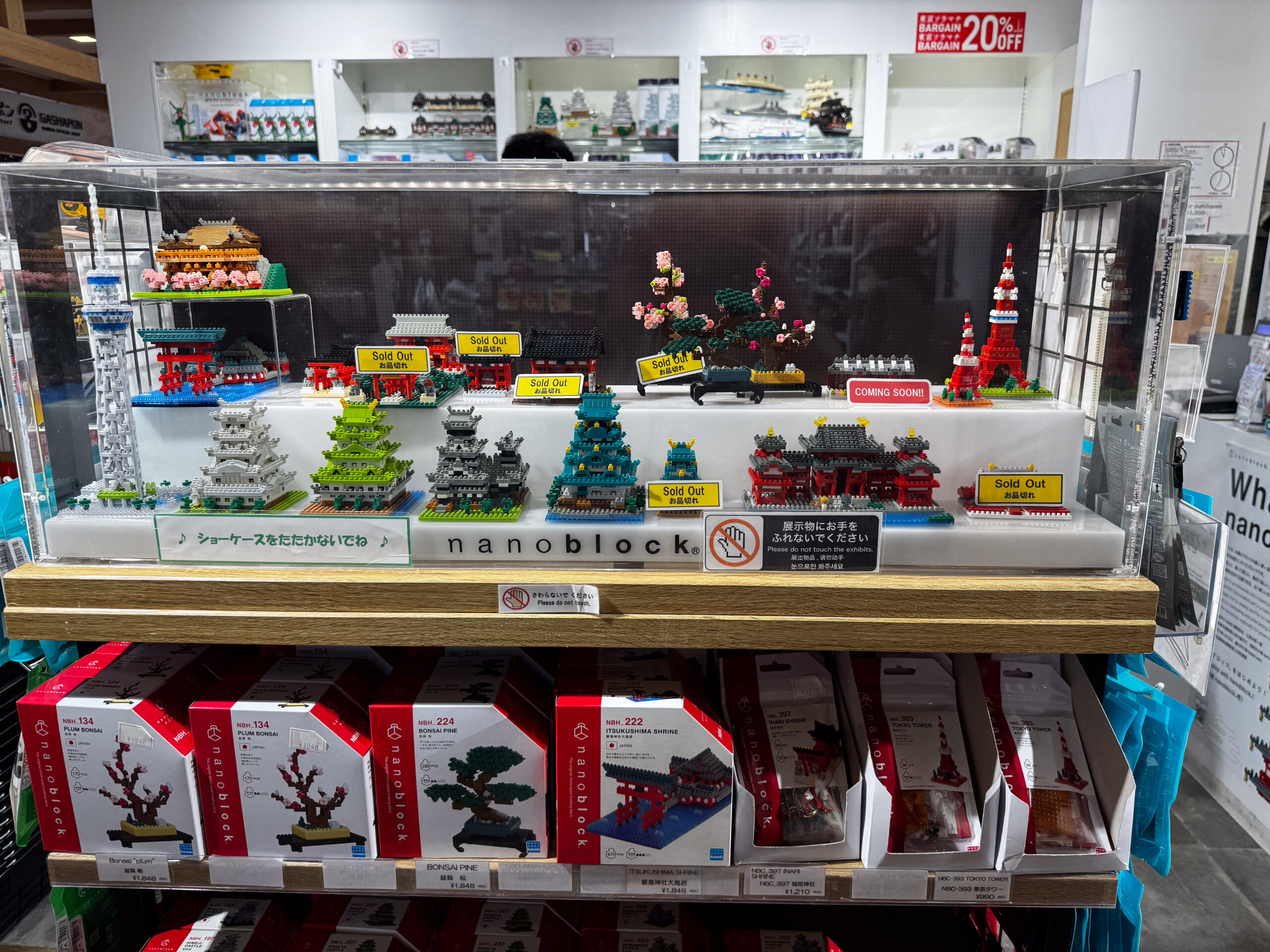
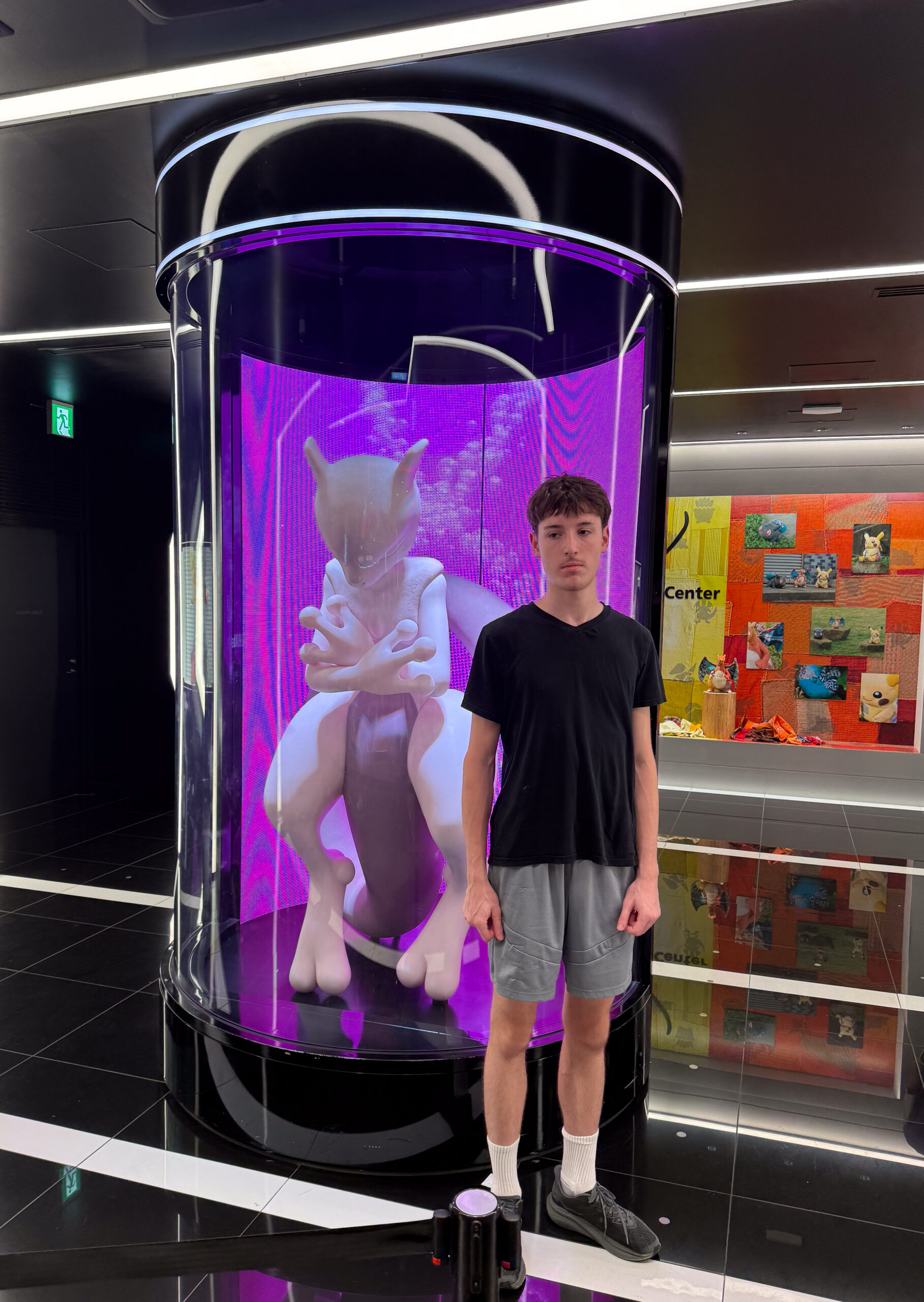
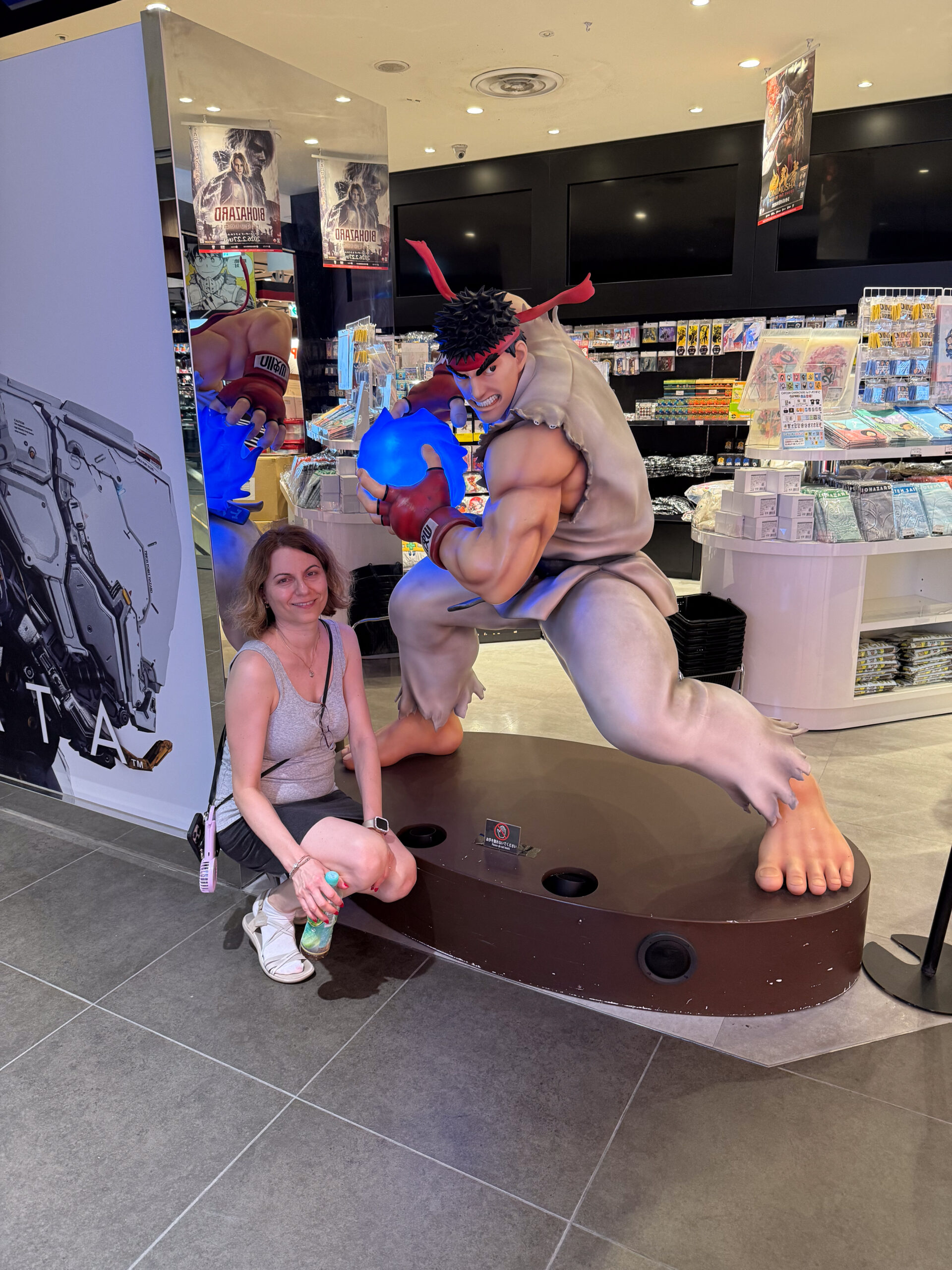
Later, we visited Tokyo Skytree, the tallest tower in the world. One thing you quickly notice in Japan is the love of mascot and anime collaborations. At the top of Skytree, the observation deck had been taken over by a collaboration with a popular character. Fans carried plushies around and posed them against the Tokyo skyline. You see these collaborations everywhere—from gachapon capsule-toy machines to pop-up cafes. It’s such a fun cultural quirk. Right underneath Skytree is Tokyo Solamachi, a huge shopping and entertainment complex that almost feels like a little town designed for kids—and adults who still behave like kids around their favorite characters. It’s packed with shops, cafes, restaurants, and character stores, including a large Pokémon Center. Everywhere we turned, there seemed to be another Disney, anime, or cartoon character waiting for a photo, so naturally we kept stopping to pose with them. You could easily spend hours at Skytree without ever actually leaving the building.
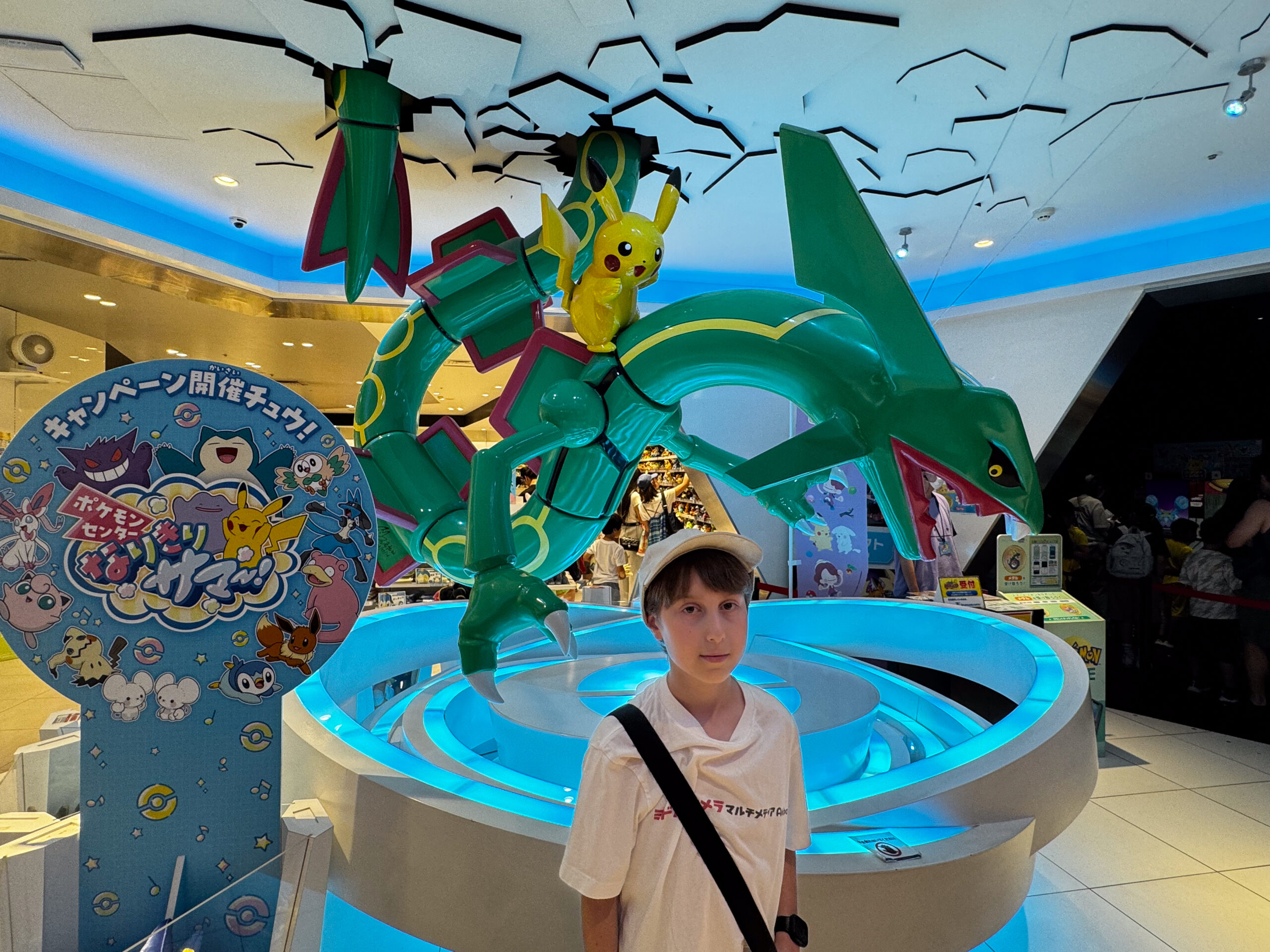
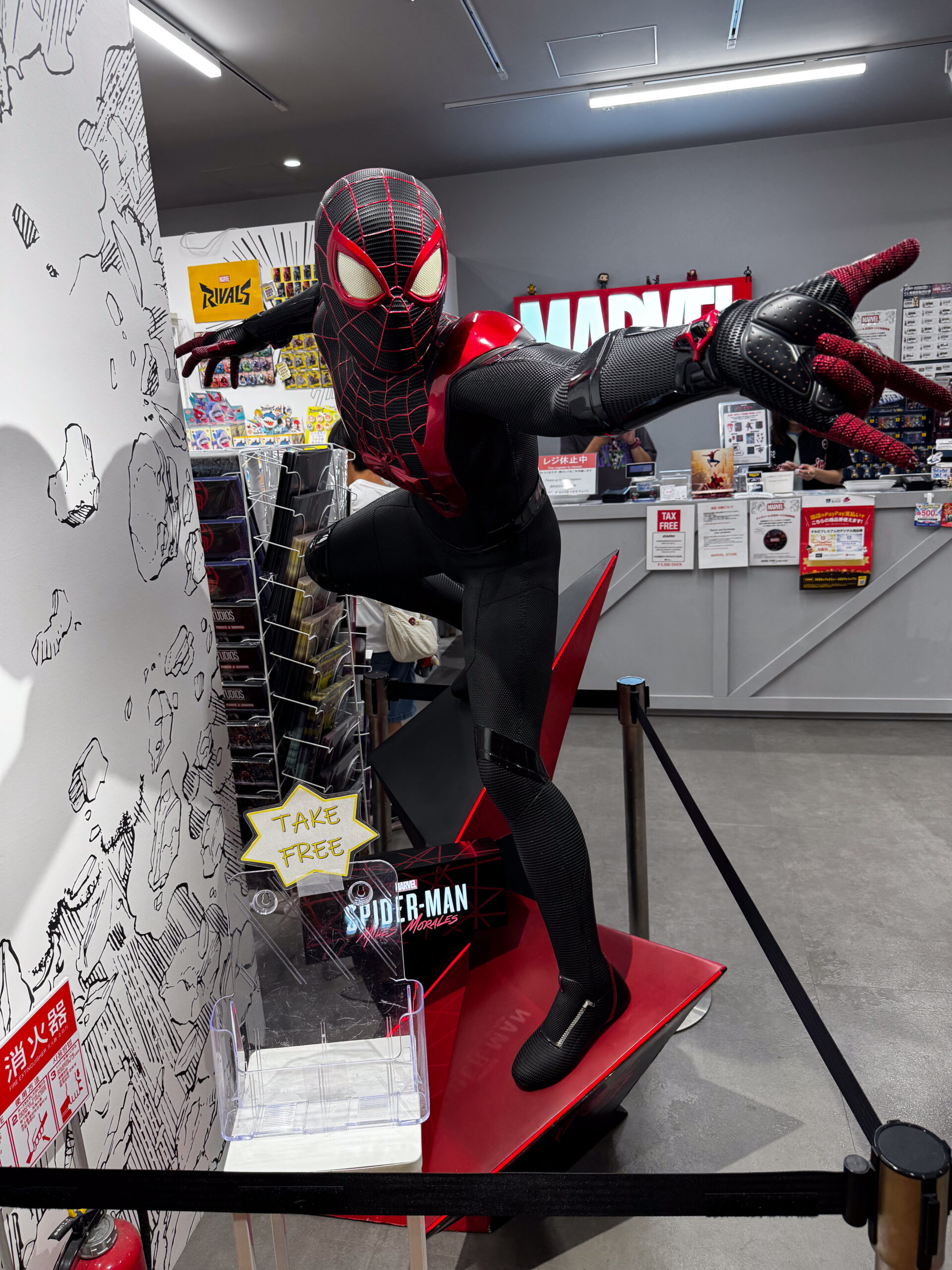
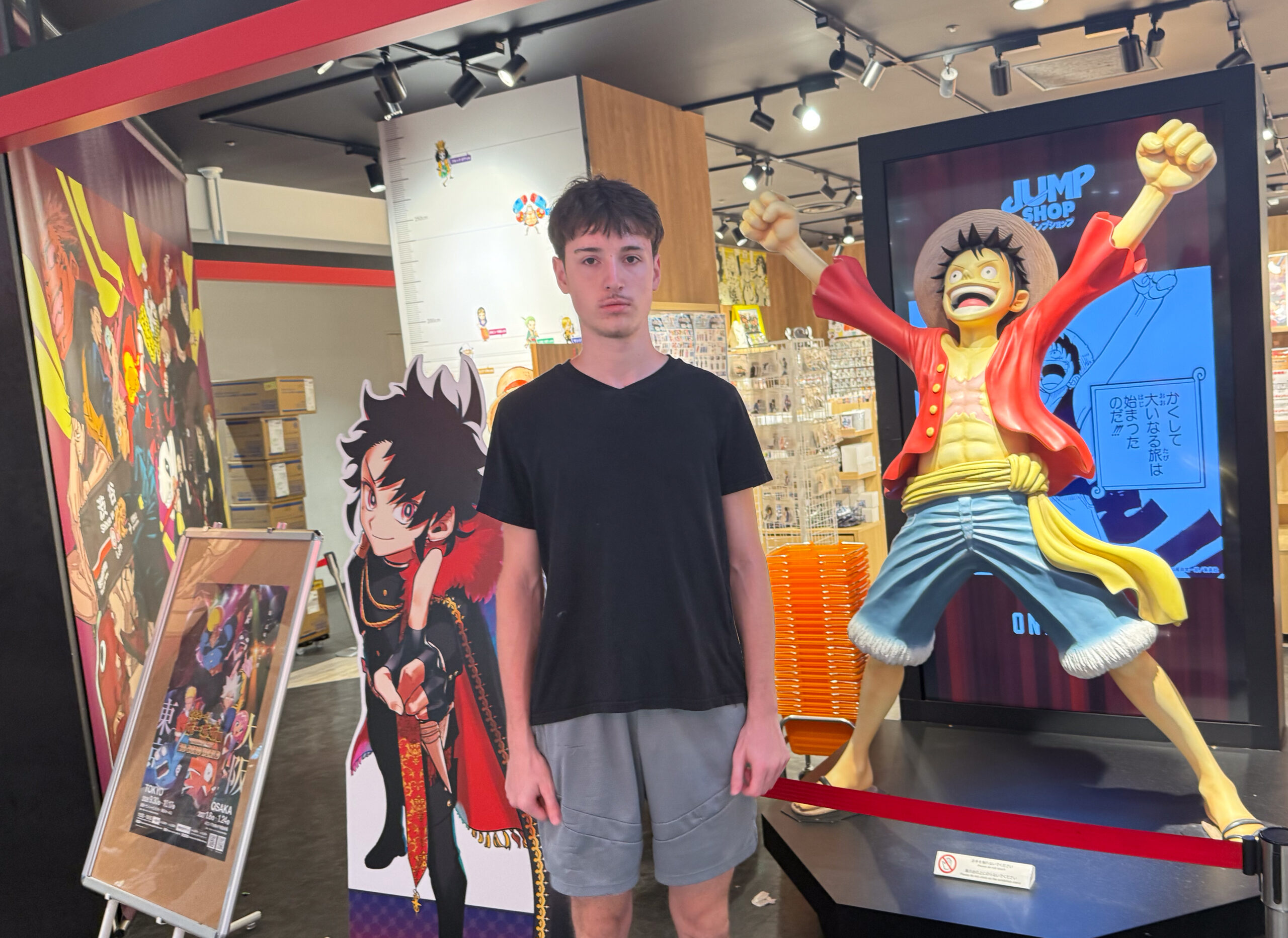
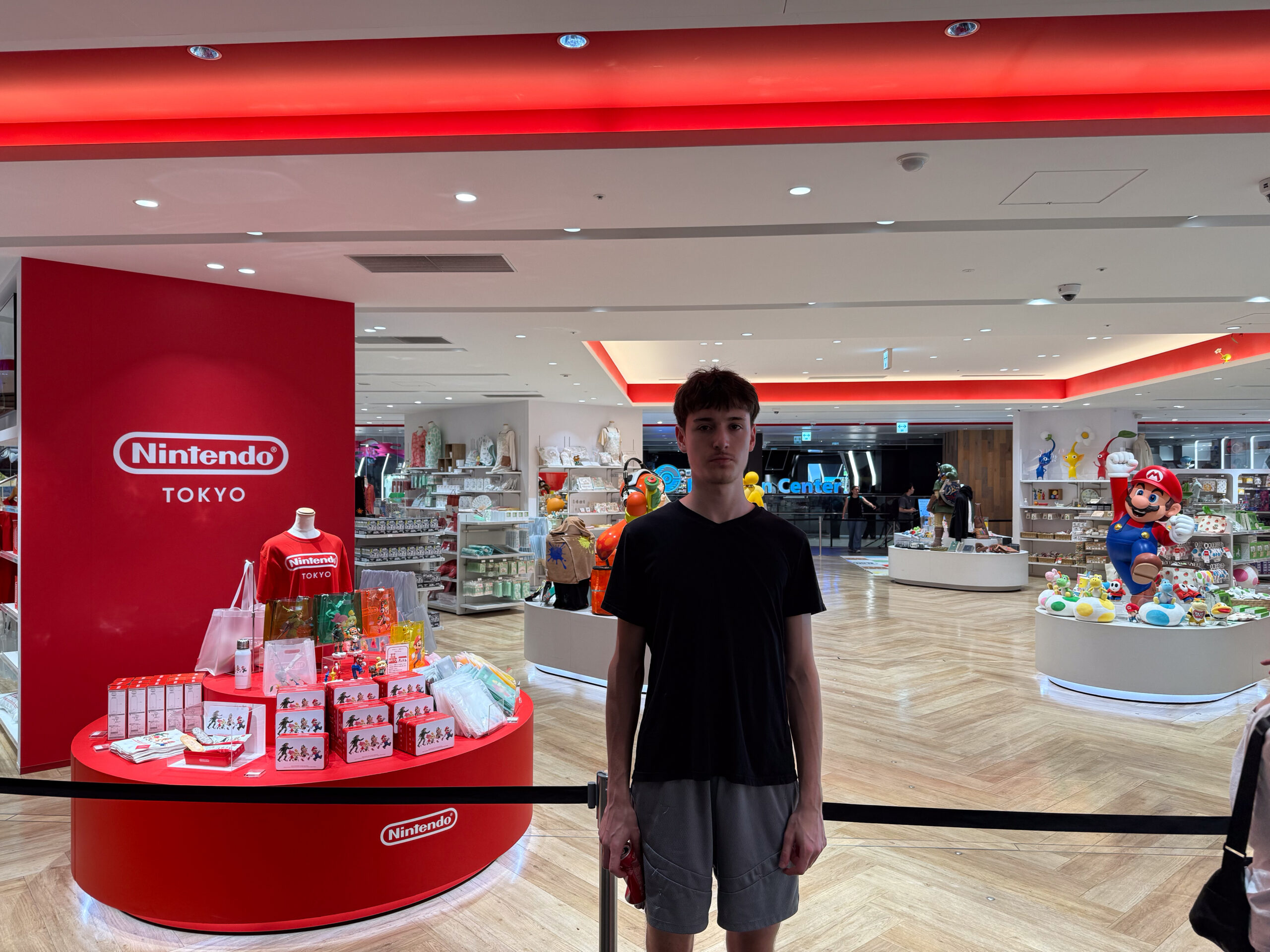
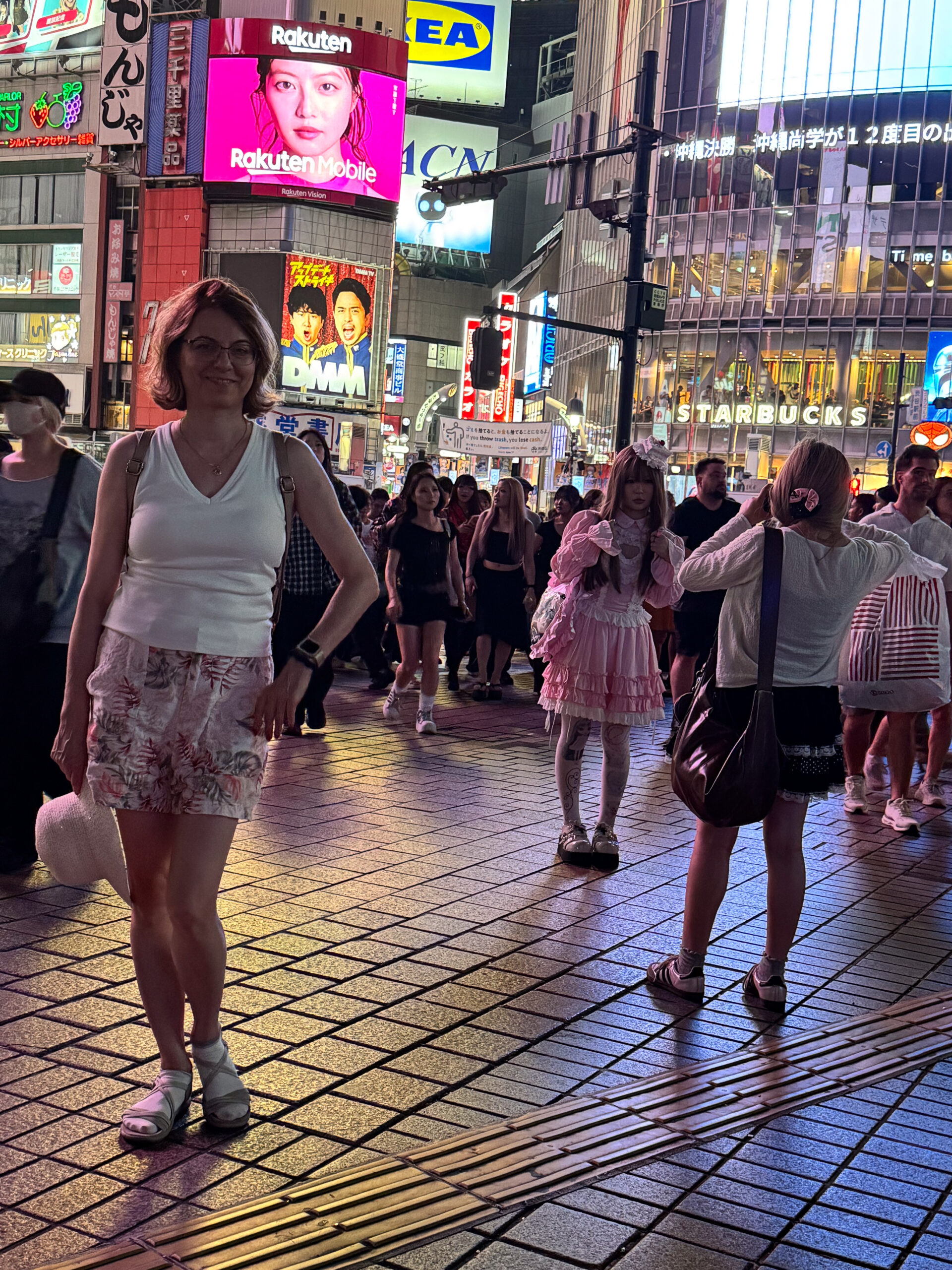
We found another paradise for anime and gaming fans on the sixth floor of Shibuya PARCO, home to a huge Pokémon Center, the Nintendo Store, and larger-than-life characters everywhere. Alex desperately wanted to go, but after lingering over omurice at a tiny restaurant one evening, we arrived at Shibuya Station with only about 30 minutes left before the floor closed at 9 p.m. Google Maps claimed PARCO was about a 10-minute walk away. In Shibuya, apparently, “10 minutes” is more of a philosophical concept.

Between construction, enormous crowds, underground passages, escalators, tiny streets, and at least one or two trips across Shibuya Crossing, getting there became another Tokyo navigation quest. Alex somehow led the way while I told Andrew to think of it as our evening fitness program. We raced up and down escalators, through tunnels and across streets—and finally reached PARCO at exactly 9 p.m., just as everything closed. Mission failed! But at least we managed to sneak in a few photos with Alex’s favorite characters before leaving. Sometimes in Tokyo, simply reaching your destination is the attraction.
Donki: Shopping in Japanese Lilliput

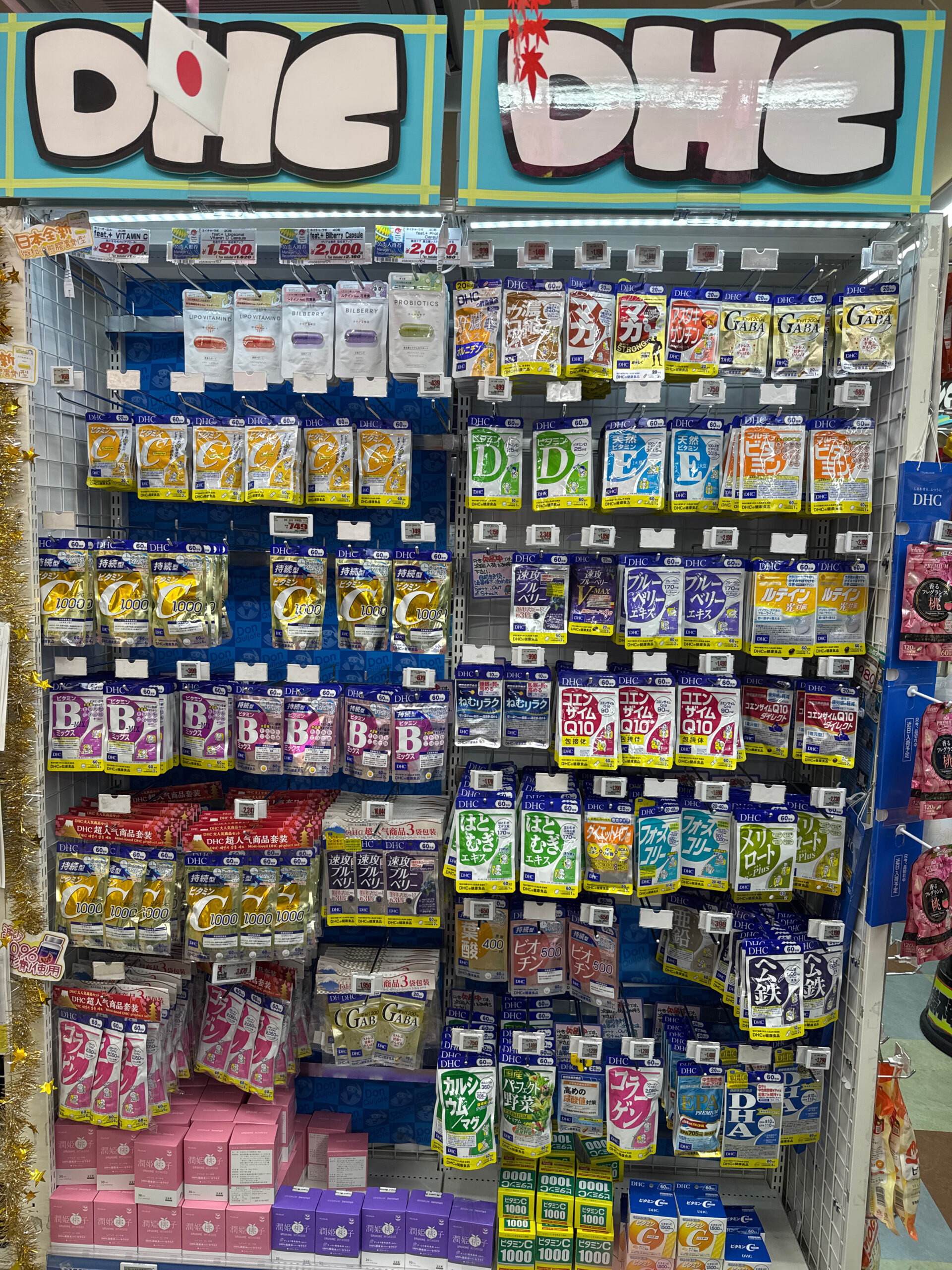
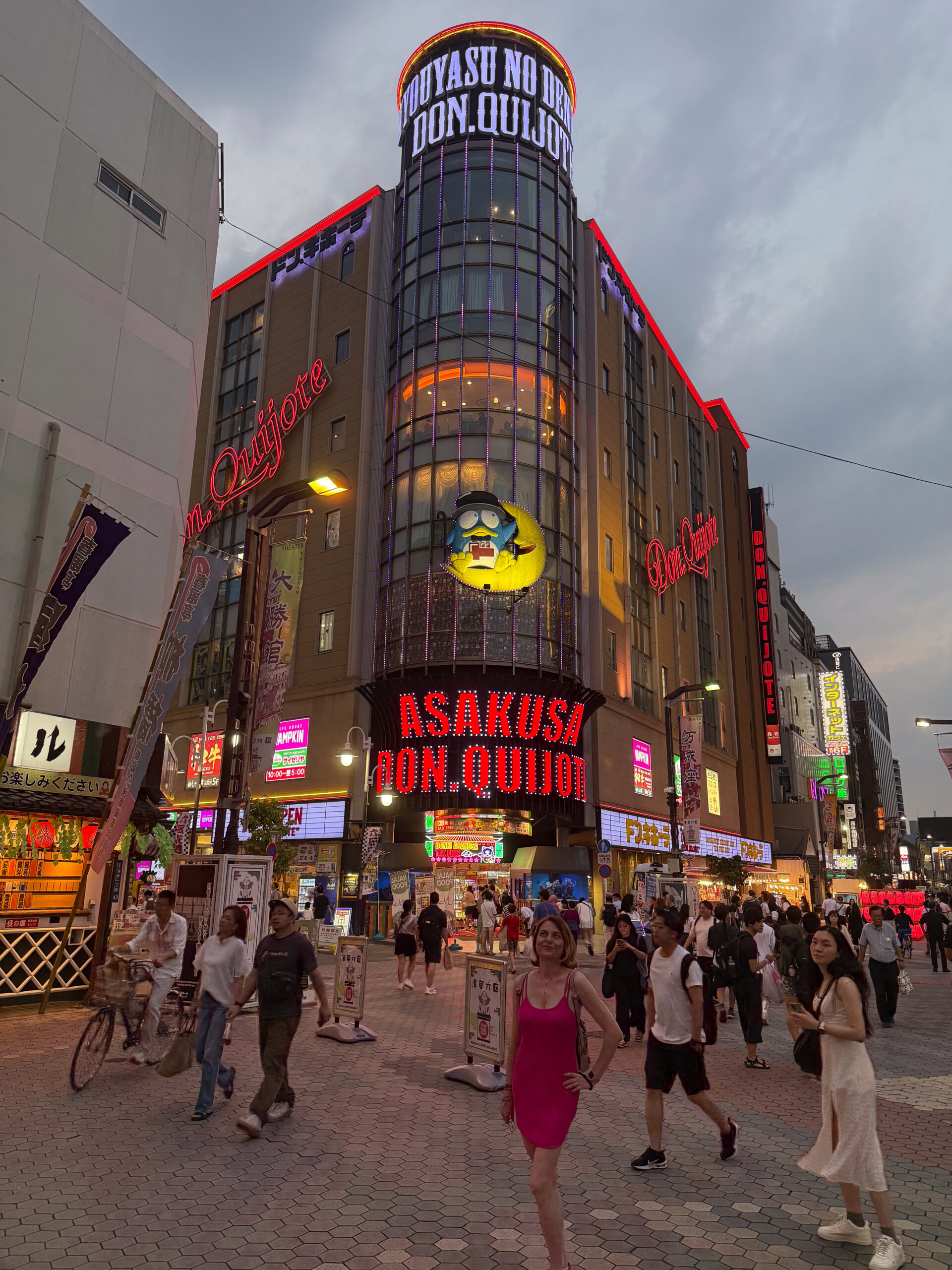
With only a few days left, it was finally time for our massive souvenir-shopping expedition at Don Quijote—or “Donki,” as everyone calls it. Imagine a discount department store, pharmacy, souvenir shop, beauty store, grocery store, and general explosion of Japanese consumer culture, all squeezed into one chaotic, multi-level labyrinth. You can find almost anything there, and somehow every aisle convinces you that you desperately need something you had never heard of five minutes ago.

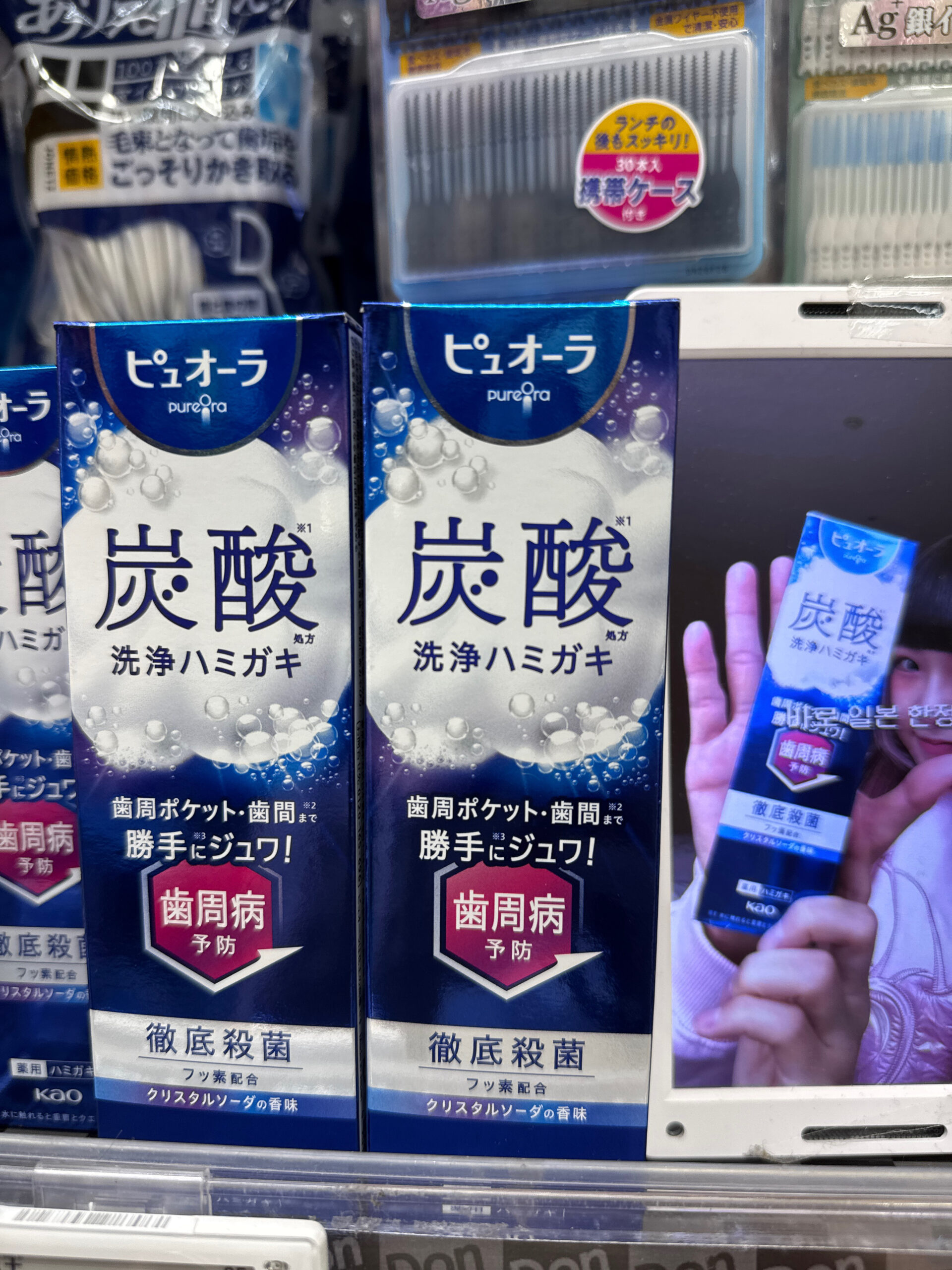
To me, Donki felt like a Japanese Walmart transported into Lilliput from *Gulliver’s Travels*. There seems to be a Walmart-sized variety of products packed into a fraction of the space. Even the advertising is miniature: tiny screens sit right on the shelves, playing tiny Japanese commercials demonstrating the products beside them. I had never seen anything like it.

And the beauty aisles are a universe of their own. Japan seems to have invented a product for every beauty problem imaginable—and quite a few problems I had never imagined existed. There are endless varieties of sunscreens, hair masks, acne treatments for every possible skin type, powders you apparently put on your face before bed, and even tiny keychain-sized gels for keeping your bangs perfectly in place. I stocked up on sunscreens and hair products, along with matcha chocolates, desserts, and all kinds of little discoveries I suddenly couldn’t live without.

At one point, I picked up a face mask I remembered seeing recommended on social media. A saleswoman spotted me and immediately became very concerned. “No, no, no!” Apparently, I had chosen a mask intended for younger skin and morning use. She took it away and showed me the mask she was absolutely convinced was right for me—which, coincidentally, cost about five times more. She looked so genuinely worried about my skincare choices that I almost felt irresponsible for having selected the first one. Needless to say, my suitcase was considerably heavier on the way home.
Shinjuku: The Human Tsunami, City Lights, and the Giant 3D Cat

Almost at the end of our trip, the epicenter of the commuter anthill called our names once again: Shinjuku Station. We had already passed through it earlier to catch the Fuji Excursion train to Lake Kawaguchiko. Shinjuku holds the Guinness World Record as the world’s busiest railway station, and once you’ve been inside, that is very easy to believe.

Here is a fun detail I have to add: every time a train arrives at many stations, you hear a cheerful little melody. Honestly, some of them reminded me of the joyful music slot machines play in a casino when you hit the jackpot. After surviving the labyrinth of Tokyo transit, hearing that little jingle really did feel like a reward for successfully completing another navigation quest.

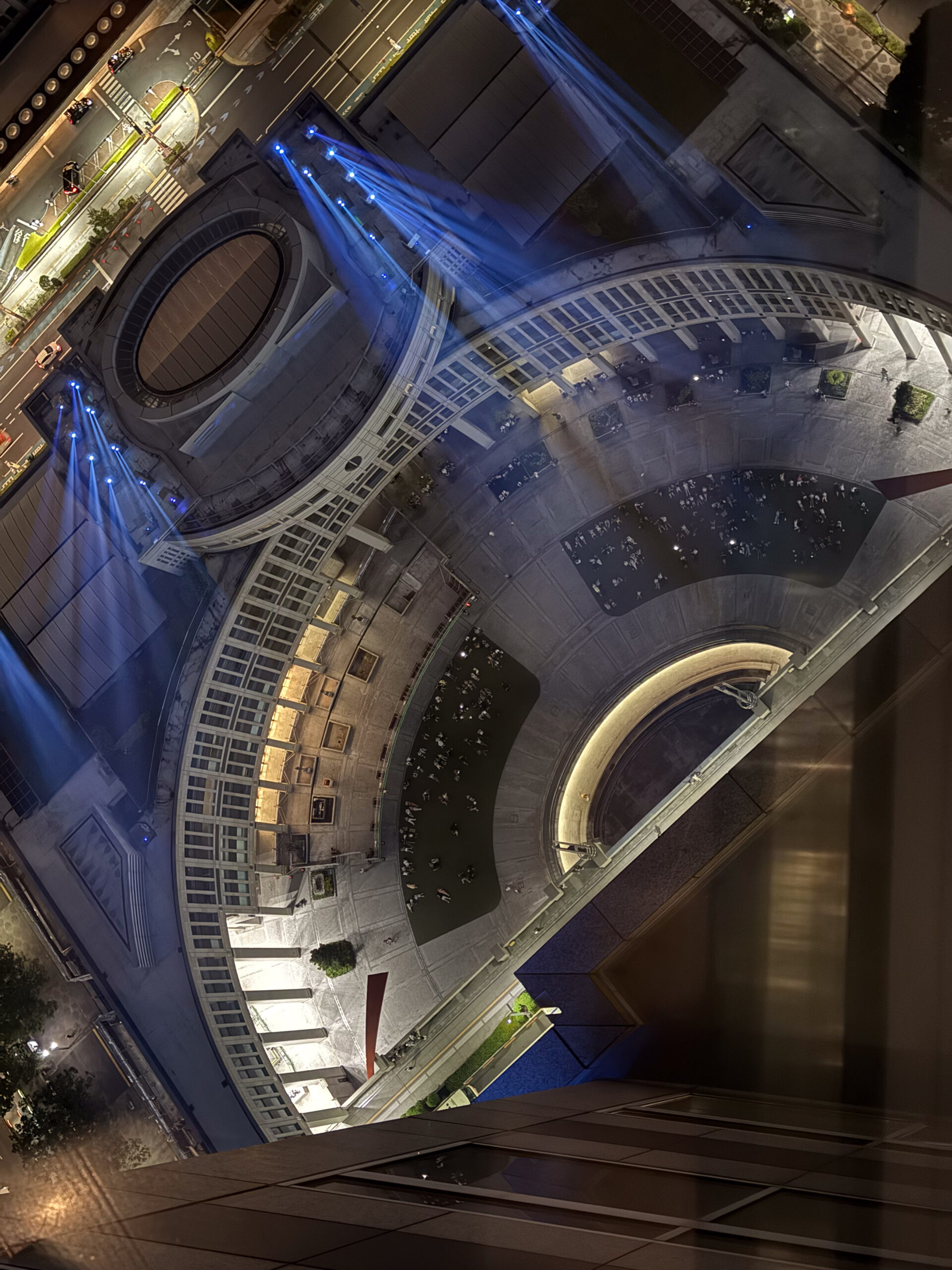
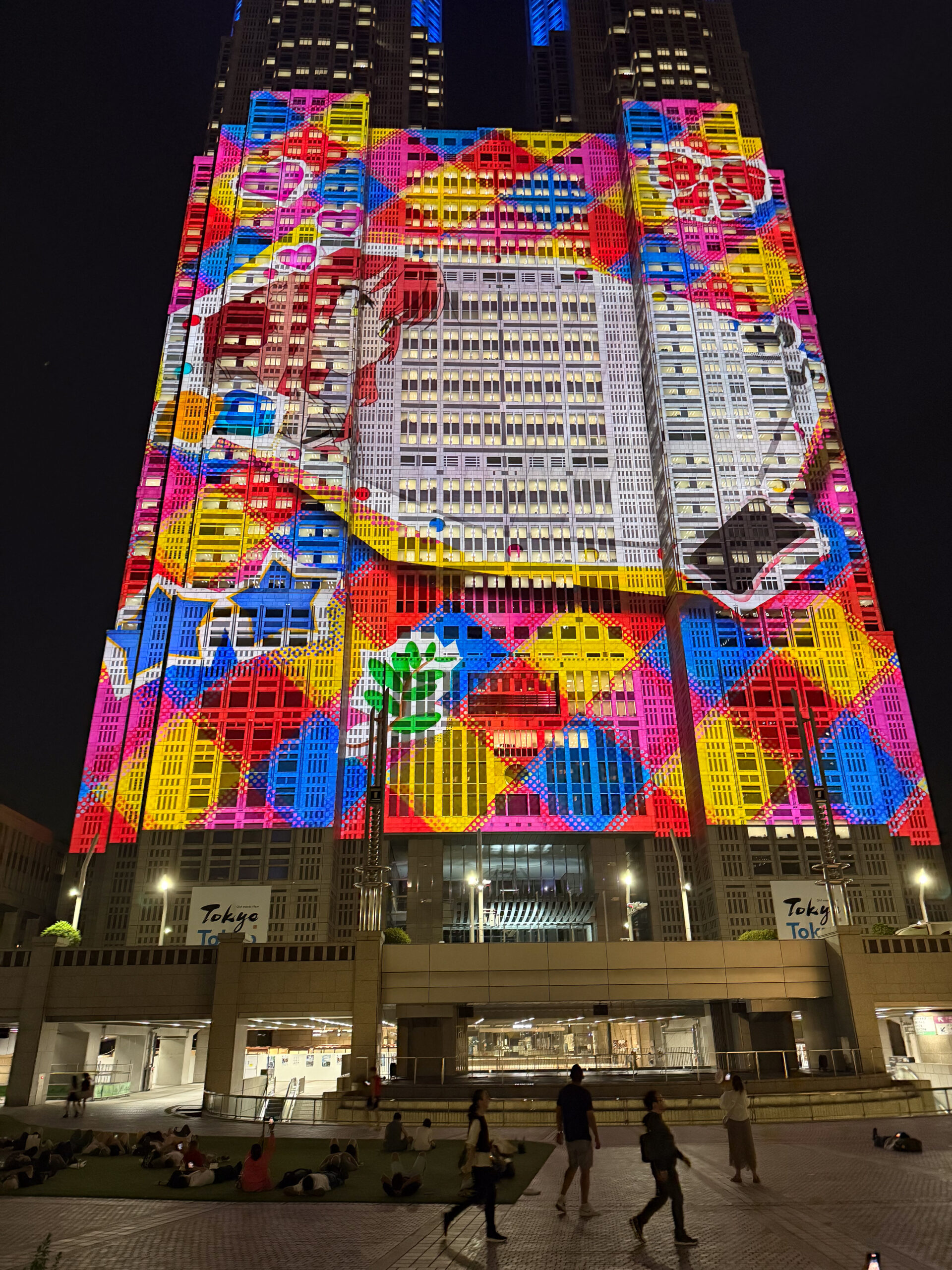
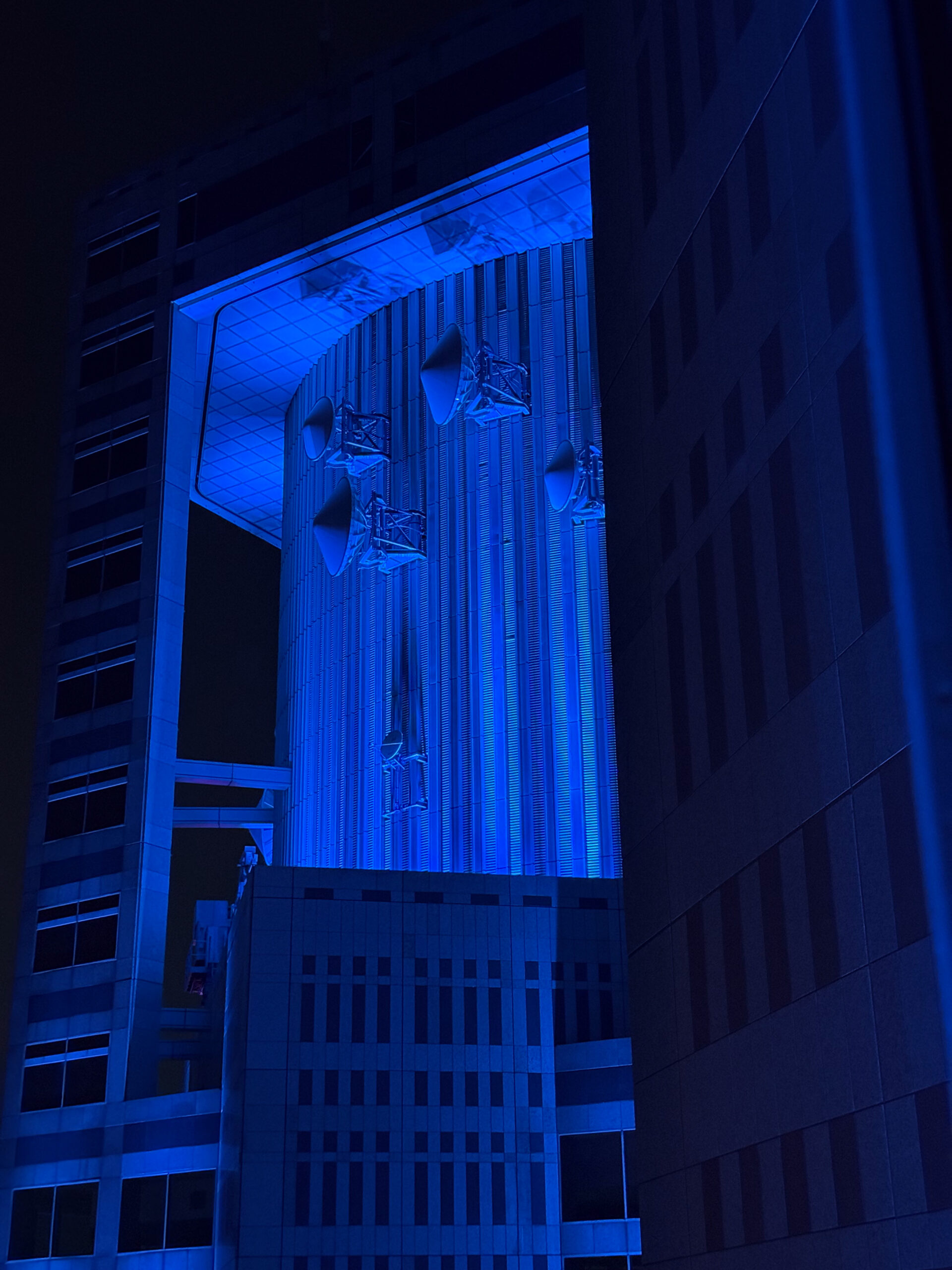
We headed back to Shinjuku to watch the “TOKYO Night & Light” show at the Tokyo Metropolitan Government Building. During the day it is a government building where bureaucrats work; at night it becomes a tourist attraction. We stood in line for about half an hour to go up to the free observation deck on the 45th floor, which offered an incredible view over the city.

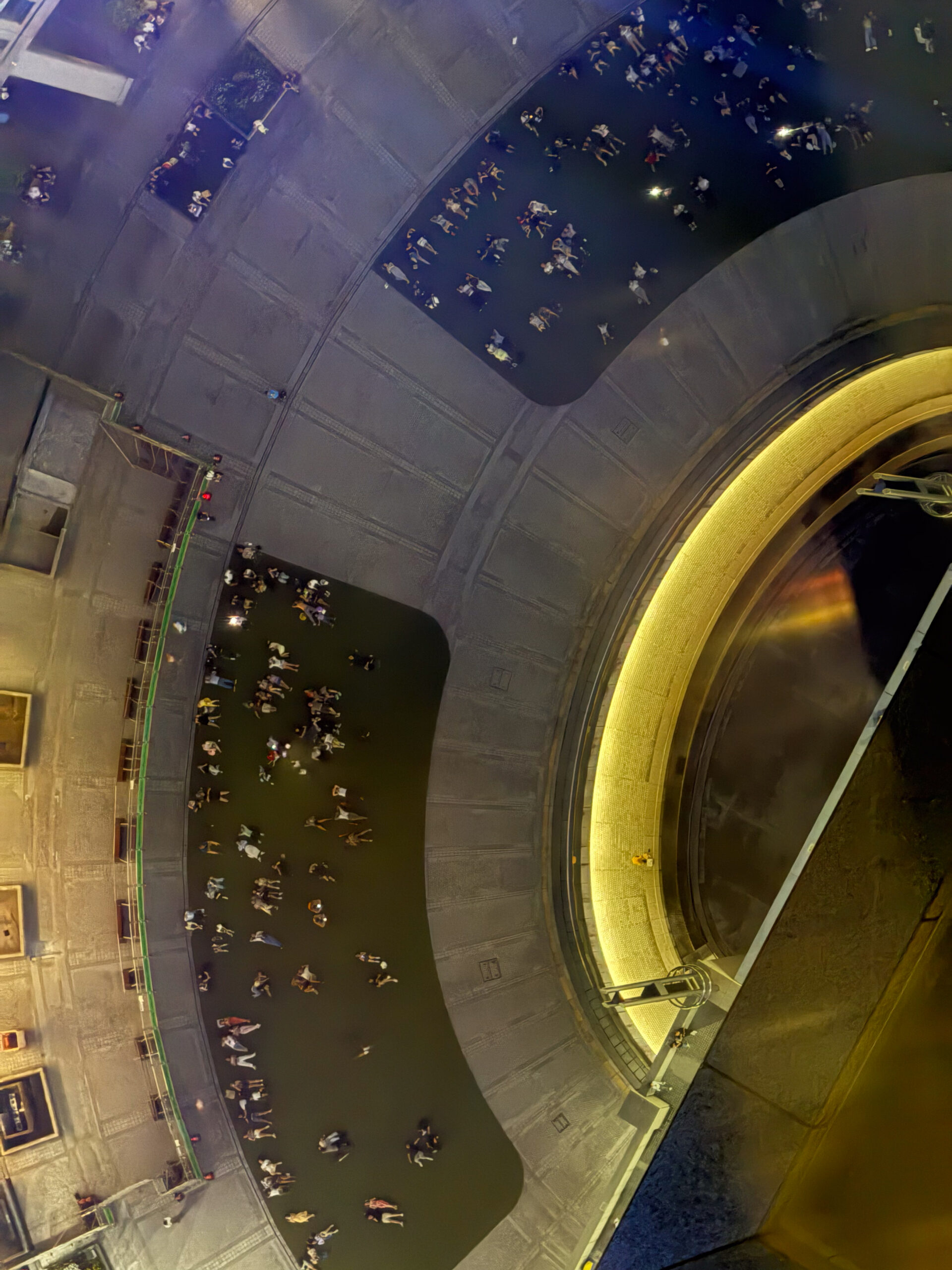
But the main action was happening below. People were lying right on special green mats to watch a huge projection-mapping show across the building’s facade. It holds a Guinness World Record for the largest permanent architectural projection display. The scale was incredible, and seeing an ordinary government building transformed into a giant moving screen felt very, very Tokyo.
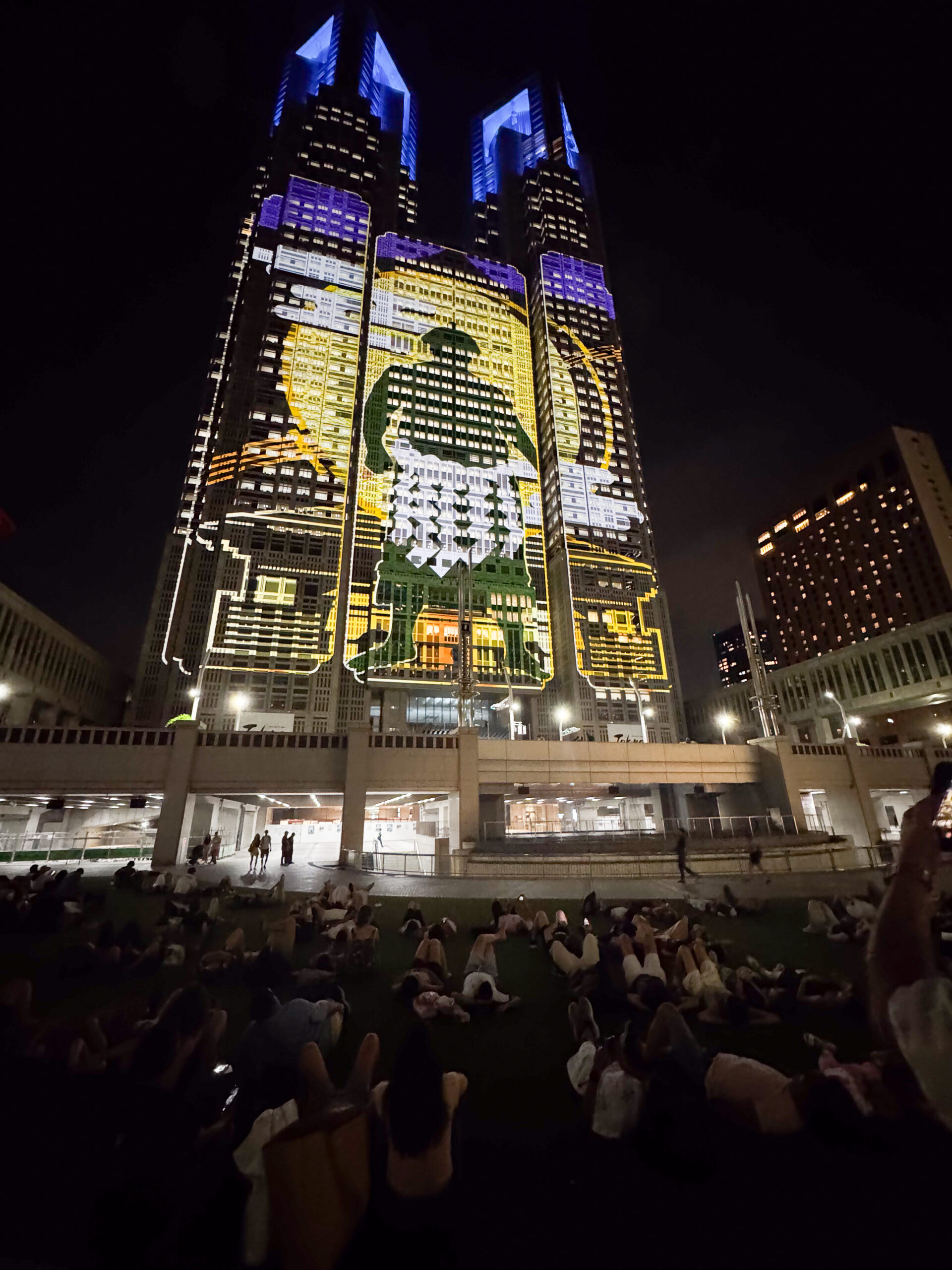
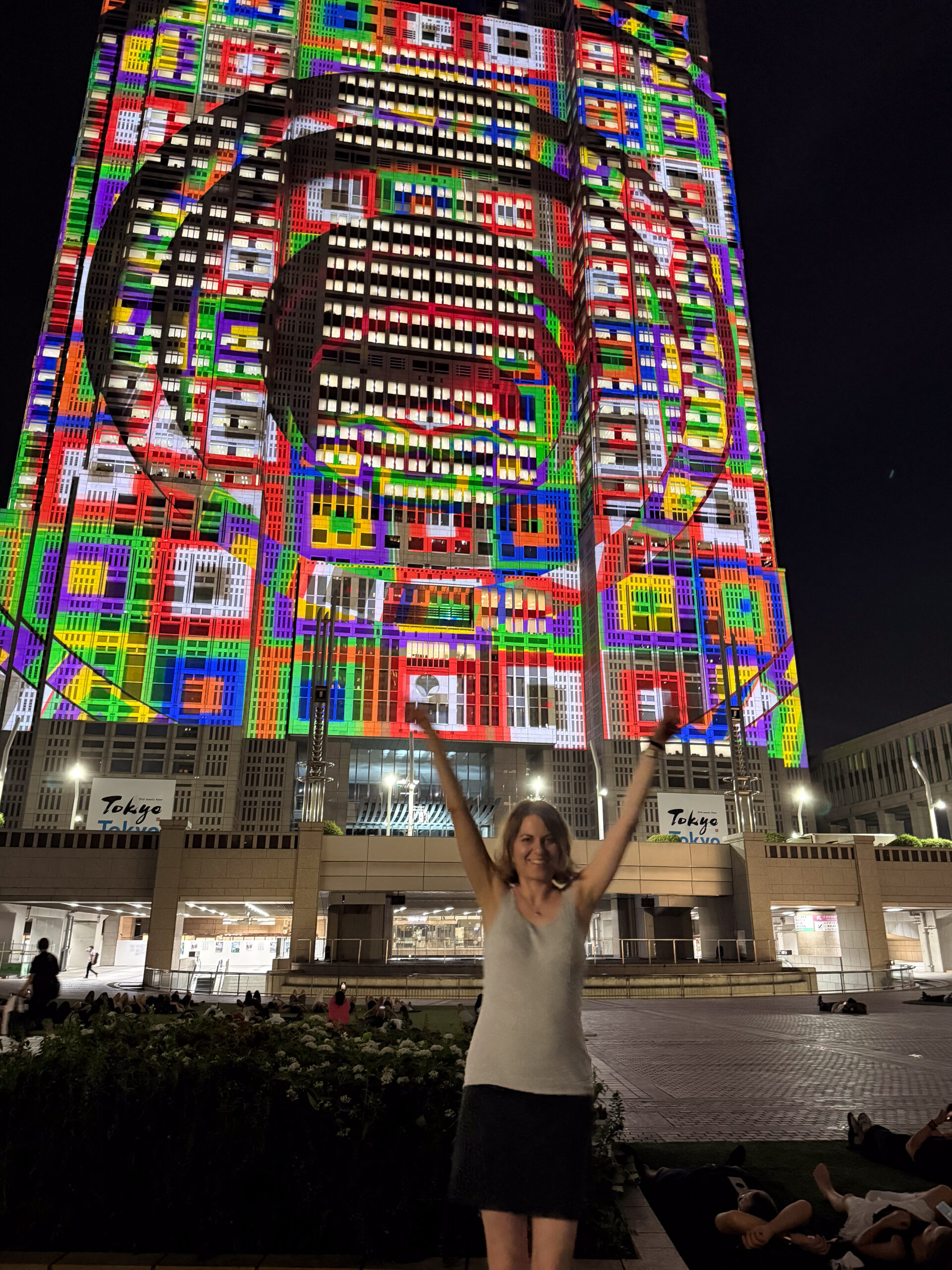
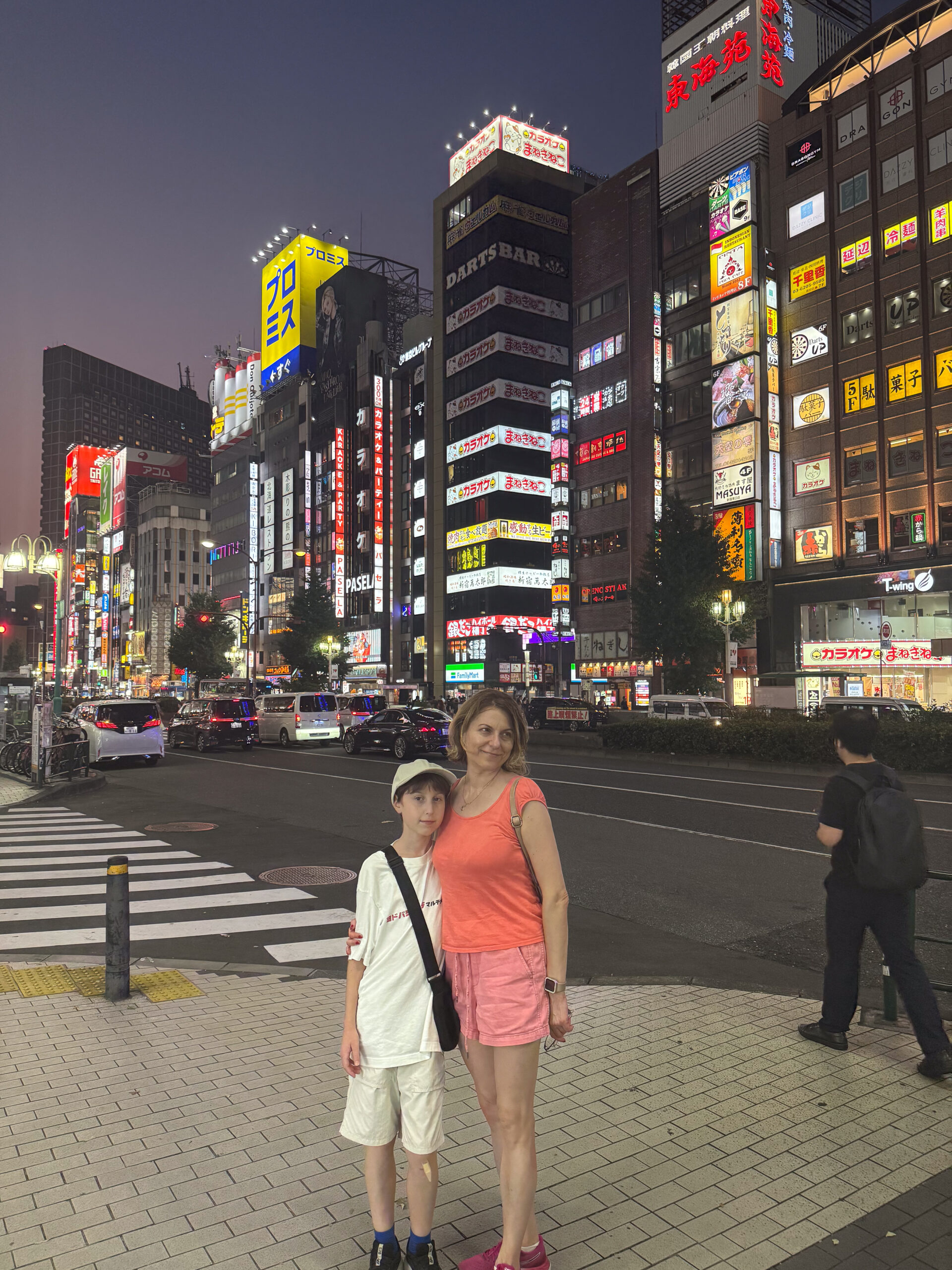
After the show, we headed toward the eastern side of Shinjuku and had to cross the giant underground station again. We were hit by another human tsunami. The station was not only overcrowded but incredibly noisy, full of young people talking and laughing. 

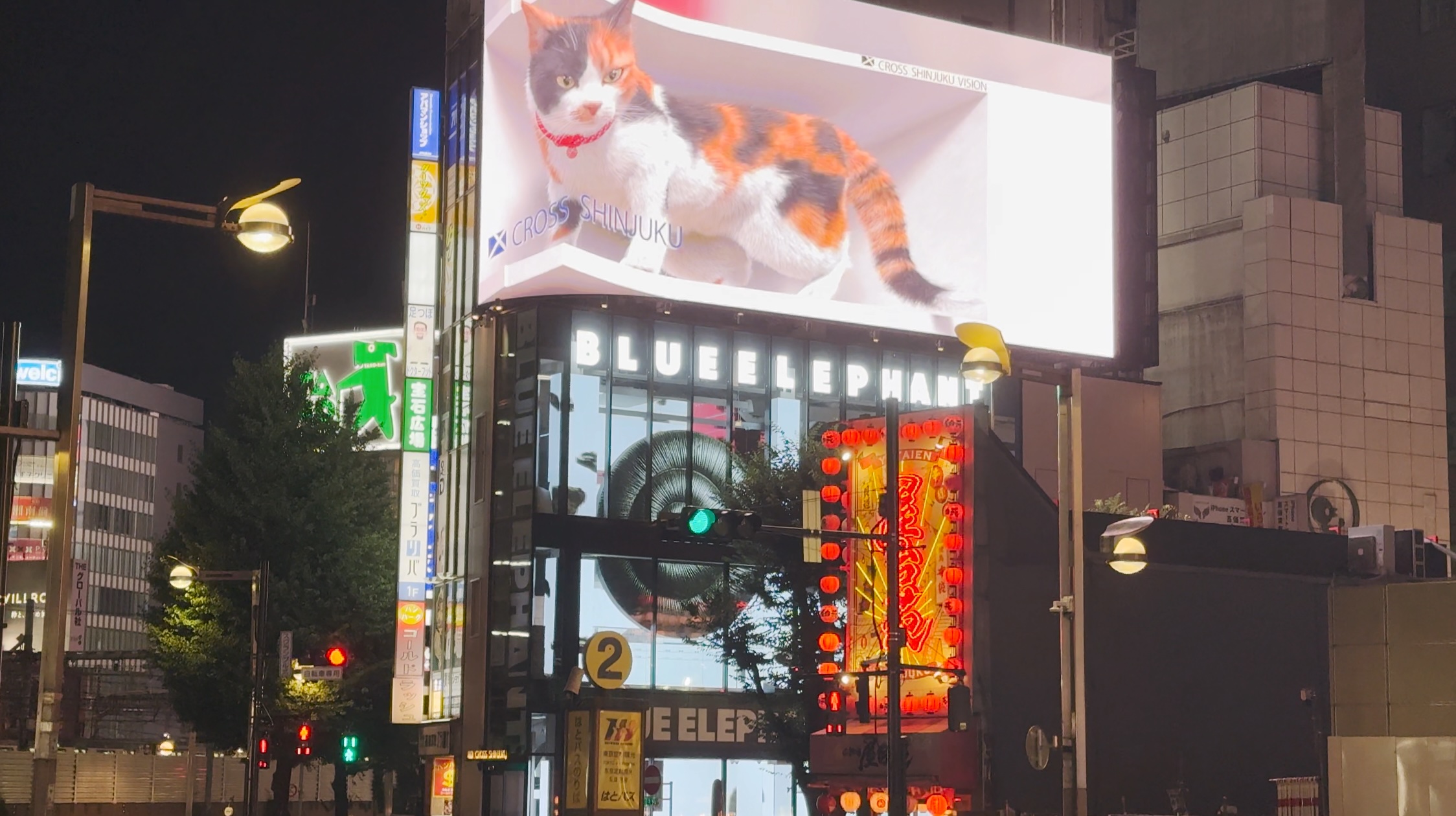
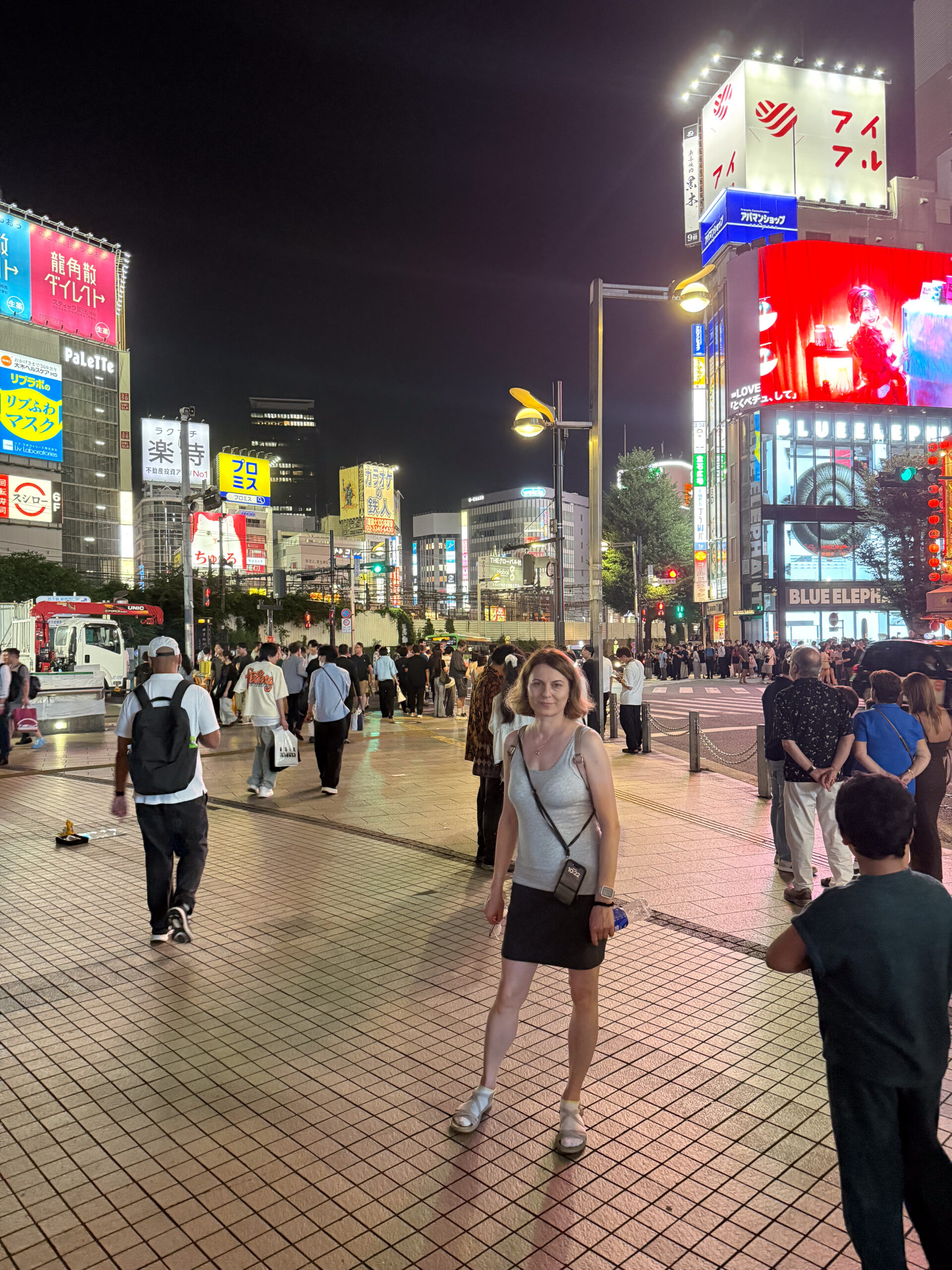
We somehow found the right exit, stepped outside—and immediately lost our bearings again, even though we were only steps away from the famous Cross Shinjuku Vision billboard.

Some local young guys approached us and asked us to take a picture of them. I snapped the photo and asked if they knew where the 3D billboard was. They hesitated and asked, “Where are you from?” “Canada,” we said. They got excited. “Canada! Vancouver?” “No, Toronto.”

And that was about as far as our shared vocabulary went. This happened to us quite a few times in Japan: people genuinely wanted to help, but communicating in English could be difficult, and asking for directions sometimes left us even more confused. Google Translate became indispensable, especially its camera function for signs and menus.

Thanks to Apple Maps, we finally found the giant 3D cat. It really is amazing—it looks like it is about to jump right down into the street. I was so curious about the cost of advertising there that I looked it up later. Even relatively small packages cost serious money, while major campaigns on Japan’s premium 3D screens can run into millions of yen. Truly a golden cat.
Reflections on Summer Travel in Japan

I am writing this two weeks after we returned from our trip. Right now, Japan is dealing with massive rainfall, and some areas have experienced serious flooding. I’m very grateful to our travel agent, Irina, who recommended that we go in the last few weeks of July rather than later in the summer.

If you have to travel with teenagers and don’t want to go in the winter because they would miss school, summer may be your only realistic option. I would still choose July over August, but you absolutely have to be prepared for the heat. The smartest approach for us was mixing outdoor sightseeing with museums and other places with AC—and, of course, using amazing food as motivation to keep the teenagers happy and satisfied.

Japan was overwhelming, exhausting, sweltering, and confusing—and I wouldn’t change a single second of it.
Japan in July: Hot. Lost. Amazed. And Completely in Love. Part 3

Kamakura: Our Mini-Kyoto and the Pacific Downpour

Traveling with teenagers is a unique experience. While I know people pay thousands for guided group tours that hit every temple in Kyoto, that wasn’t going to work for us. Teens like to sleep in, and their favorite activity is hitting up convenience stores to buy mountains of food.

Sasha really wanted to go to Kyoto, but Gemini actually talked me out of it. If Tokyo was a hot pot, the humidity in Kyoto sounded like the fiery pits of hell. After all the subway chaos, we didn’t have the energy for another massive transit day in the heat. Instead, we took Gemini’s advice and went to Kamakura, which is often described as a mini-Kyoto right on the coast.

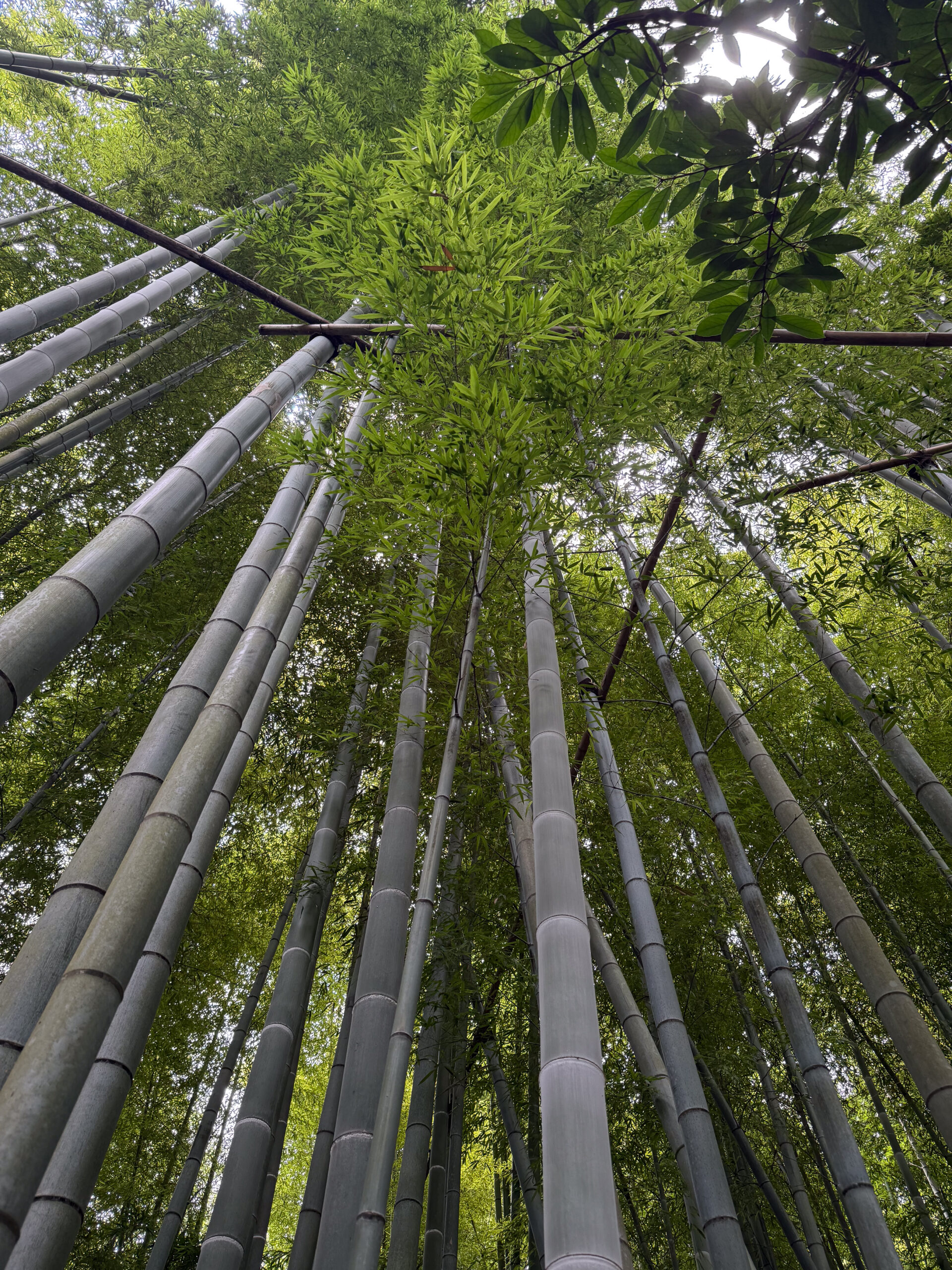
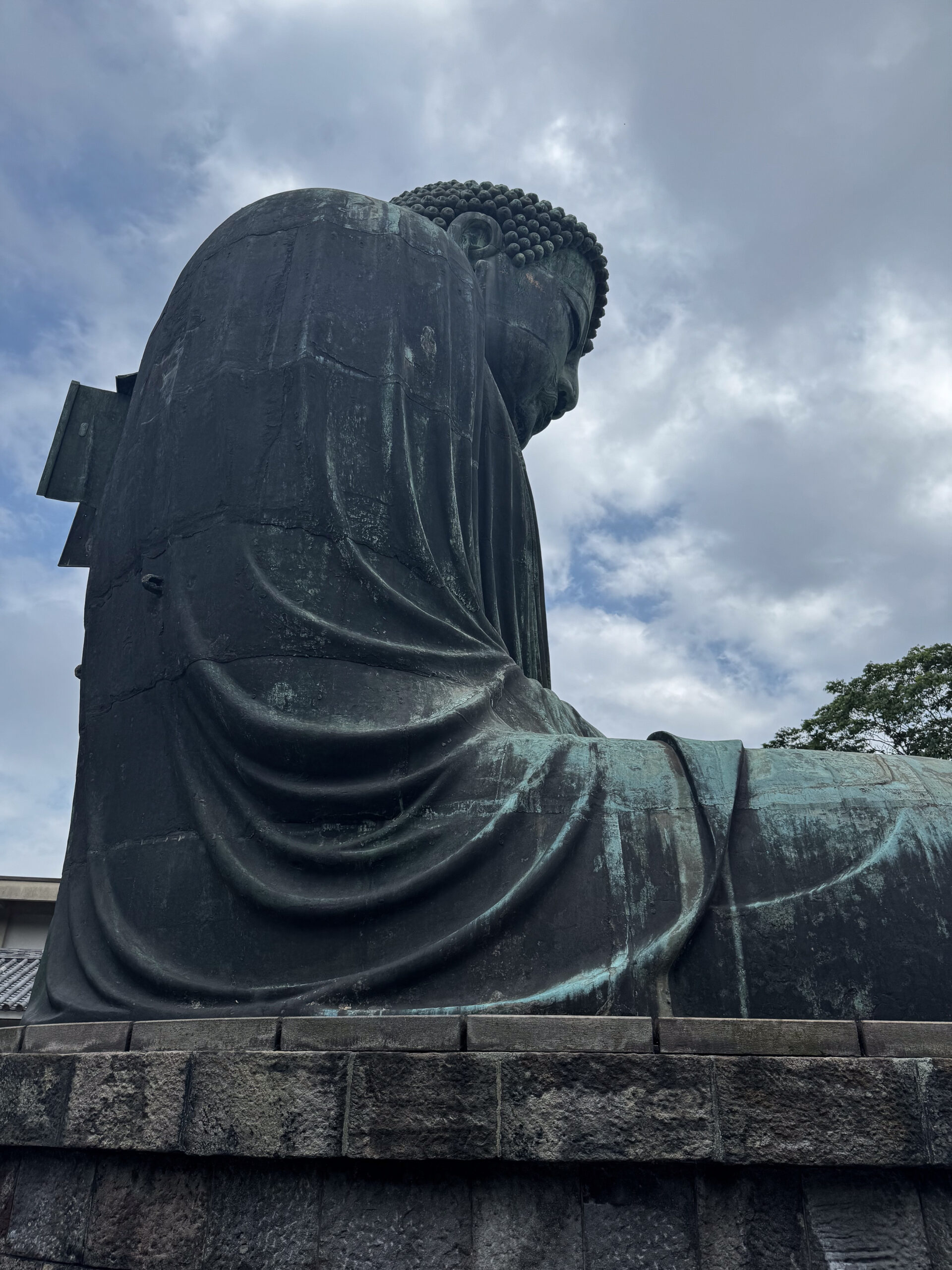
We visited a beautiful bamboo forest and took an Uber from Kamakura station to the Great Buddha. A quick note on Ubers in Japan: ours felt more like a luxury taxi. The driver wore a full suit and definitely did not rush. The app said he was arriving, but it took another 15 minutes of circling before he finally found us.

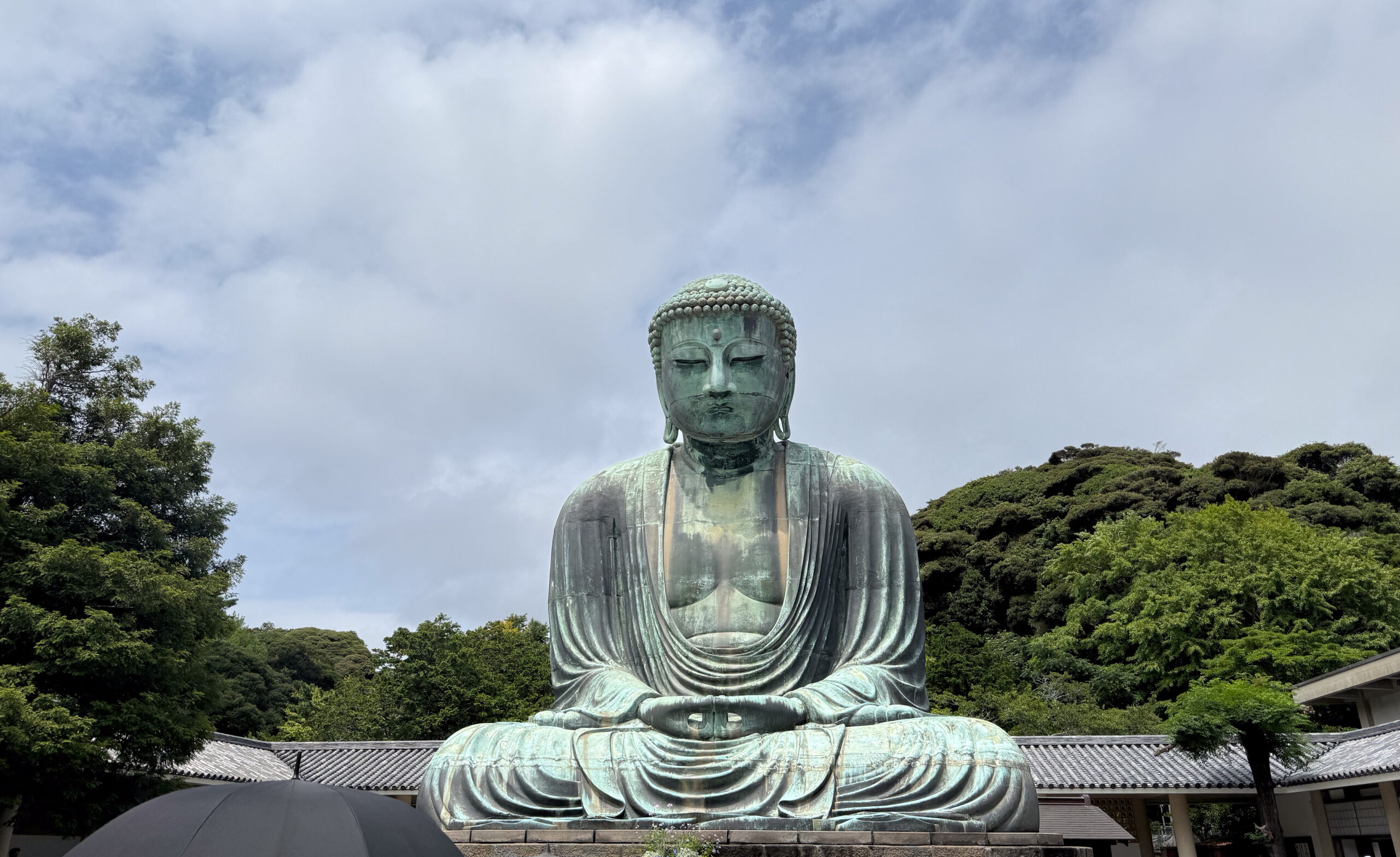
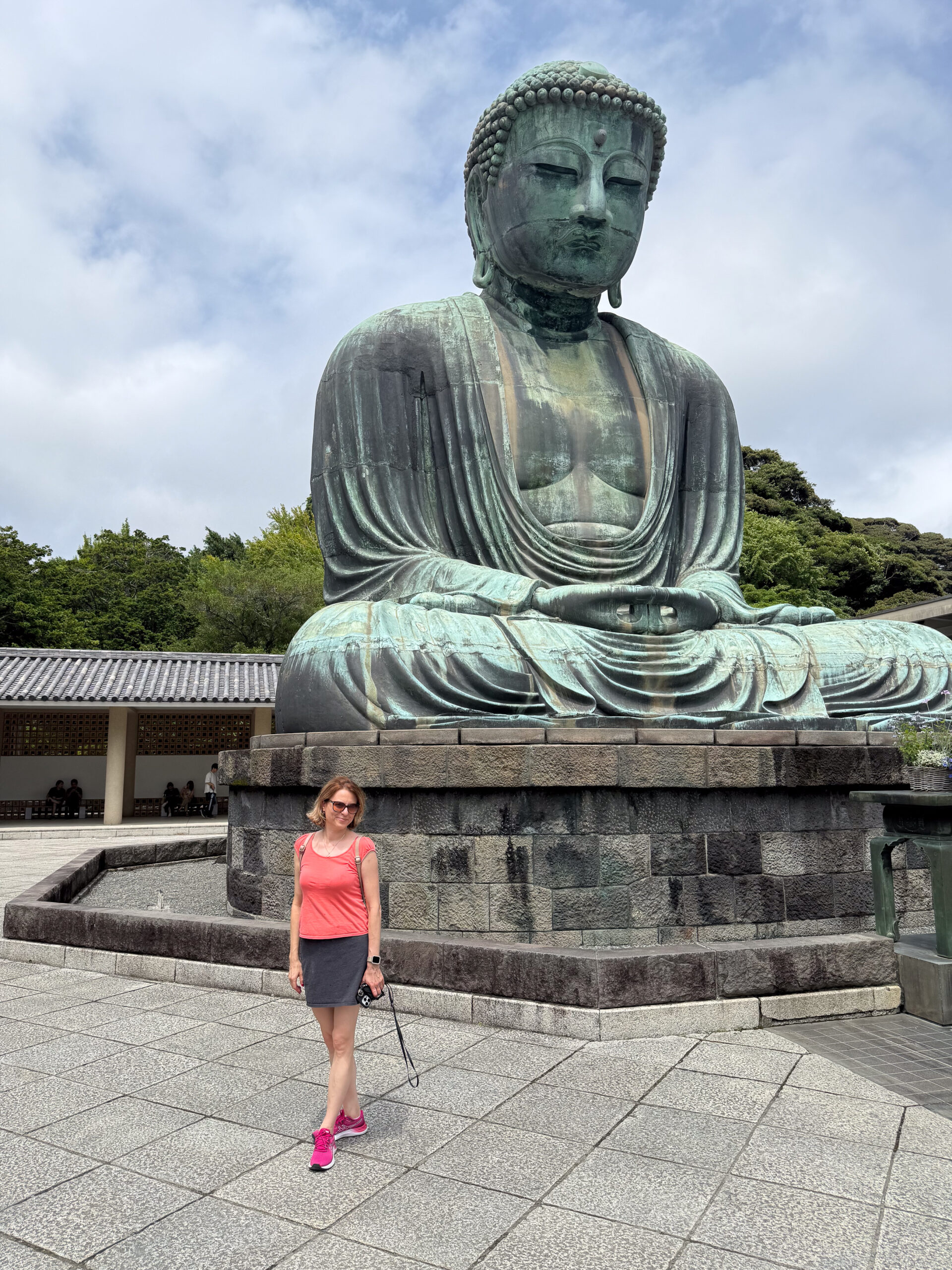
The Great Buddha is a massive hollow bronze statue that you can actually walk inside, though we skipped the interior because I could only imagine how hot it was in there.

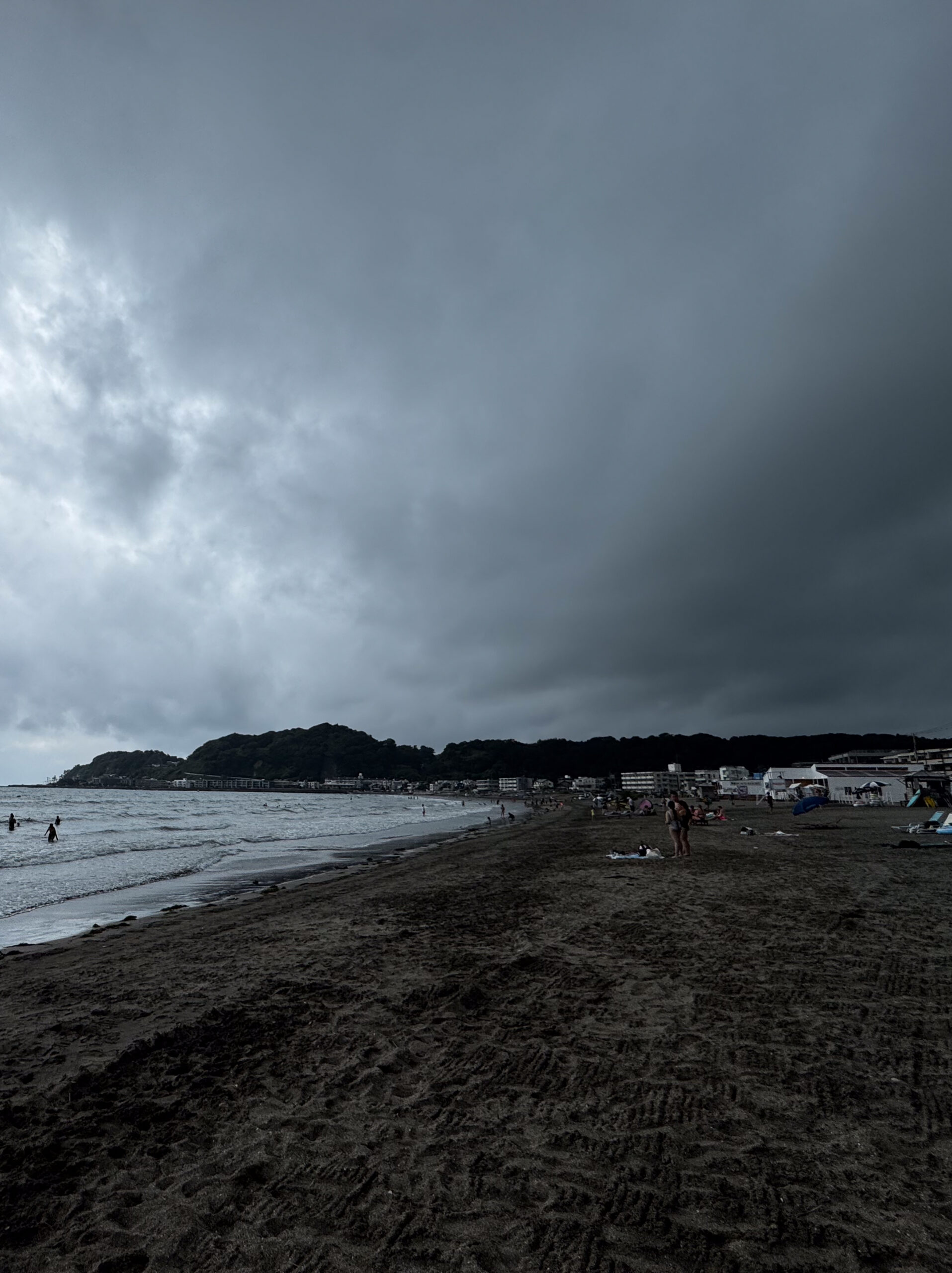
My main goal in Kamakura was hitting the beach to put that hard-won swimsuit to use in the Pacific Ocean for the very first time. I had grand expectations, but the beach itself was a bit rugged. The sand is dark and volcanic-looking, so when wet it looks a lot like mud. But the water was incredibly warm and clean, and we had a blast jumping in the waves.

Then came the rain. We knew a storm was supposed to hit around 3:00 PM and brought umbrellas, but the skies opened up before we even left the beach. We practically swam down the streets back to the bus station. The umbrellas were useless against the sideways rain. We joked about it at the time, although news of an earthquake elsewhere in Japan that day was a sobering reminder that traveling there also means being aware of the country’s very real natural hazards.

Food Feasts: Konbini Runs, Tonkotsu Ramen, and Sushiro

Speaking of food, traveling with teenagers means their eyes are often much bigger than their stomachs, especially when it comes to Japanese convenience stores (konbini). But honestly, I don’t blame them. The food in Japan was amazing almost everywhere we went, including the convenience stores.

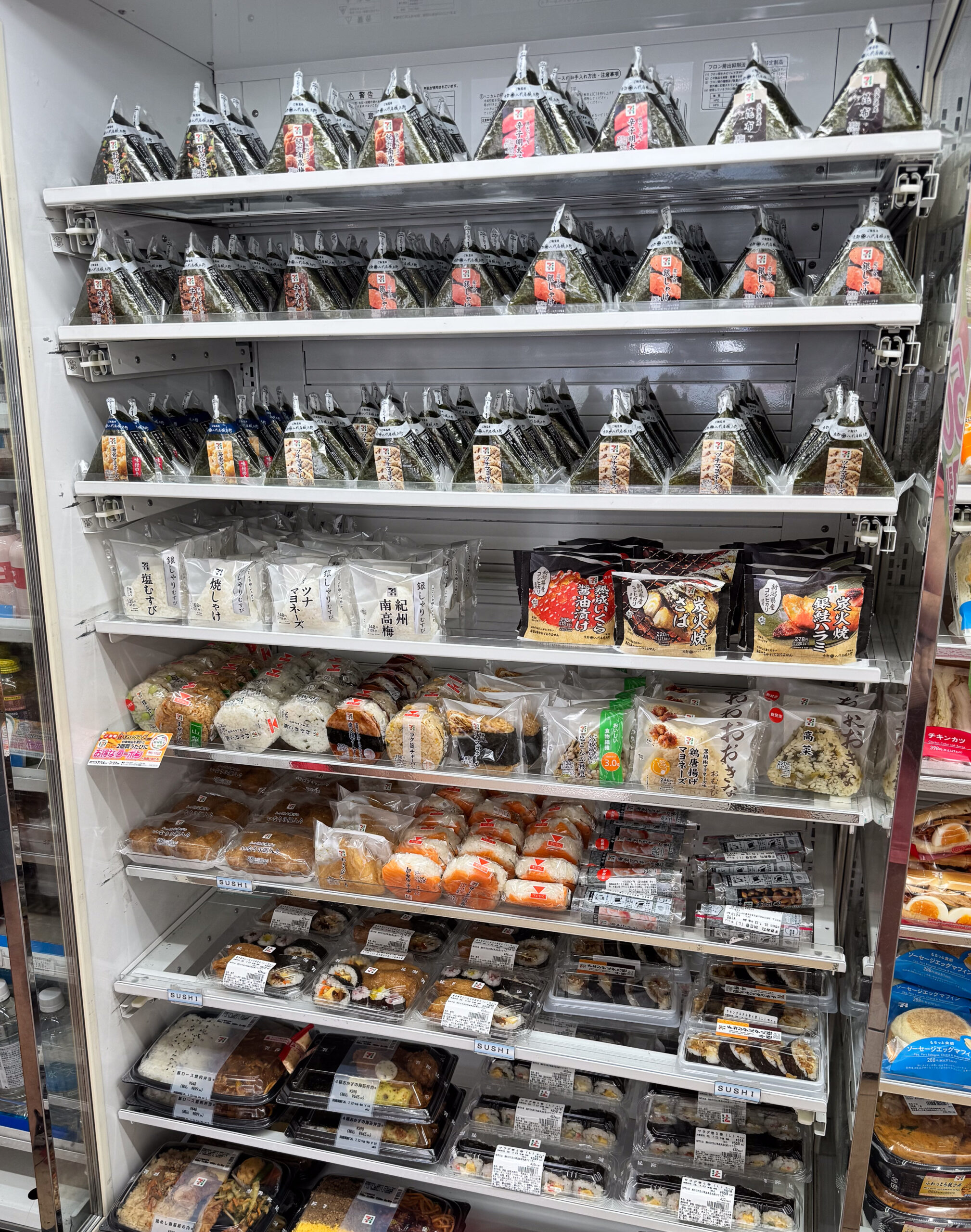
Lawson and 7-Eleven became regular stops for us. We had a Lawson literally across the street from our hotel and frequently grabbed lunch or dinner from the fresh-food shelves. One day, we spent about $50 for the four of us and came back with an absolute feast: ice cream, noodles, salads, chicken meatballs, croquettes, meat and potatoes, and spring rolls.

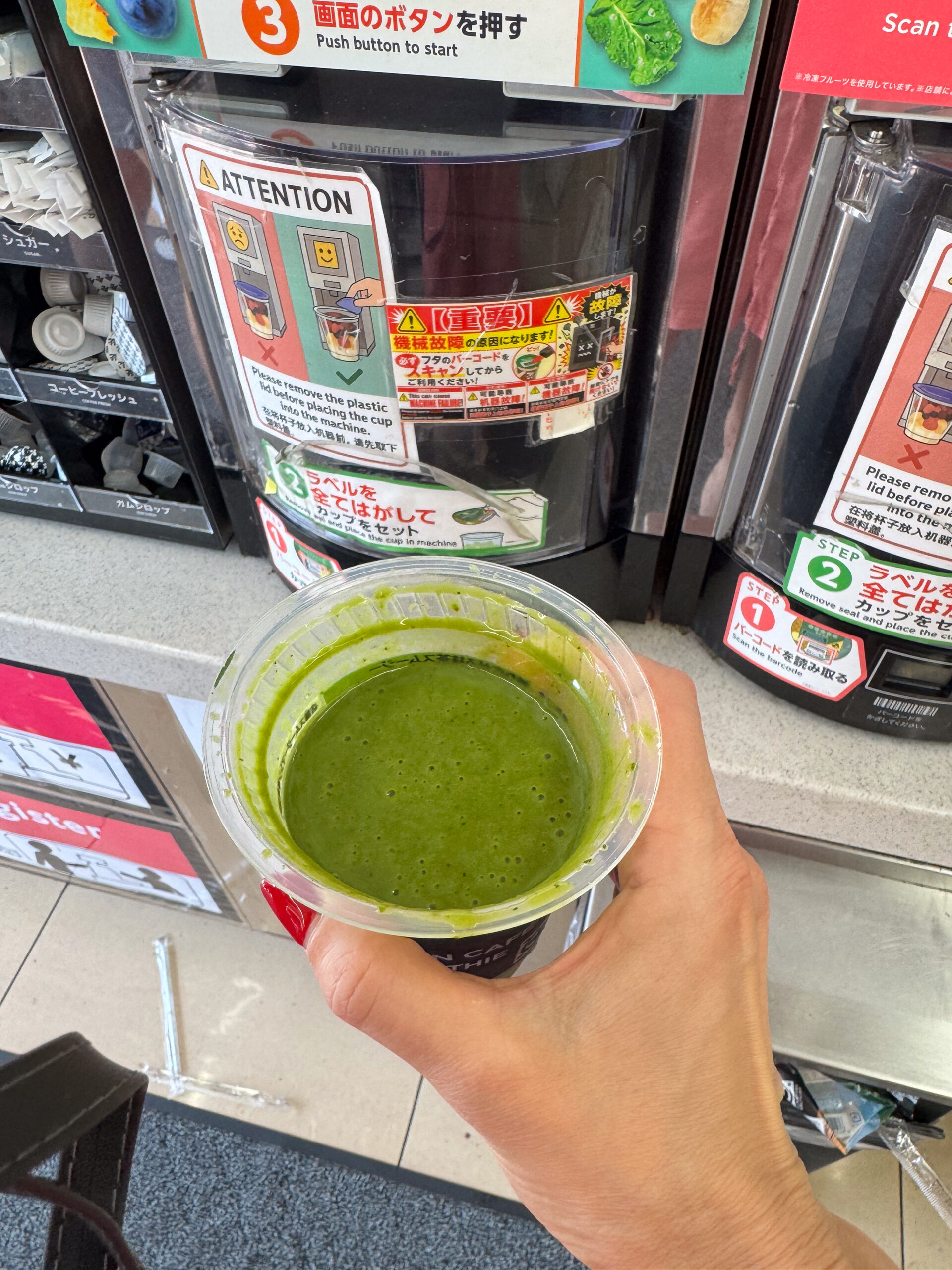
My absolute favorite convenience-store discovery was the 7-Eleven smoothie. You buy a frozen cup filled with fruit and other ingredients, scan it at the register, and put it into a special blending machine right there in the store. It makes a fresh smoothie in seconds. I’m going to miss the efficiency of Japanese snacks so much.

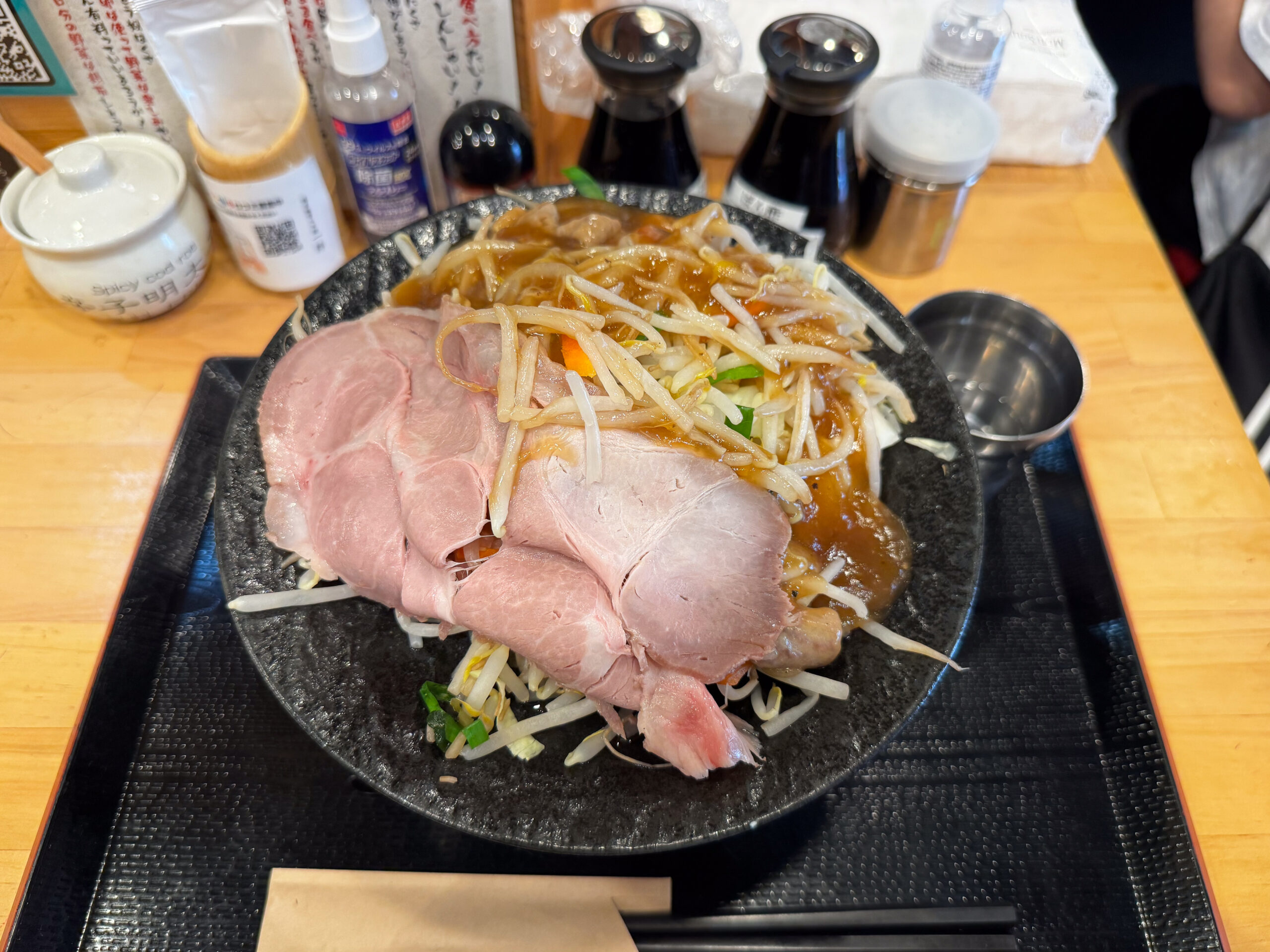
Beyond the konbini feasts, we explored traditional spots too. One day, we went to a tiny, super-cheap tonkotsu ramen place where a huge portion cost around 1,000 yen. The restaurant seated maybe 10 people at a single counter where you could watch the chefs work. It was cash only, so you bought a ticket from a machine first and then waited for a seat. They gave us a paper form to customize the bowl exactly how we wanted it—spicy or mild, with or without green onions, extra oil, garlic, or extra vegetables.

Once we sat down, the chef handed our orders right over the counter. The staff were so sweet—they used their phones to translate instructions for us, even translating into Russian when they heard us speaking it. They strongly advised us to eat the ramen and vegetables in the intended order instead of dumping everything into the broth and turning it into a hot pot. I also spent some time secretly studying the Japanese girl sitting next to me to learn the proper technique: noodles with chopsticks while simultaneously sipping the rich broth with the large spoon.

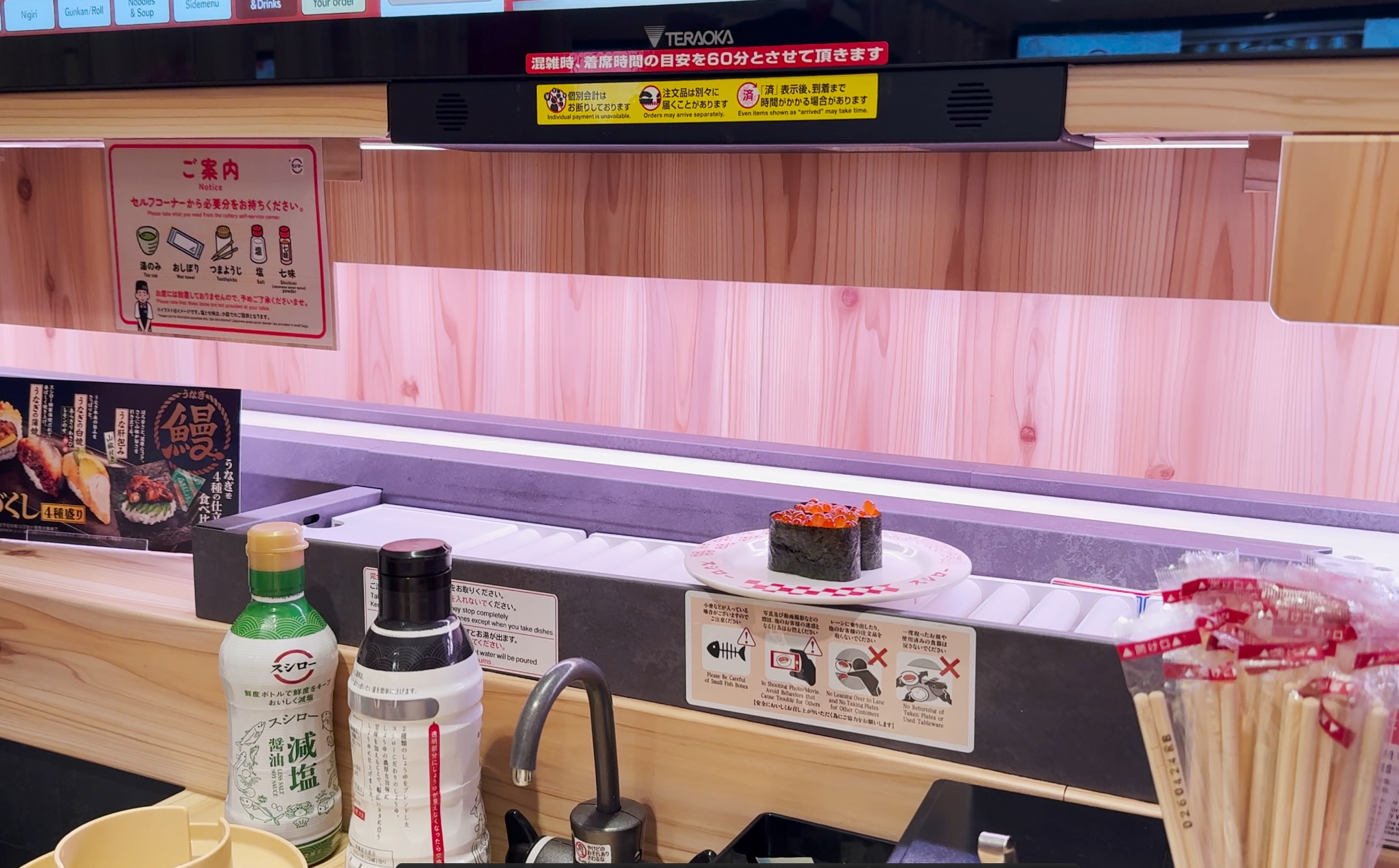
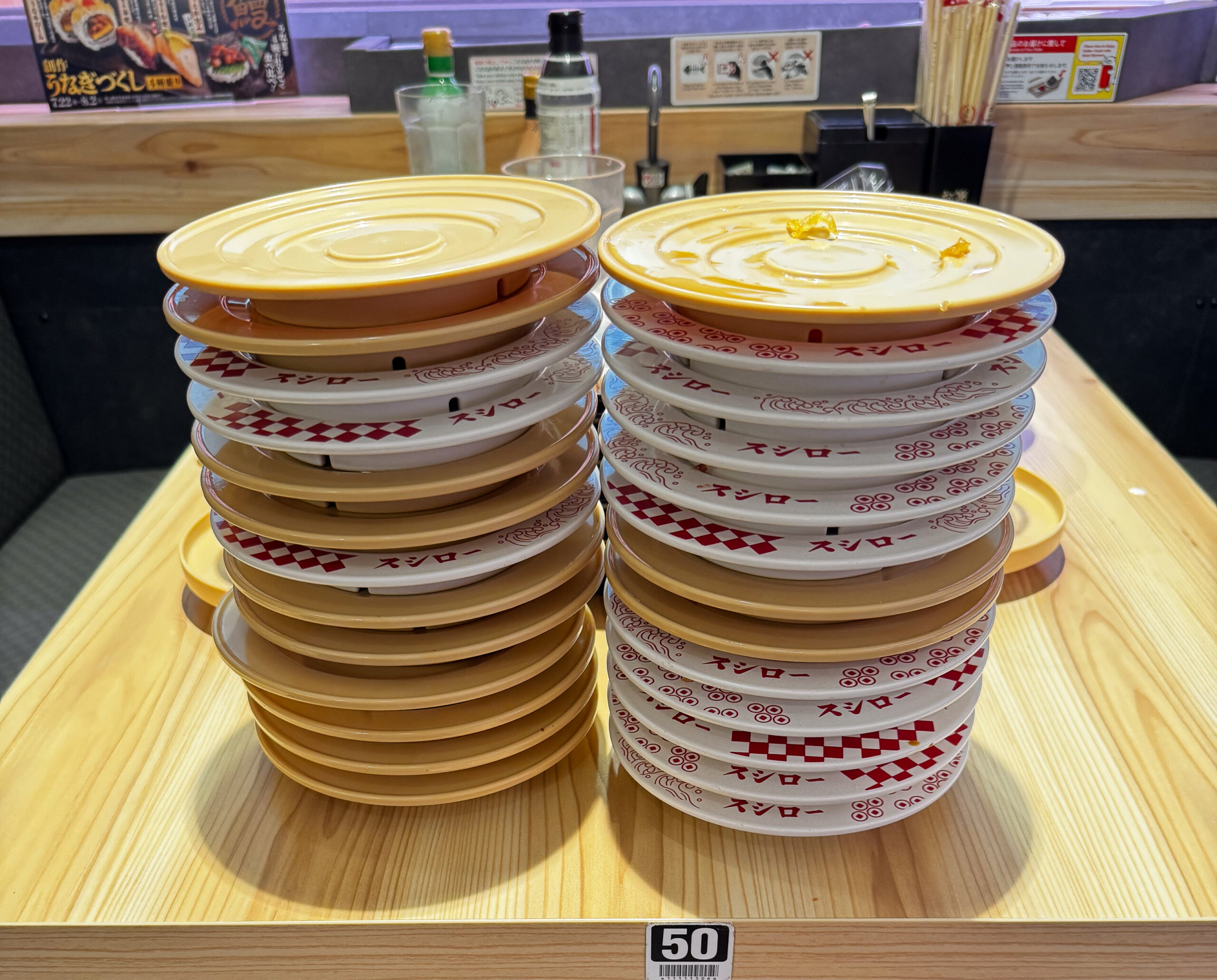
We also went to Sushiro, a popular conveyor-belt sushi chain. You take a ticket, wait for your table, and order from a touchscreen or your phone. We went completely wild. By the time we finished our incredibly delicious dinner, we had a leaning tower of 30 or 40 empty little plates stacked on our table!

Where Is the Trash? (And Where Are the Dogs?)

There’s another cultural difference I have to mention: the surprising lack of garbage bins on the streets. If you walk around Toronto, you’re used to seeing public bins everywhere. In Tokyo, we could walk for ages carrying empty bottles and wrappers without finding anywhere to throw them out.

One explanation often given for the scarcity of public bins is that many were removed for security reasons after the 1995 Tokyo subway sarin attack. There is also a strong expectation that people take responsibility for their own trash and carry it until they can dispose of it properly. Whatever the combination of reasons, the result amazed us: very few public bins and incredibly clean streets. We quickly learned to keep a little garbage bag with us.

This brought up another mystery for me: where were all the dogs? In two weeks, I felt like I saw hardly any, and most were tiny. Space is obviously at a premium in Tokyo, and pet-friendly housing can be restrictive and expensive, so small breeds make a lot of practical sense. We even saw little dogs being pushed around in special strollers. Coming from home, where dogs are such a visible part of everyday neighborhood life, their absence really stood out to me.

Japan in July: Hot. Lost. Amazed. And Completely in Love. Part 2

The Tokyo Oven and the Great Subway Quest

When we arrived back in Tokyo, the city was its own kind of hot pot. It was already over 33°C (91°F), and on the worst days it hit 36°C, with suffocating humidity that made it feel closer to 40°C. We felt like we were literally boiling in our own sweat. We bought personal electric fans, constantly chugged ion drinks, and ate special salt tablets provided by our hotel just to replace what we were sweating out.

But the real stress wasn’t the heat. It was the Tokyo transit system.

If you don’t speak Japanese, the Tokyo subway is a high-stakes escape room. Imagine a gigantic anthill with millions of ants moving in every possible direction through thousands of holes. That is Tokyo. Coming from the Toronto subway, which has just a few simple lines, my mind was blown. Tokyo has 13 underground subway lines, plus a huge network of surface rail lines operated by different companies, all intersecting at massive hubs.

Even a simple transfer can involve so many exits, levels, and corridors that you end up completely lost. Almost two weeks into our trip, we were still getting confused. We navigated using Google Maps and Apple Maps, and eventually I discovered a lifesaver: Google Maps can track your progress while you’re traveling, showing the station you’re approaching, entrance and exit numbers, and departure times. Sadly, I figured out how useful this was a little late.

In the beginning, I was in charge of navigation. After a few “strategic errors”—like taking us three stops in the wrong direction—I happily surrendered navigation duties to Mikhail and Sasha. It became a lot more relaxing once I just blindly followed them!

Transit Card Chaos and High-Tech Toilets

Japan is a beautiful paradox: it is simultaneously living in the year 3000 and the year 1990.

Our hotel was near Ueno, right by the smaller Okachimachi station. Despite doing my research on Suica and Pasmo transit cards, our first day in the subway was a disaster. Mikhail and I easily added digital transit cards to our phones, but we couldn’t get them to work for the kids. We had to withdraw cash and buy physical cards instead.

Eventually, we managed to transfer one physical card to a digital Pasmo on my phone, while I moved my own card to my Apple Watch. So I was tapping myself in with my watch and my son in with my phone! My other son finally got a card on his phone, but Apple Pay wouldn’t work for him, so we still had to top it up with cash at the machines.

Between the cards, getting lost, and running onto the wrong trains, we had a lot of adventures. More than once, we got trapped by the turnstiles because something had gone wrong with our tap. The station attendants had to perform some kind of digital magic on our phones to release us and hand us paper tickets instead.

And when we traveled to Yudanaka to reach our hot spring village, our high-tech transit cards suddenly became much less useful. Parts of the journey required paper tickets, and the Shinkansen added another layer of confusion: we were given two tickets each and had to understand when to insert one and when to insert both. If we hadn’t stopped to ask several locals for help, we absolutely could have missed our train. I quickly learned my golden rule of Japanese transit: arrive early, especially when you have to exchange QR codes for physical tickets at a special machine!

But then, you walk into the bathroom.

The toilets in Japan are an absolute marvel. Back home, we spent a fortune to install a bidet toilet, but in Japan heated washlet-style toilets seem to be everywhere—from tiny cafes and train stations to traditional ryokans. Heated seats, washing functions, multiple flush options: after fighting with paper train tickets, sitting down on one feels like suddenly being transported back into the future.

The Swimsuit Quest and Japanese Modesty

Before heading to our next destination, Kamakura, I had a mission: I needed a swimsuit. I had packed light and completely forgot mine, assuming I could just buy one in Tokyo. I was very, very wrong.

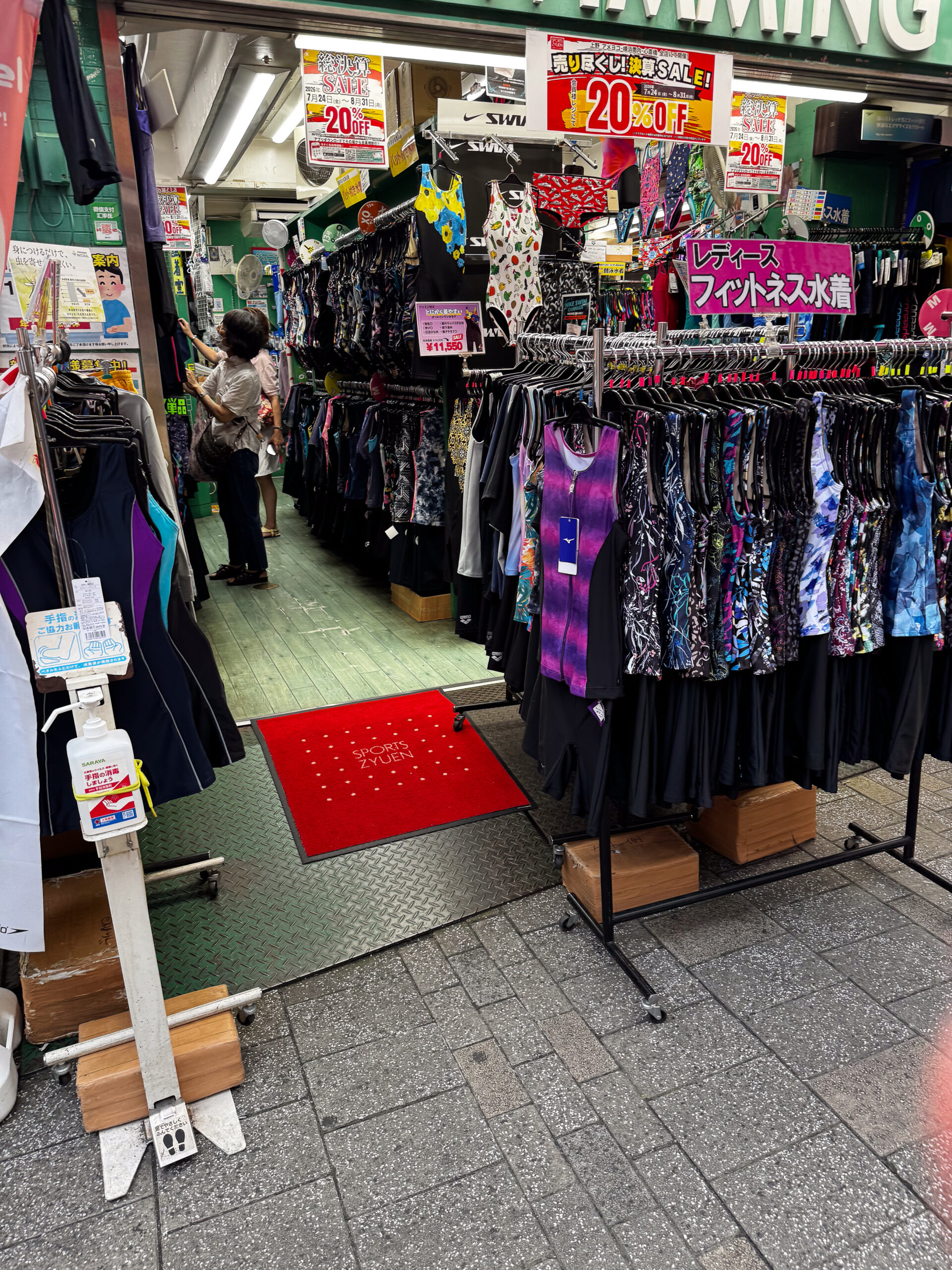
We were staying near Ueno and Okachimachi, right next to a massive, bustling street market where you can buy literally anything—from fresh peaches to sneakers. But a normal swimsuit? Impossible. We spent two hours wandering. I asked Gemini, I asked Google Maps. We found a few sports stores selling professional swimming gear, but no beachwear anywhere. Plus, Japanese sizing runs incredibly small, and I needed a 2XL just to get it on my body.

We tried Uniqlo and GU, but no luck. Finally, we asked a saleswoman in a tiny shop selling men’s trunks. She pointed us down an alleyway to a multi-story sports shop. There, on the very top floor, I finally found a one-piece swimsuit in a 2XL for a reasonable 6,600 yen.

I later tried to figure out why a regular Western-style swimsuit had been so difficult to find. One explanation was the much stronger emphasis on sun protection in Japan. We certainly noticed umbrellas, covered arms, and layers everywhere despite the heat, and many women’s swim outfits offered far more coverage than what I’m used to seeing in Canada. Whatever the reason, I learned not to assume that something as basic as a swimsuit will be easy to buy just because you’re in one of the biggest cities in the world.

Fashion Contrasts: From Conservative Commuters to Anime Maids

That preference for coverage was also noticeable in everyday fashion. A lot of the adult clothing we saw was quite conservative. When you look in some stores, it feels like every outfit is designed for meeting the Queen or working in a bank.

While shopping at a GU near a robot exhibition, I bought a slightly sheer camisole. I wanted to put it on immediately to survive the heat. The cashier looked at me with pure terror in her eyes, silently pleading with me not to wear what she apparently considered an undergarment outside. I didn’t care—I was thrilled to have something cool to wear! The locals might prefer layering up to avoid the sun, but I will gladly take the Japanese anti-dehydration drinks and wear my sheer camisole.

However, there is a wild flip side to this conservative fashion. In places like Shibuya, teenage street fashion is incredibly cool and vibrant. And then there are the “Maids.”

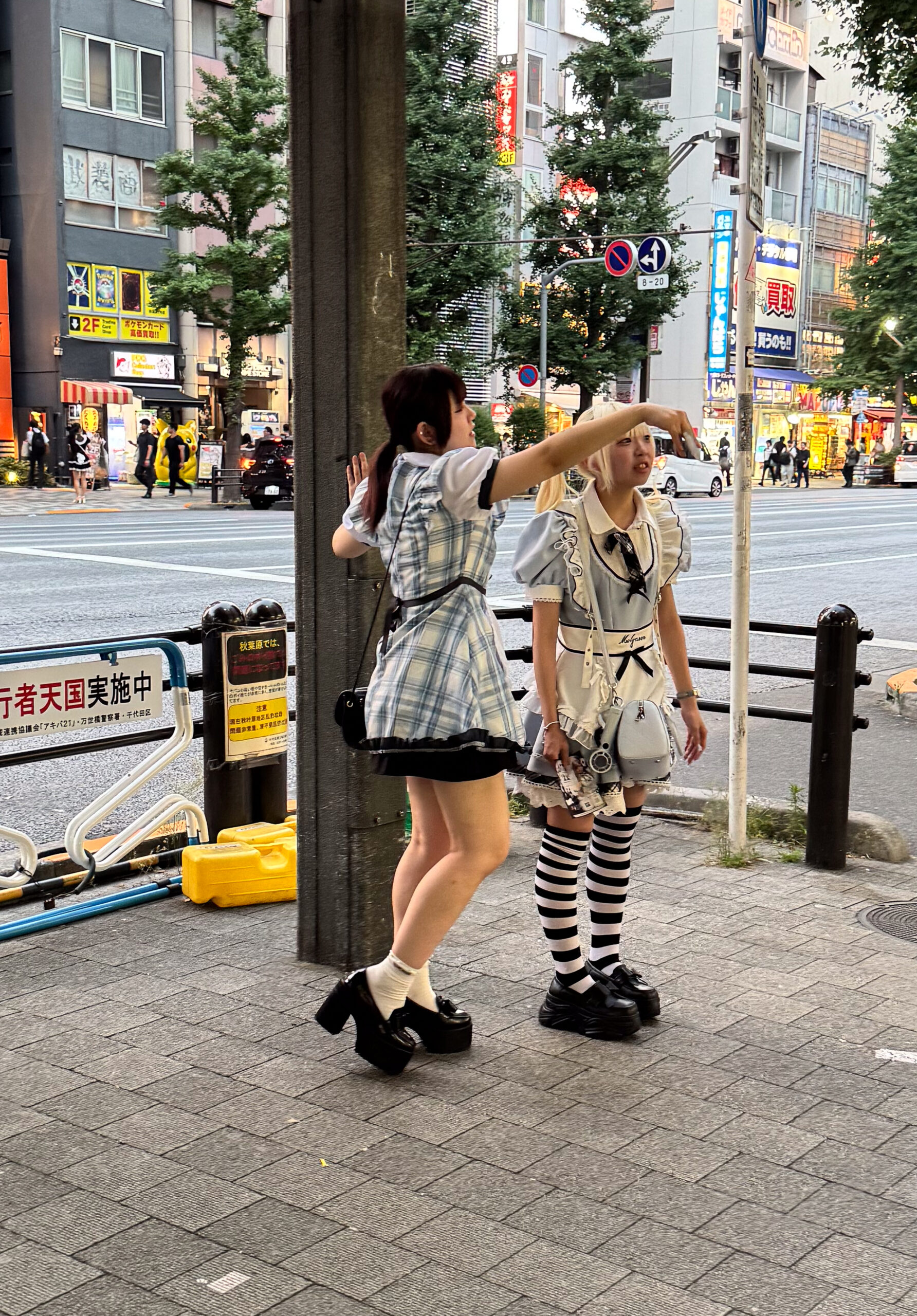
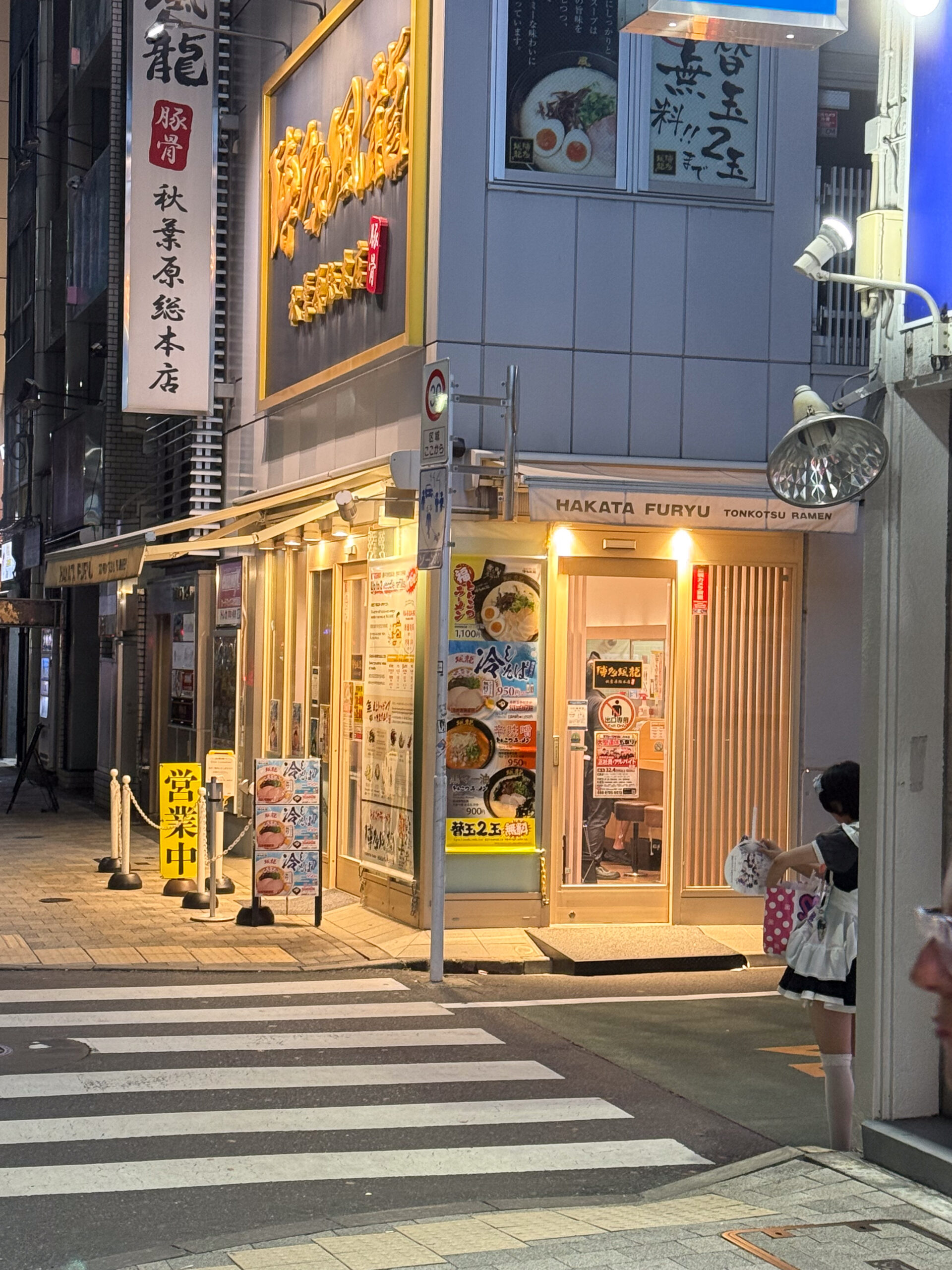
Near Akihabara, we saw girls dressed perfectly as anime maids standing on the sidewalks and inviting customers into Maid Cafes hidden on upper floors. Inside, they dance, sing, and perform “magic spells” over your food. My boys absolutely refused to go into one, but it was fascinating to see them dotting the streets!

Shopping Quirks: Face Bags and Magic Bins

Shopping in Japan comes with its own unique set of rules and mind-blowing tech.

If you want to use a fitting room, you may be asked to take your shoes off. In nicer stores, attendants can also hand you a breathable gauze cover to place over your face before trying on tops so your makeup doesn’t stain the clothes. Definitely a first for me.

But the most futuristic part of shopping is the checkout at places like Uniqlo and GU. There are no barcodes to scan one by one. You simply drop your entire basket of clothes into a large bin at the self-checkout, and the RFID tags are read almost instantly. Your whole purchase appears on the screen in a split second. It feels like magic.